NITI Aayog Studies AMTZ Model for Scaling India’s MedTech Manufacturing Ecosystem
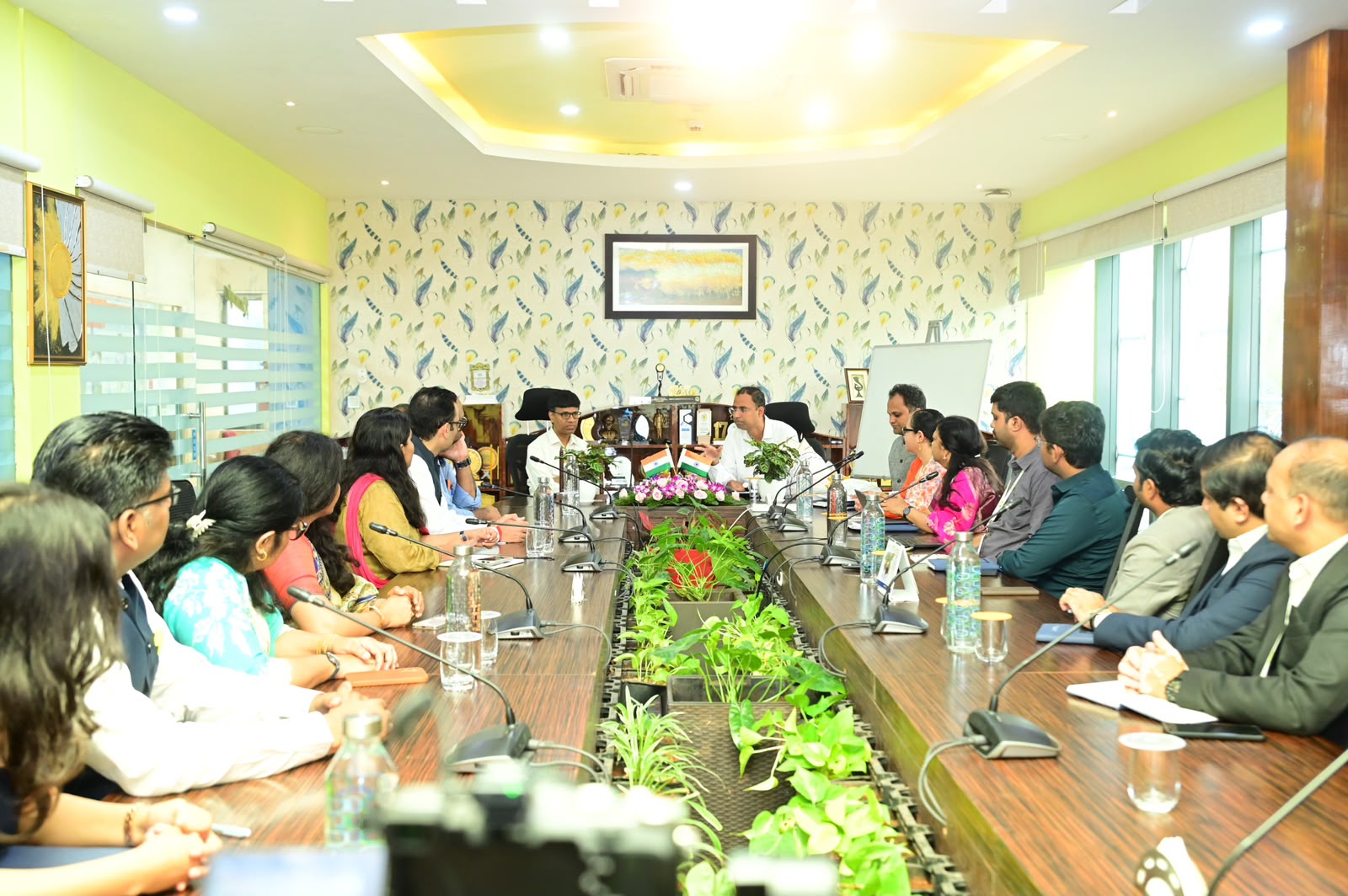
New Delhi/Visakhapatnam: As India sharpens its focus on self-reliance in healthcare technologies and seeks to emerge as a global medical device manufacturing hub, Andhra Pradesh MedTech Zone (AMTZ) has come under the national spotlight. A high-level delegation from NITI Aayog visited the Visakhapatnam-based facility on July 27 to study what is widely regarded as the world’s largest integrated medical technology manufacturing cluster and assess its potential as a template for future MedTech ecosystems across the country.
The delegation, led by Dr M. Srinivas, Member (Health), NITI Aayog, was given a comprehensive overview of AMTZ’s integrated innovation ecosystem by Dr Jitendra Sharma, Managing Director and Founder CEO, AMTZ. The visit assumes significance at a time when India is aggressively promoting domestic manufacturing of medical devices, reducing import dependence and strengthening its healthcare innovation ecosystem under the Atmanirbhar Bharat initiative.
An End-to-End MedTech Ecosystem
During the visit, NITI Aayog officials reviewed AMTZ’s end-to-end MedTech ecosystem that brings together research, product design, manufacturing, testing, regulatory support, artificial intelligence-enabled healthcare solutions, and startup incubation under one campus. The delegation examined how innovations move seamlessly from laboratory concepts to commercially manufactured medical devices through a collaborative framework involving industry, academia and healthcare institutions.
Inside the Startup Ecosystem
A major focus of the interaction was AMTZ’s startup ecosystem. The delegation visited MediValley, BioValley, the Bharat Limb Centre, and the Centre of Excellence, where entrepreneurs showcased indigenous healthcare technologies ranging from advanced diagnostics to next-generation medical devices.
The discussions centred on challenges confronting India’s MedTech startups, including regulatory approvals, manufacturing scalability, quality testing and market access. AMTZ demonstrated how shared manufacturing facilities, specialised testing laboratories, regulatory guidance and industry partnerships significantly reduce the cost and time required to commercialise healthcare innovations.
Global Collaboration in Focus
The delegation also interacted with representatives of the World Health Innovation Forum (WHIF) to explore opportunities for international collaboration in healthcare innovation. Officials were briefed on the initiatives of Universal BioMed Cross (UBMC) in biomedical emergency response, healthcare capacity building and global health partnerships.
“One of the Finest MedTech Ecosystems”
Impressed by the integrated model, Dr M. Srinivas described AMTZ as one of the finest MedTech ecosystems he had witnessed.
A Template for India’s MedTech Future
Industry observers believe the visit reflects growing policy interest in expanding India’s domestic medical device manufacturing capacity. India continues to import a significant share of high-end medical equipment, and policymakers see integrated manufacturing clusters such as AMTZ as critical to building technological capabilities, supporting innovation-led enterprises and enhancing healthcare security.
Over the past few years, AMTZ has evolved into a comprehensive MedTech ecosystem housing advanced manufacturing facilities, common scientific infrastructure, regulatory support systems, innovation centres and incubation platforms. By integrating every stage of the value chain—from research and prototyping to manufacturing and commercialisation—the cluster has emerged as a key pillar in India’s ambition to become a global centre for affordable, high-quality medical technologies.
The NITI Aayog visit is expected to provide valuable inputs for future policy interventions aimed at strengthening India’s MedTech sector, promoting indigenous innovation and positioning the country as a leading global destination for medical technology research, manufacturing and exports.