The Wangchuk Factor: Was There a Political Strategy Behind the Government’s Handling of the Protest?
The resignation of Union Education Minister Dharmendra Pradhan following weeks of mounting public anger over the examination paper leak controversy may have temporarily eased the political pressure on the government. Yet, the larger questions surrounding one of the most dramatic protest movements in recent years remain unanswered. At the centre of these questions is environmentalist and education reform advocate Sonam Wangchuk, whose indefinite hunger strike transformed a student agitation into a wider debate on governance, accountability, and democratic dissent.
The sequence of events—from Wangchuk’s detention during the Ladakh movement to his removal from Jantar Mantar shortly before a planned Parliament March—has fuelled speculation that the government may have adopted a calibrated strategy to prevent him from emerging as the defining face of a nationwide protest.
While there is no official evidence to conclusively establish such a strategy, the timeline has become the subject of intense political discussion. The issue is no longer confined to whether Wangchuk was hospitalised on medical grounds; it has evolved into a broader debate about political management, public perception, and the optics of democratic protest.
A Protester Beyond Conventional Politics
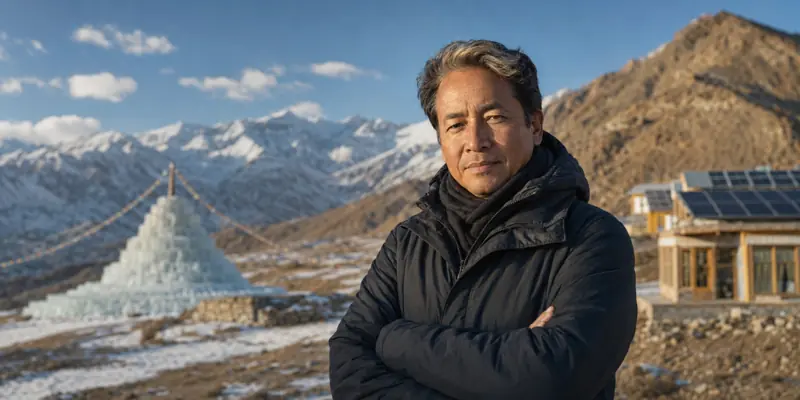
Sonam Wangchuk has occupied an unusual position in India’s public life. Unlike conventional opposition leaders, he derives credibility from his work in education, innovation, sustainable development, and environmental conservation. Internationally recognised for his contributions to alternative education and climate advocacy, he has generally maintained a distance from partisan politics.
That distinction became particularly significant over the last two years.
His campaign demanding constitutional safeguards for Ladakh, restoration of statehood, and inclusion under the Sixth Schedule had already placed the Union Government under considerable political pressure. During that movement, Wangchuk also raised concerns regarding border infrastructure and territorial issues involving China—subjects that generated intense national debate.
Although several of his public statements were interpreted differently across social media platforms and political circles, his personal credibility remained largely intact among a broad cross-section of citizens. That credibility would later become the defining element of the paper leak agitation.
From Ladakh to Delhi
Following violent protests in Leh in September 2025, Wangchuk was detained under the National Security Act (NSA) and subsequently lodged in Jodhpur Jail. The government maintained that the detention was necessary to preserve public order after serious law-and-order disturbances.
His detention was revoked in March 2026. Within months, Wangchuk re-emerged—not on the Ladakh issue but on a matter affecting millions of students across India. Joining the nationwide campaign against repeated examination paper leaks, he began an indefinite hunger strike at Jantar Mantar on 28 June. What initially appeared to be another student-led demonstration soon acquired a much broader moral dimension. The issue was no longer merely about examination irregularities. It became a question of fairness, transparency and the future of India’s youth.
The Politics of Moral Authority
Political protests often derive strength either from numbers or from symbolism. The paper leak movement already possessed the first. Wangchuk brought the second.
Unlike opposition politicians, he could not easily be portrayed as pursuing electoral gains. His image as an educator and public intellectual gave the agitation an ethical legitimacy that complicated the government’s political response.
This distinction mattered. Governments frequently counter opposition-led protests through political messaging. However, responding to a respected civil society figure requires a different strategy because criticism from such individuals tends to resonate beyond party lines.
As Wangchuk’s fast continued, concerns regarding his health increased. Simultaneously, public attention shifted from the mechanics of examination reforms to the government’s handling of peaceful dissent.
The Critical Timing Before July 20
According to political observers and sources familiar with developments, the most significant turning point came just before the proposed Parliament March scheduled for 20 July. Wangchuk had publicly declared that he intended to continue his hunger strike until the march and personally lead the demonstration. Instead, on 18 July, Delhi Police shifted him from Jantar Mantar to Safdarjung Hospital after more than twenty days of fasting. The official explanation centred on his deteriorating health and the state’s responsibility to prevent medical complications.
Wangchuk, however, presented a different account. In a handwritten note released from hospital, he alleged that he had been admitted against his wishes and that restrictions had been imposed on his movement, communication, and freedom of expression.
These competing narratives created two parallel interpretations. From the government’s perspective, the intervention represented a humanitarian and administrative necessity. From the perspective of his supporters, it removed the movement’s most recognisable face at its most politically sensitive moment.
Neither interpretation has been independently established as definitive.
Did the Protest Lose Momentum?
Contrary to what some may have expected, the movement did not diminish after Wangchuk’s hospitalisation. The Parliament March witnessed significant participation by students and young protesters. The paper leak controversy had by then evolved into a larger political issue concerning government accountability, institutional credibility, and recruitment reforms.
Ironically, the mobilisation demonstrated that while Wangchuk had become its moral symbol, the movement itself had developed an independent momentum.
This distinction is politically important. Removing a leader from the physical protest site does not necessarily weaken a movement once public anger has reached critical mass.
The Resignation That Changed the Narrative
Five days later, Union Education Minister Dharmendra Pradhan resigned. The resignation immediately altered the political conversation. Wangchuk described the development as a victory for democratic participation and peaceful public mobilisation.
Yet it also generated another question that continues to dominate political analysis. Had Wangchuk remained at Jantar Mantar during those decisive days, would the visual and political impact of the minister’s resignation have been fundamentally different?
Politics often turns on imagery as much as policy.
A minister resigning while a nationally respected activist continues an indefinite fast at the protest venue would likely have produced powerful symbolism—one suggesting that sustained peaceful resistance had compelled political accountability.
Instead, Wangchuk remained in hospital while the political developments unfolded elsewhere. Whether this sequence resulted from coincidence, administrative necessity or strategic political calculation remains open to interpretation.
A Pattern or Mere Coincidence?
Supporters of Wangchuk argue that whenever he emerges at the centre of a major public issue, coordinated political narratives seeking to diminish his influence also appear. They point to his detention during the Ladakh movement, criticism directed at him across social media and finally his removal from the protest venue before its anticipated climax.
Government representatives, on the other hand, reject suggestions of political targeting and maintain that each decision was taken independently in response to prevailing administrative and security circumstances.
Without documentary evidence, it would be inappropriate to conclude that these events formed part of a pre-planned political strategy. However, political analysts acknowledge that the sequence has inevitably invited scrutiny because of its timing.
Beyond One Individual
The larger significance of the Wangchuk episode extends beyond the individual himself. It reflects the changing nature of democratic mobilisation in India. Unlike conventional political agitations led by parties, movements increasingly revolve around independent public figures who command credibility across ideological divides. Such individuals pose unique political challenges because governments cannot easily categorise or politically isolate them.
The paper leak movement demonstrated that youth-led protests gain considerably greater legitimacy when supported by personalities perceived as politically neutral. For any government, managing such situations requires balancing constitutional freedoms, public order and political communication.
The Questions That Remain
Several important questions remain unanswered.
1Was Wangchuk’s hospitalisation solely a medical intervention necessitated by concerns over his health?
2Was there also a parallel political calculation aimed at preventing him from becoming the defining image of a nationwide movement?
3Did the government seek to ensure that any political concessions, including the resignation of the Education Minister, were not publicly associated with sustained pressure from an independent civil society figure?
There is currently no conclusive evidence to answer these questions definitively.
The chronology of events has ensured that the debate surrounding the “Wangchuk factor” is unlikely to disappear soon. Whether viewed as coincidence or careful political management, the episode has highlighted how symbolism, timing, and public perception increasingly shape democratic politics in India.
Ultimately, the story is not merely about Sonam Wangchuk or a ministerial resignation. It is about the evolving relationship between citizens’ movements and state power, and how governments respond when a protest is led not by politicians, but by individuals whose moral authority transcends party politics.