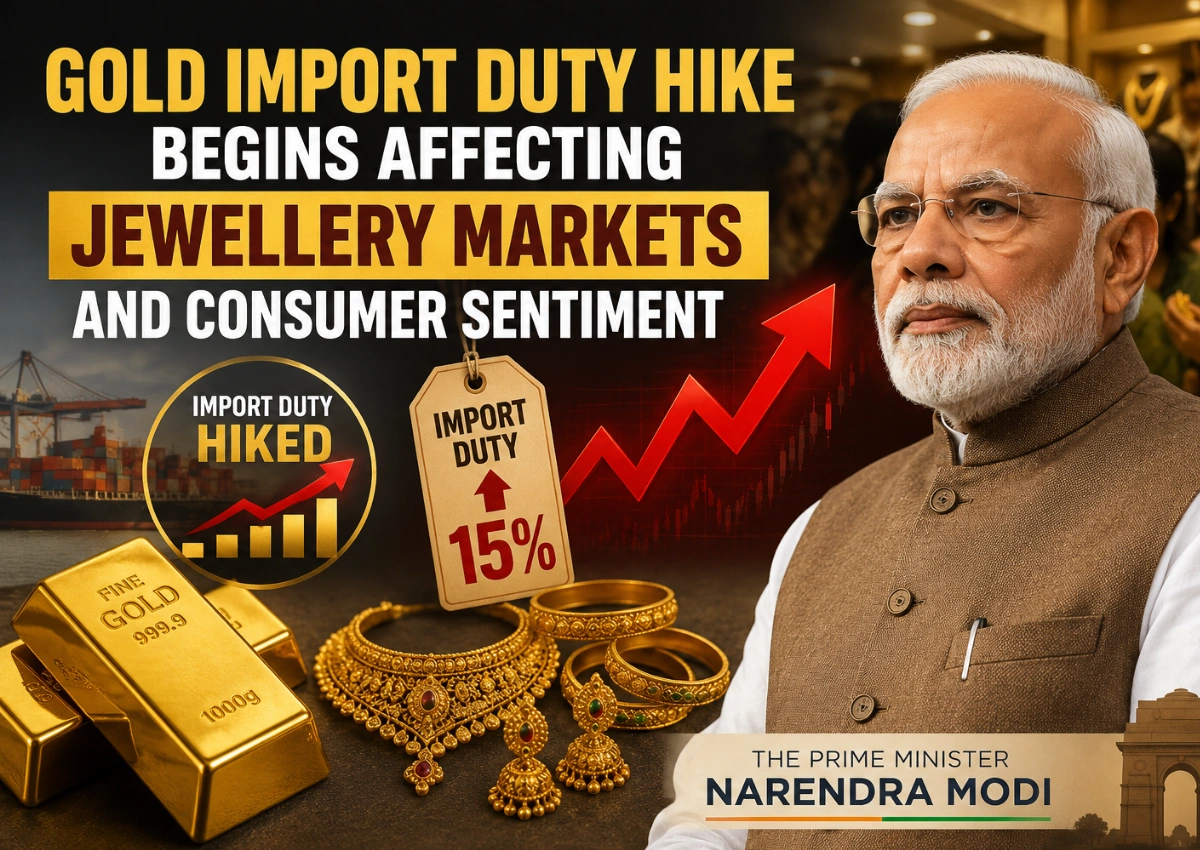
The decision of the central government to reserve the import of gold and silver from the world markets has once again highlighted India’s long-standing monetary and cultural association with gold. This decision was taken after just a few weeks of the appeal made by Prime Minister Modi.
Narendra Modi urged Indian citizens to hold back on their gold purchases for a period of one year, which was part of the country’s measures to control the import pressures during the current global economic crisis. The government has raised import duty on gold and silver from 6 per cent to 15 percent and imported gold has gone astronomically high in the consumers’ eyes.
It’s seen more as a gimmick and symbolic gesture by the government trying to continue the import restriction movement, albeit with a subtle economic connotation. Policymakers’ defence is that the hike is imperative to safeguard the economy under spiralling global instability and oil prices.
But it has irked jewellery traders, middle-class families and consumers, gearing for the wedding and celebration seasons. Quite apart from Truth is, this issue once again shows the close association of gold with Indian culture, savings habits, and economic psyche.
Why the Government Increased Import Duty
India is the largest importer and consumer of Gold in the world. As most of the gold purchased is imported into the country, large purchases of gold increase demand for foreign exchange, Most of all US dollars.
In a situation when petrol and oil prices around the world are already putting strain on the country’s import bill, the government seems to be trying to curb non-essential imports that aggravate pressure on the forex reserve and the rupee.
Economists say that the import duty hike has two reasons behind it: it increases the price of gold so that gold buying becomes unattractive, and some revenue for the government in the form of customs duty. The move, though, also goes hand in hand with concerns about trade imbalance and economic stability amidst an uncertain global environment.
Gold’s Emotional and Cultural Importance
In India, gold isn’t just considered a luxury item or an investment. It also symbolises emotions, cultures and societies. Gold is traditionally connected to:
Celebrations like the wedding and other family ceremonies, events like Diwali and Akshaya Tritiya. Financial security of households, Savings across generations, Social prestige. Gold has always been viewed in most families, mostly in rural and middle-class households, as one of the most secure and safe means of saving in the long run.
This cultural link makes gold consumption appear very distinct from everyday consumer spending. Even when faced with inflation or economic turmoil, a lot of people will go on investing in gold because it’s considered a haven of stability, not turbulence. This explains the heated debate that has ensued, following the government’s call for a dump in buying gold and the rise in import tax.
Impact on Consumers
The short-term impact of the failure to raise the duty would be to push up the domestic prices of gold. Customers buying jewellery for marriage, celebratory festivals or investment will probably have to pay many times higher prices.
The effect can be observed most during the next season of marriage when the demand for gold rises dramatically. It’s predicted that middle-class families will feel the pinch most. Many gold-buying ventures can take years of savings and are emotionally high-stakes.
Some households may:
- Reduce gold purchases
- Shift toward lighter jewellery
- Delay buying decisions
- Explore alternative investments
However, experts believe demand may not disappear completely because cultural and emotional motivations continue to influence buying behaviour.
Jewellery Industry Concerns
The jewellery industry has shown consternation over the abrupt hike in the import duty. Jewellers’ groups, fearing that raising prices could hit sales, are worried about the reduced customer demand, first and foremost, those from middle-income groups.
Small jewellers and local shopkeepers are more concerned as the industry relies on spike sales during festivals and weddings.
Smuggling of Gold, Local market sales, Unregulated trading systems. India has traditionally suffered from illegal gold smuggling whenever import tariff levels are raised higher. While the jewellery industry argues that any economic measures should take into consideration the fairness of producing revenue and the practicality of the market situation.
Public Reactions and Political Debate
There has been a mixed public reaction to the decision. The proponents of the government maintain that economic discipline is needed in an unstable global environment, and minimising excessive dependency on imports safeguards the national interest.
Opposition parties and critics complain that economic adjustment is being placed disproportionately on the shoulders of the people. They wonder if middle-class families should give up saving as well as depart from traditional customs during the inflationary shock.
Another reason that the timing of the duty increase, coming just after PM Modi’s speech, was so contentious in political terms was that critics claimed it was another step in the wider trend of “sacrifice politics”. Public conversations on social media also showed both patriotic love and frustration.
Conclusion
The government’s hugely increased import duty on gold has offered yet another robust measure to curtail pressure on imports and bolster the economy’s decks in this difficult time of crunching global.
Although government advocates argue that the ban was inevitable to preserve foreign currency and reduce imports, the move has been controversial, due to the regard of gold as most traditionally and emotionally cherished, as well as financially in Indian society. This problem brings to light the difficult link between economic rule and everyday practice.
While here, gold is a commodity in India, it’s also an integral part of identity, tradition and people’s security. It’s unclear whether the duty hike will in fact, have much impact in altering consumer behaviour. But even if it doesn’t, the whole debate has once more demonstrated how economic decisions here often now go well beyond markets and spill into the everyday emotional lives of ordinary citizens.