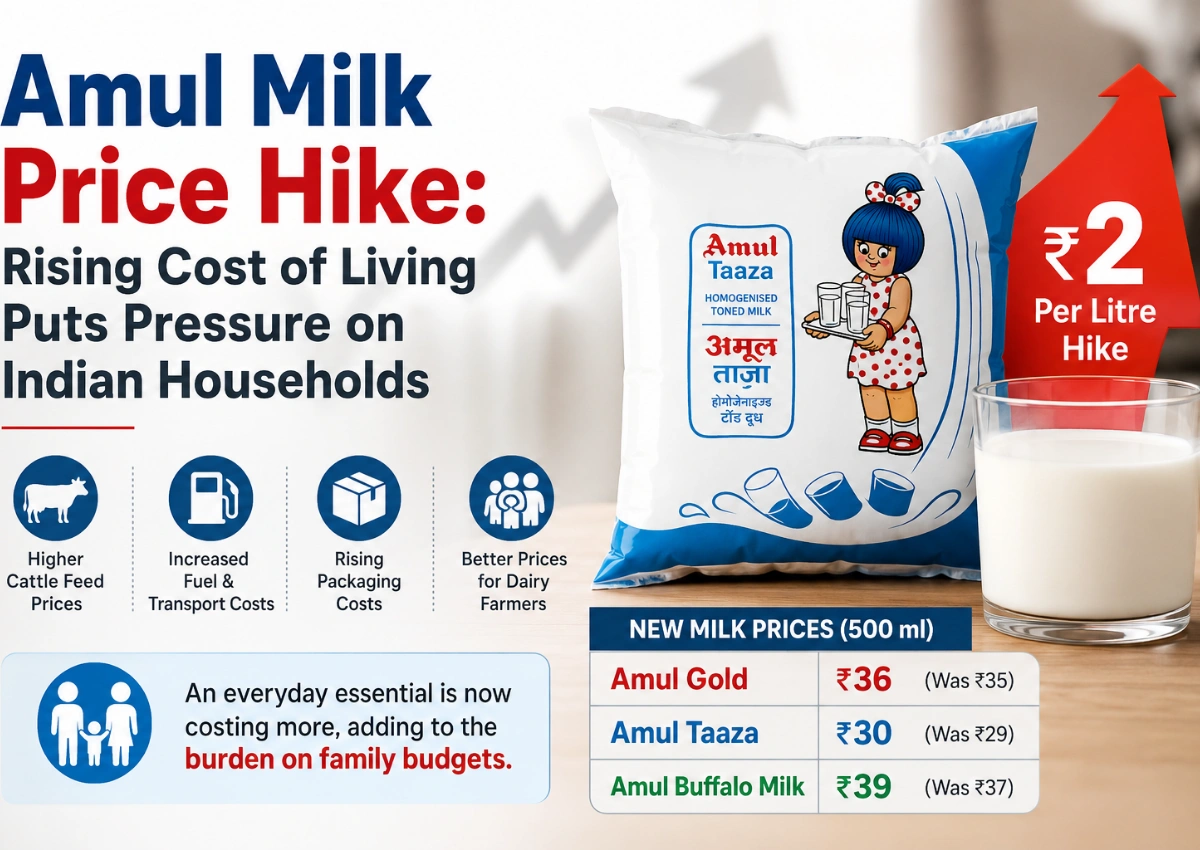
Amul – India’s biggest Dairy brand, Amul, has hiked the prices of Milk by the amount of Rupee 2 per litre on various tastes from 14 May 2026. Similar to other hikes, it stirred inflation worries and a rise in the cost of living.
This hike will make customers even more conscious about spending, as their grocery check-outs will increase. As per Gujarat Cooperative Milk Marketing Federation (GCMMF), the price hike has been one of the consequences of rising input costs like cattle feed, transportation fuel and other operating expenses. Yet, the dairy federation has claimed that the hike was ‘necessary for dairy farmers to survive and to keep milk prices stable’. Still, the hike has drawn protests from middle-class families and small businesses who rely on dairy products.
Milk is arguably the most widely used household commodity in Indian homes, and the rise in prices would mean a great deal of financial and emotional impact for the common family. Because of this, the recent increase in the dairy industry is also a product of the inflationary tension which is being faced nationwide.
What Has Changed?
Starting from today, the price of Amul’s most popular kind of milk has increased by Rs 2 per litre in these selected states. The increase affects:
- Full cream milk
- Toned milk
- Cow milk
- Buffalo milk
- Fresh dairy products linked to milk pricing
The company said the price revision was due to increased procurement prices and increasing payments to dairy farmers. As officials, increases in cattle feed prices, transportation costs, fuel prices and general inflation within the dairy supply chain have all contributed quite a bit to recent fluctuations in production economics. The price revision follows similar increases by several dairy brands in the past few years, showing how inflation is steadily affecting essential food items.
Why Milk Prices Matter So Much
Milk has its own list of special positions as it isn’t an occasional or luxury item but rather an essential need. It’s consumed by:
- Elderly citizens
- Working families
- Tea and food vendors
- Restaurants and sweet shops
On top of that, milk is closely related to nutrition and people’s everyday shopping. When it comes to luxury items, families tend to give up the habit of spending more and more money even the price of the items has increased.
This way, even a small increase would hit the household budgets hard, no matter how modest, at least for middle-class and poorer households already under strain. For a lot of families Yet increased milk prices have become the symbol of a bigger issue: the increase in managing cost of living.
Rising Inflation and Household Pressure
The rise in the milk price is to come at a time when there’s still much debate about the issue of inflation. Over the past few years, households have experienced rising costs in:
- Vegetables and other foodstuffs
- Fuel, transportation
- Kerosine gas
- Electricity
- Education
- Healthcare
So, all in all, the rise in milk prices is just further adding to the spiralling costs that middle-class families are already struggling with. Middle-class families, more than others, may be feeling the pain of these increases: rising costs without a corresponding salary or savings rate.
This is what economists term “cost of living pressure, ” where daily-use products continue to rise in price. The recent update is again raising fresh debate about the battle against inflation and people’s ability to afford to live.
Why Dairy Companies Are Increasing Prices
Dairy companies claim that milk prices need to be higher to end support for milk producers and the supply system. Several challenges are currently affecting the dairy sector:
- Increasing wages for cattle feed
- Increased Fuel Prices
- Transportation costs
- Climate-related stress on the supply of fodder
- Higher operating costs
Dairy cooperatives are also arguing that farmers should be paid more, as costs for modern cattle production technologies have risen sharply.
Advocates of the revision believe that securing farmers’ income over the long term is the key to maintaining a sustainable milk supply and supporting farming communities.
Public Reactions to the Price Hike
The public response to the increase in the cost of milk has been divided. Several consumers were venting their anger on social media due, in particular, to the increase occurring at a time when the cost of living is already rising.
- Goods are growing more and more costly
- Savings among the middle classes are falling
- Rising prices are hitting the stuff you need to live.
Yet, at the same time, some economists and dairy sector experts came out to defend the change, arguing that dairy farmers have no option but to produce. This debate exposes an underlying economic dilemma: the balance between producer sustainability and consumer affordability.
Long-Term Concerns for Consumers
When inflation of essential commodities is persistent, it may encourage households to gradually change behavior. Experts warn that rising food costs can bring:
- Lowered nutritional quality
- Budget reductions in other sectors
- Financial stress
- Less Saving at the Household Level
For lower-income families, even small daily increases become significant over time. What we should really be worried about is that this isn’t just a one-off increase, but a series of hikes over many different buying essentials.
Conclusion
Again, milk prices hike by Amul, the nation’s favourite, has brought back the focus and reminded us how much inflation affects each Indian family. Although it’s costing more to produce dairy products, whereas dairy companies claim that higher prices need to be charged to compensate for farmers and rising costs, it’s farmers and consumers that are most concerned.
This sums up economics on a larger scale, where people buying and people selling are both being impacted by inflation at the same time. Milk is one of the most important products in Indian homes, and this explains why even small hikes in price tend to find strong reactions from consumers.
Amidst persistent inflation across the industries, the task for industry and policymakers will be to maintain a balance between farmer welfare, long-term industry viability and affordability for consumers in an uncertain future.