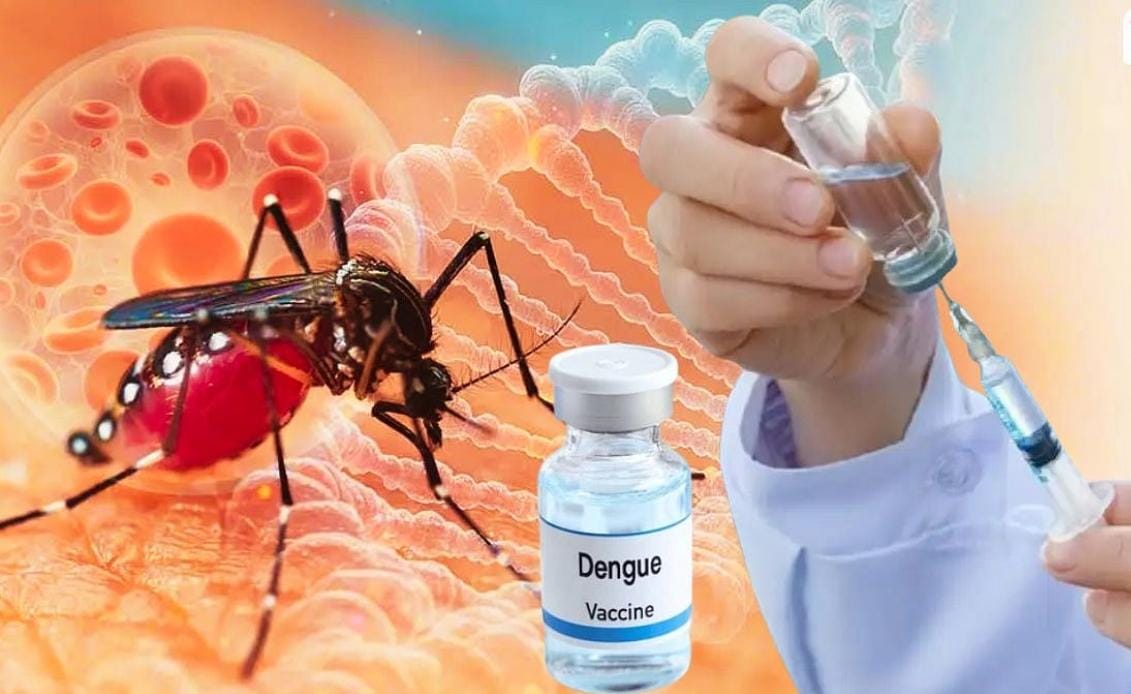
India’s First Dengue Vaccine: A Turning Point
India’s approval of its first dengue vaccine is a landmark public health achievement. The Central Drugs Standard Control Organisation’s (CDSCO) decision to clear Takeda’s recombinant live attenuated tetravalent dengue vaccine Qdenga®, marks the beginning of a new chapter in the country’s long and difficult battle against one of its fastest-growing vector-borne diseases.
The significance of this decision extends beyond the introduction of a new vaccine. It reflects the growing recognition that dengue is no longer a seasonal inconvenience but a persistent national health challenge. According to the National Centre for Vector Borne Diseases Control (NCVBDC), India reported over 2.33 lakh dengue cases and 297 deaths in 2024, while the country has consistently recorded more than two lakh infections annually in recent years. Climate change, erratic rainfall, rapid urbanisation, poor sanitation, and expanding mosquito habitats have made dengue a year-round threat in several states.
The newly approved vaccine offers protection against all four dengue virus serotypes, a critical advantage because infection with one strain does not confer immunity against the others. In fact, subsequent infections with different serotypes often carry a greater risk of severe dengue, haemorrhagic fever and shock syndrome. Backed by clinical trials in multiple countries, including India, and already approved in 42 nations with WHO prequalification, the vaccine has demonstrated an encouraging safety profile after over 24 million doses administered globally.
Vaccination Alone Is Not Enough
Yet, the approval must not create a false sense of security. Vaccination alone cannot eliminate dengue. Unlike diseases where immunisation can virtually interrupt transmission, dengue continues to depend on the density of Aedes mosquitoes. Unless breeding sites are eliminated, urban sanitation improves, and community participation becomes routine, outbreaks will continue despite vaccine availability.
Affordability will determine success. If the vaccine remains beyond the reach of ordinary households, its public health impact will be limited. Policymakers should explore phased inclusion in public immunisation programmes, especially in high-burden centres.
A Chance to Redesign India’s Dengue Strategy
The government must therefore view this approval as an opportunity to redesign India’s dengue strategy. The priority should be developing evidence-based vaccination guidelines identifying high-risk populations and endemic districts.
Equally important is strengthening surveillance. India needs real-time disease mapping, predictive outbreak modelling using weather data, faster diagnostics, and integrated mosquito control. Municipal bodies must be held accountable for eliminating breeding grounds before every monsoon rather than reacting after outbreaks occur.
Public awareness also requires a shift. Early symptoms are frequently ignored until patients develop complications. Timely diagnosis, hydration and medical intervention continue to save lives.
With such strategy, this approval may well be remembered as the moment India finally began turning the tide against dengue.
Dengue Situation in India: State-wise Cases and Deaths
Data from the National Centre for Vector Borne Diseases Control (NCVBDC) shows year-wise dengue cases (C) and deaths (D) across Indian states and Union Territories from 2021 to 2026.
| Affected States/UTs | 2021 | 2022 | 2023 | 2024 | 2025 | 2026* | ||||||
|---|---|---|---|---|---|---|---|---|---|---|---|---|
| C | D | C | D | C | D | C | D | C | D | C | D | |
| Andhra Pradesh | 4760 | 0 | 6391 | 0 | 6453 | 0 | 5555 | 2 | 2686 | 5 | 448 | 0 |
| Arunachal Pradesh | 7 | 0 | 114 | 0 | 130 | 0 | 20 | 0 | 170 | 0 | 5 | 0 |
| Assam | 103 | 0 | 1826 | 2 | 8208 | 7 | 2271 | 0 | 679 | 0 | 28 | 0 |
| Bihar | 633 | 2 | 13972 | 32 | 20224 | 74 | 10157 | 16 | 3902 | 2 | 54 | 0 |
| Chattisgarh | 1086 | 0 | 2679 | 10 | 2412 | 0 | 3523 | 2 | 513 | 0 | 20 | 0 |
| Goa | 649 | 0 | 443 | 1 | 512 | 3 | 567 | 3 | 105 | 0 | 7 | 0 |
| Gujarat | 10983 | 14 | 6682 | 7 | 7222 | 7 | 7891 | 6 | 4233 | 0 | 187 | 0 |
| Haryana | 11835 | 13 | 8996 | 18 | 8081 | 11 | 6469 | 9 | 2626 | 0 | 9 | 0 |
| Himachal Pradesh | 349 | 0 | 3326 | 1 | 1989 | 0 | 3359 | 0 | 229 | 0 | 14 | 0 |
| J & K | 1709 | 4 | 8269 | 18 | 6403 | 10 | 6876 | 1 | 3381 | 2 | 17 | 0 |
| Jharkhand | 220 | 1 | 290 | 0 | 2578 | 4 | 1528 | 0 | 401 | 1 | 13 | 0 |
| Karnataka | 7393 | 7 | 9889 | 9 | 19300 | 11 | 32886 | 27 | 7325 | 0 | 560 | 0 |
| Kerala | 3251 | 27 | 4432 | 29 | 17426 | 153 | 20674 | 128 | 10923 | 65 | 670 | 9 |
| Lakshadweep | 1 | 0 | 67 | 0 | 445 | 0 | 513 | 0 | 125 | 0 | 19 | 0 |
| Madhya Pradesh | 15592 | 11 | 3318 | 2 | 6979 | 0 | 10224 | 6 | 1941 | 0 | 94 | 0 |
| Meghalaya | 129 | 0 | 26 | 0 | 114 | 0 | 74 | 0 | 81 | 0 | 7 | 0 |
| Maharashtra | 12720 | 42 | 8578 | 27 | 19034 | 55 | 19385 | 40 | 14168 | 24 | 786 | 0 |
| Manipur | 203 | 0 | 503 | 4 | 2548 | 0 | 2463 | 5 | 5519 | 1 | 12 | 0 |
| Mizoram | 83 | 0 | 1868 | 5 | 2060 | 2 | 744 | 1 | 1482 | 0 | 75 | 0 |
| Nagaland | 24 | 0 | 154 | 0 | 4943 | 2 | 42 | 0 | 97 | 0 | 0 | 0 |
| Odisha | 7548 | 0 | 7063 | 0 | 12845 | 1 | 9892 | 0 | 2635 | 0 | 50 | 0 |
| Punjab | 23389 | 55 | 11030 | 41 | 13687 | 39 | 6260 | 13 | 4981 | 8 | 14 | 0 |
| Rajasthan | 20749 | 96 | 13491 | 10 | 13924 | 14 | 12514 | 5 | 4348 | 3 | 120 | 0 |
| Sikkim | 243 | 1 | 264 | 0 | 311 | 0 | 374 | 0 | 169 | 0 | 5 | 0 |
| Tamil Nadu | 6039 | 8 | 6430 | 8 | 9121 | 12 | 27378 | 13 | 23407 | 12 | 2873 | 1 |
| Tripura | 349 | 0 | 56 | 0 | 1447 | 0 | 1198 | 0 | 741 | 0 | 173 | 0 |
| Telangana | 7135 | 0 | 8972 | 0 | 8016 | 1 | 10077 | 0 | 8412 | 0 | 230 | 0 |
| Uttar Pradesh | 29750 | 29 | 19821 | 33 | 35402 | 36 | 15868 | 9 | 9206 | 3 | 102 | 0 |
| Uttrakhand | 738 | 2 | 2337 | 0 | 4320 | 17 | 494 | 0 | 992 | 0 | 0 | 0 |
| West Bengal* | 8264 | 7 | 67271 | 30 | 30683 | 4 | 441 | 0 | – | – | – | – |
| A& N Island | 175 | 0 | 1014 | 3 | 846 | 0 | 59 | 0 | 370 | 0 | 19 | 0 |
| Chandigarh | 1596 | 3 | 910 | 1 | 454 | 0 | 349 | 0 | 66 | 0 | 0 | 0 |
| Delhi | 13089 | 23 | 10183 | 9 | 16866 | 19 | 10585 | 11 | 4665 | 4 | 101 | 0 |
| D&N Haveli | 547 | 0 | 685 | 0 | 1178 | 0 | 403 | 0 | 212 | 0 | 3 | 0 |
| Daman & Diu | 279 | 0 | 228 | 0 | 284 | 1 | 278 | 0 | 132 | 0 | 26 | 0 |
| Puduchery | 1625 | 1 | 1673 | 3 | 2790 | 2 | 2128 | 0 | 902 | 1 | 186 | 0 |
| Ladakh | – | – | – | – | – | – | – | – | – | – | – | – |
| Total | 193245 | 346 | 233251 | 303 | 289235 | 485 | 233519 | 297 | 121824 | 131 | 6927 | 10 |
*Provisional till 28th Feb 2026. Source: National Centre for Vector Borne Diseases Control (NCVBDC)