India’s Telecom Innovation Push: Scindia Brings Startups, MSMEs and Investors Together to Build Indigenous Technologies
From building telecom products at home to selling them abroad, the Telecom Startups and MSME Conclave 2026 put India’s technology entrepreneurs in the spotlight
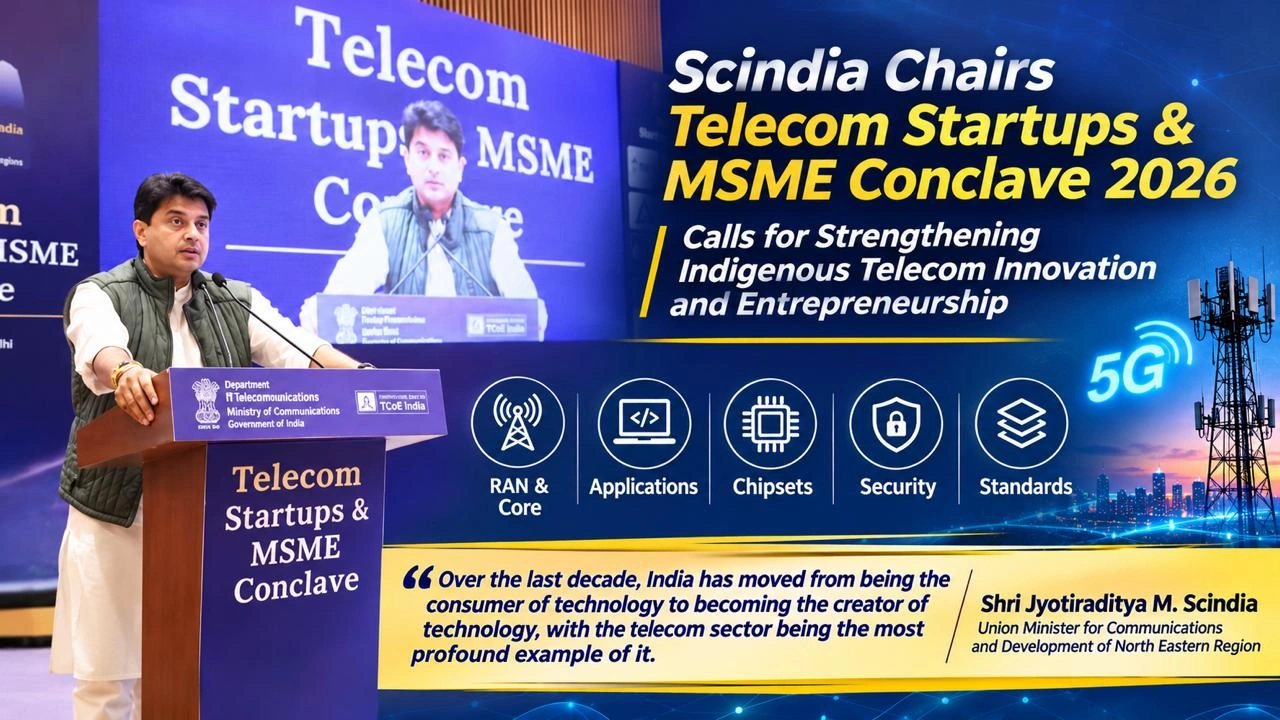
India built one of the world’s biggest telecom networks by buying technology. Now the government wants Indian companies to build it. That was the message on November 24 at the Telecom Startups and MSME Conclave 2026, chaired by Union Communications Minister Jyotiraditya M. Scindia at the Leaders Lounge, Bharat Mandapam, New Delhi.
Organised by the Department of Telecommunications (DoT), the conclave brought together startups, MSMEs, investors, industry leaders, academics and officials. Debjani Ghosh, Distinguished Fellow at NITI Aayog and Chief Architect of the NITI Frontier Tech Hub, delivered the keynote.
From Consumer to Creator
Scindia said that over the last decade India has moved from being a consumer of technology to a creator of it, and that telecom is one of the clearest examples. He pointed to the growth of the startup ecosystem, from only a few hundred startups in 2014 to more than two lakh today, and noted that India is now the world’s fourth-largest economy and market.
According to the minister, India’s telecom network market is the only one in the world growing at double-digit rates. A network of this size gives Indian startups something valuable: a large home market where they can test and prove their products before taking them abroad.
Five Areas That Could Shape India’s Telecom Future
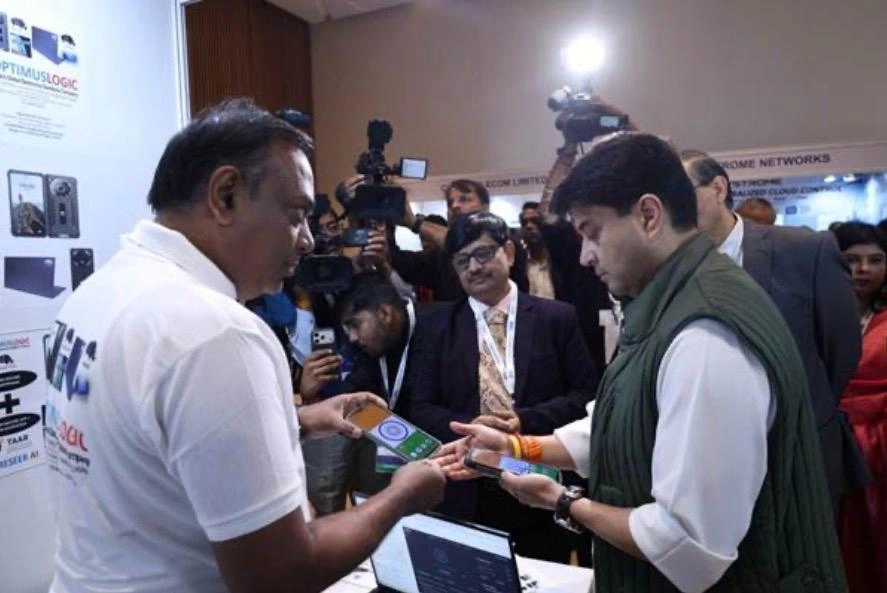
The conclave was built around five parts of the telecom technology stack. DoT presented its initiatives and policy measures for each.
ETH 2026: The Winners
The conclave also honoured the winners of the Emerging Technologies Hackathon 2026 (ETH 2026), run by TCoE India. It drew more than 2,870 registrations and 620 applications across nine technology domains, from students, startups, companies and academic institutions.
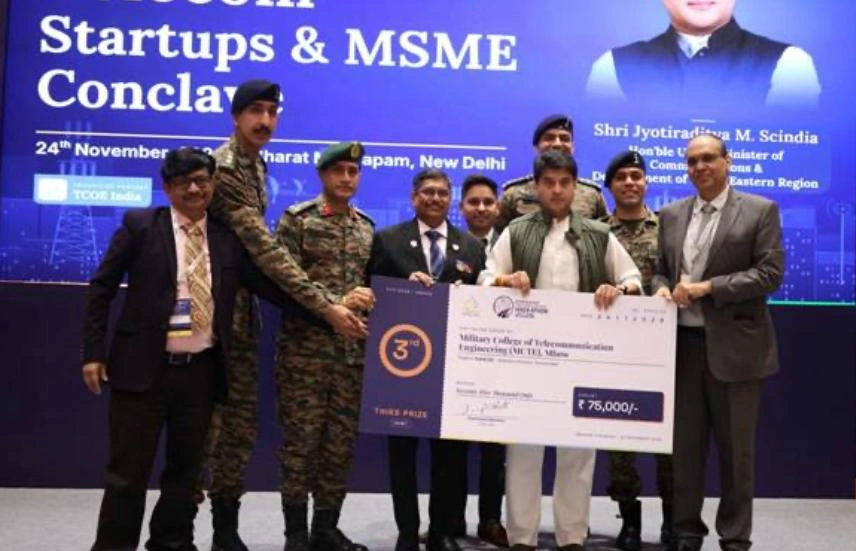
The winning ideas show how far telecom research now reaches: car electronics, fibre networks, cybersecurity and defence communications, not just mobile connectivity.
How the Government Is Backing Innovators
Building a good product is only half the job. Startups also need funding, testing facilities, clear rules, industry partners and buyers. DoT highlighted the support already available:
- Telecom Technology Development Fund (TTDF): funds research and development of indigenous telecom technology.
- Technology Development and Investment Promotion (TDIP) Scheme: supports technology development and investment, including research and global standards work.
- 100 5G Use Case Labs: places to build, test and demonstrate 5G applications across sectors.
- Telecommunications Act, 2023: provides for Captive Non-Public Networks (private networks for enterprises) and a Regulatory Sandbox for live testing of new telecom technologies.
Dedicated sessions at the conclave covered captive networks and the regulatory sandbox, with Ericsson sharing global experience on both.
Why It Matters for Startups and MSMEs
The real test for India’s telecom entrepreneurs is whether prototypes can become products that sell. The opportunities are spread across the stack: telecom hardware and components, chip design, 5G solutions for factories, hospitals, logistics and schools, network security, and export markets.
Getting there will take reliable products, competitive prices, manufacturing at scale and buyers willing to switch. That is why bringing investors, academia, policymakers and established companies into the same room matters as much as the technology itself.
The Road Ahead
Scindia called for an entrepreneurial ecosystem in which Indian innovators can drive the country’s technology growth, and DoT said the conclave reaffirmed its commitment to indigenous capability and collaboration, in line with the vision of Viksit Bharat@2047.
For India’s telecom sector, the next phase is not just about connecting more people. It is about building the technology behind those connections, and eventually selling it to the world.
Quick Answers: Telecom Startups and MSME Conclave 2026
What is the Telecom Startups and MSME Conclave 2026?
A DoT event held on November 24, 2026, at Bharat Mandapam, New Delhi, chaired by Jyotiraditya M. Scindia, to promote indigenous telecom technologies from startups and MSMEs.
Who won the Emerging Technologies Hackathon 2026?
Entra Innovations LLP (VAAYU) won first prize, Dawniens International (Cablesmith) second, and IIT Bombay’s Team DRISTI and MCTE’s Team RUDRA shared third.
Which government schemes support telecom startups?
TTDF, the TDIP Scheme and 100 5G Use Case Labs, plus captive network and regulatory sandbox provisions under the Telecommunications Act, 2023.