A few hours after India and New Zealand signed their long-awaited and much-touted Free Trade Agreement (FTAs), the agreement has been the most talked about discussions in the economic and diplomatic circuit. From an erstwhile proposed trade partnership, it emerged as a formalised and strategic accommodation between two nations for a more strengthened economic cooperation in a fast-changing economic context.
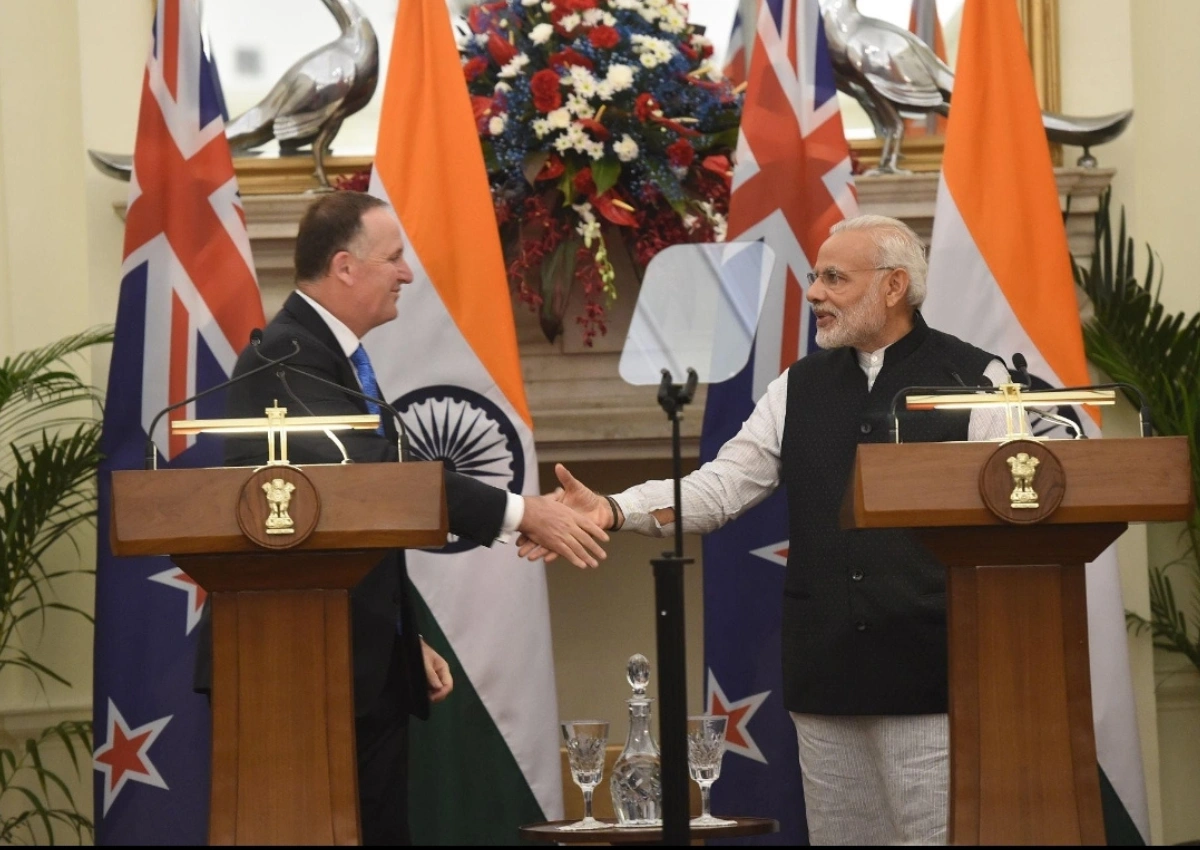
The pact was signed in New Delhi by Union Commerce and Industry Minister Piyush Goyal and New Zealand Trade and Investment Minister Todd McClay in the presence of senior officials of both.
Leaders have also called this deal a “once-in-a-generation” deal because of its impact on trade, investment and mobility in the long term. It has given India duty-free access for 100% of the tariff lines to New Zealand, and that is expected to double the bilateral trade to almost $5 Billion within five years.
Having signed the agreement, focus has moved from negotiations to implementation and what impact it will have on enterprises, workforces and trade relations.
What was signed
The India-New Zealand FTA consists of 20 chapters dealing with trade in merchandise, trade in services, dispute resolution, legal provisions, investment and mobility of professionals. There will be free duty access on nearly 8,284 items imported by New Zealand from India. Some of the main labour-intensive export items to New Zealand are textiles, leather footwear, pharma engineering goods, processed foods, gifts and handicrafts.
By way of compensation, the government has consented to lower or eliminate tariffs covering a significant proportion of New Zealand’s exports, especially wool timber, coal wine vegetables, and other commercially important commodities.
At the same time, important industries, for example, dairy products, edible oils, onions , sugar, and several commodities considered too sensitive to be exposed to competition have been protected.
This short of pro-trade globalization, pro-domestic protection compromise, turned out to be one of the most integral elements of the final agreement.
Immediate Economic Significance
The most immediate advantage for India is in terms of export competitiveness. With access to the NZ market on zero duty, Indian goods will now be cheaper.
Sectors like leather, textile carpets, marine products, gems & jewellery and engineering goods are likely to experience the maximum impact of this agreement. Industry associations have already expressed their enthusiasm for the pact, citing the fact that it would boost employment and provide a boost to exports for small and medium enterprises.
For manufacturing-oriented cities, this could have an immediate economic impact. India’s large consumer market has the potential to open up a longer-term opportunity for exports to New Zealand and also counterbalance risks that come from being overly reliant on a few global markets. This is particularly relevant amid the evolution of international trade tensions.
The $20 Billion Investment Commitment
A notable feature of the deal is New Zealand pledging to make a $20 billion investment in India over the next 15 years. The fund will go towards items like agriculture, manufacturing innovation, digital services and technology.
India’s Prime Minister Narendra Modi said this investment will be to the advantage of farmers, young people, women MSMEs, industrial art movers, startup institutions, students and innovators.
He said, The agreement would pave a stronger way for longer-term economic partnership. The FTA defined in the below edict is different from the generic free trade treaties, including the WTO’s one.
It builds up a larger economic partnership model aside from conventional free trade treaties on exports and imports.
Mobility, Jobs, and Professional Opportunities
Easier mobility for professionals and skilled workers is yet another significant result of the pact. Under the professional mobility pathway, there will be the creation of about 5000 visas to cater to students, skilled workers, yoga teachers, AYUSH practitioners, musicians, and entrepreneurs.
Which favors: this improves not only trade but also people-to-people relations: students and professionals in search of global exposure may take advantage of this with greater ease of access and enhanced cooperation of institutions.
These kinds of mobility reinforce academic connections and establish long-term trust not only through economic exchanges.
Political and Strategic Importance
Another reason the FTA holds importance, apart from its economic value, is its relevance in geopolitics. In the last couple of years, India has broadened its trade agreements with nations across Europe, Asia and Oceania in order to lessen undue reliance on established markets and reinforce Indo-Pacific alliances.
In the case of New Zealand, closer economic relations with India are also strategically desirable as a diversification away from the relatively established trade with other countries, such as less uncertain global supply chains.
The Prime Minister of New Zealand, Christopher Luxon, called the agreement a great opportunity for exporters. Call it a door into one of the most rapidly expanding economies of the world. The agreement is really not just commercial in nature; it also forms a part of a broader strategic international alliance.
Challenges Before Implementation
Though the FTA has been signed it is yet to become fully operational. It still awaits ratification by the New Zealand Parliament, which is hopefully due later in the year.
Implementation in India will be subject to administrative approval, trade readiness and business recognition. Some exporters, especially the smaller businesses, will require assistance in how to take advantage of the new tariff benefits.
Questions also exist on the ability of local industries to absorb more imports. It will continue to be an essential policy to preserve the farmers’ interests and equal competition. Trade agreements are not successful simply because they are agreed and signed; successful implementation too requires success.
Industry Response and Future Expectations
Most industry bodies have expressed positivity over the deal, describing it as a significant enhancement for the exports sector of India. Companies anticipate improved market access, increased investor confidence and boosted global competitiveness.
According to experts, the agreement could facilitate the expansion of future FTAs, since it encompasses open trade access, investment conditions and mobility arrangements.
If accomplished effectively, the India-New Zealand FTA could lead to greater collaboration in renewables, digital innovation, healthcare education and infrastructure among the two nations.
Thus, the agreement has the ability to shape major migratory flows and the whole direction of economic diplomacy.