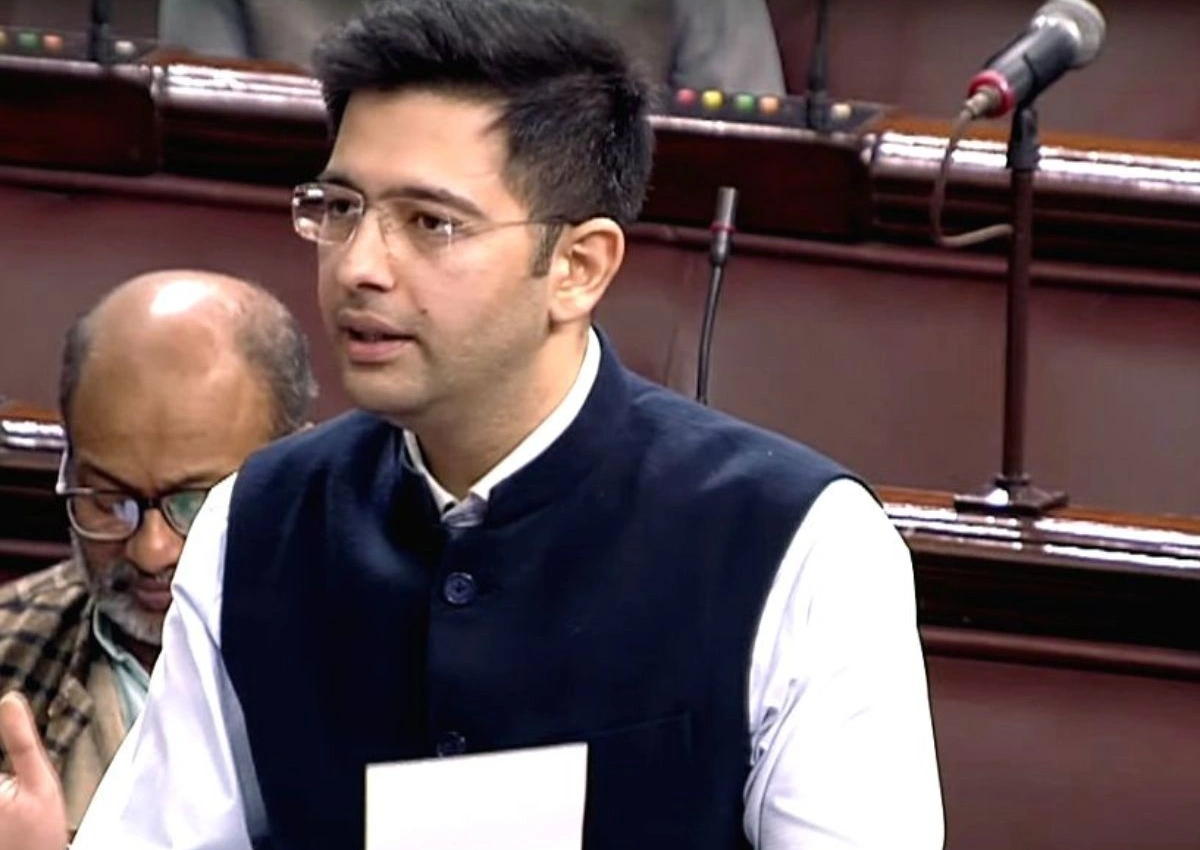
Out of nowhere, seven Rajya Sabha MPs – Raghav Chadha among them – switched from AAP to BJP, shaking up the usual political rhythm. This shift didn’t just rattle party equations; it quietly spotlighted a long-overlooked rule meant to hold loyalty together. Not often discussed, the Anti-Defection Law suddenly found itself back in conversation. Instead of fading into legal background noise, it now stands centre stage. What seemed like mere political manoeuvring peeled open deeper questions about allegiance and structure. From whispers to headlines, the law is being examined again – not by scholars first, but through real moves on the ground. With every change of seat comes scrutiny of the rules that try to contain such shifts.
Out of nowhere, the departure sparked more than just routine chatter. Not one or two, but several lawmakers left at once – timing that felt too neat to be a coincidence. Could this have been timed to slip past legal barriers? Hard to say, yet the situation shines light on how rules and power plays quietly shape each other inside parliament walls.
Was it about staying in power, carefully mapping moves ahead, or some mix of the two? That’s what people are trying to figure out now.
Understanding the Anti-Defection Law
The Anti-Defection Law was brought into effect by the 52nd Constitutional Amendment Act of 1985 which incorporated the Tenth Schedule into the Constitution. The main objective was to discourage representatives from changing political outfits for their individual advantage, which had turned into a common feature and was referred to as “Aaya Ram, Gaya Ram” kind of politics.
According to this law, a legislator at the parliamentary or assembly level could be disqualified if he or she leaves the party or votes against it without the consent of the party leadership.
Besides, the law sought to ensure that the country remains politically stable and stops the government from falling simply because of wrong behaviour among representatives motivated by the desire for power and money.
Yet, politicians in the process of time have found ways, legally as well as strategically, to maintain their political positions in the light of the same law, only to be disqualified later.
The Two-Thirds Rule and Merger Provision
The merger provision is one of the key exceptions under the Anti-Defection Law that has been broadly interpreted for a long time to accommodate political realities and defectors’ rights. If two-thirds of the members of a legislative party decide to merge with another party, they won’t be eligible for disqualification.
This provision was intended to differentiate between political realignment and defection, thereby not treating every change of side as defection. In the latest Rajya Sabha case, it’s said that seven of the ten AAP MPs were moving together, which means that they passed the requirement of two-thirds for protection.
This strength in numbers played a vital role. Suppose only one or two MPs had left on their own; then they would have been liable to disqualification right away. However, by acting together, they invoked a legal defence under the constitutional provisions.
Hence, many interpret this situation as more than mere personal choices; it is a reflection of well-planned political calculations.
Why the Raghav Chadha Case Matters
Raghav Chadha was among the top faces of AAP who were highly visible and well-known. Being a young Rajya Sabha MP and a close associate of Arvind Kejriwal, a lot of his political identity came from being part of the party’s national image.
His choice to go out, along with six others, drastically reduced AAP’s parliamentary strength and increased BJP’s presence in the Upper House. Because the action was taken as a group, it not only altered the topic of debate from mere political emotions to constitutional and legal issues, but it also opened the door to different interpretations.
Why the case is important is that it demonstrates how the Anti-Defection Law, which was originally a legislative provision aimed at preventing the changing of political parties by members, can be circumvented by the very same members using the provisions of merger.
This brings us to a very serious issue: does the law really prevent defection, or does it only alter the manner in which defections occur?
Political Strategy Behind the Move
Political analysts have argued that such a large-scale group movement was hardly a mere accident. The very fact that the members were two-thirds of the party strength points towards working out the planning, negotiation and timing aspects.
By guaranteeing the presence of the necessary numbers, the leadership strategy protected their Rajya Sabha seats while changing the political affiliation. So it’s really no surprise that they managed to keep their seats that way and didn’t have to face re-election. Especially in the Rajya Sabha, where the fixed term and the limited number of seats make the membership protection a big strategic issue.
For the BJP, it turned out to be a move with both symbolic and practical advantages. It not only undermined the opposition party but also gave further weight to the national political narrative of the BJP. On the other hand, MPs who are going to have a way to continue their political journey without having to give up their parliamentary position. Therefore, numerous observers characterise this as a constitutional tactical step rather than a mere act of defiance.
Criticism of the Anti-Defection Law
The issue around Raghav Chadha highlighted the fact that many people are criticising the Anti-Defection Law in the first place. Some believe that it was only intended to prevent corruption and political instability, but in fact, it also killed the ability of lawmakers to act independently.
Because politicians are usually told how to vote by the party leaders, the MPs and MLAs have little room to voice their own opinions. In addition, the merger clause provides a loophole through which it’s safer for groups of people to defect together than individually, following their own conscience.
Those who criticise say it leads to less democratic accountability. If a politician switches parties along with enough people, the act becomes legal, although the public is likely to perceive it as mere political opportunism.
However, some say it’s still an important tool for keeping coalition politics stable and the government free from continual disruptions.
So far the dispute hasn’t been settled and incidents like these only fuel the discussion.
Effect on AAP and Other Political Parties in Opposition
The first and most direct consequence for AAP will be a significant disruption of their parliamentary strategy. The reduction in the number of Rajya Sabha MPs directly diminishes their ability to assert their presence and voice at the national level. Besides, the setback may shake the public’s faith in the party, resulting in complications during alliance negotiations.
Besides dealing with the legal issues, AAP risks a narrative blow if its leader, Raghav Chadha, exits. The public might begin doubting their leadership and question the party’s discipline and prospects for stability.
Opposition as a whole may interpret the incident as a symptom of the real difficulty in keeping factions together in an intensely competitive political arena. Especially, small parties at the margin would have to be extremely careful about their leadership development and presence in the parliament.
Besides this, the incident is likely to change how defections are used as a political weapon among parties. Legal considerations would play a far-reaching role in the political manoeuvring.
Constitutional Ethics vs Political Practicality
This issue stems from a fundamental tension between constitutional ethics and political practice. While the constitution aims for stability and accountability in governance, politics frequently rely on negotiation, survival and making strategic alliances. If the law permits a group merger, is resorting to that law unethical, or just politically clever? A straightforward answer to this question is quite elusive.
Those in favour of the merger may simply call it a legitimate political move, whereas the opponents may view it as a breach of trust with voters. We can say that law defines what a that’s legal. However, public opinion largely determines what’s deemed legit. The gap between what’s legally right and what’s morally seen as right is a major reason why this case is critical in a democracy.