Creative Economy Forum Season 4 is scheduled to bring policymakers, entrepreneurs, artists and creative-industry professionals together in New Delhi on September 18–19, 2026.
The fourth season of the Creative Economy Forum is scheduled to take place at the PHD Chamber of Commerce and Industry in New Delhi on September 18 and 19, 2026. The two-day programme is expected to bring together participants from business, media, entertainment, fashion, technology, culture and public policy.
Organisers have announced “Rise of Creative Bharat” as the central theme. The programme is designed to examine how creative work can be developed into sustainable businesses, intellectual property and internationally competitive Indian brands.
Why the Creative Economy Matters
The creative economy includes sectors in which ideas, artistic expression and intellectual property create economic value. Film, music, publishing, advertising, design, animation, fashion, crafts, gaming and live entertainment all form part of this wider ecosystem.
According to UNESCO, cultural and creative industries contribute about 3.1% of global gross domestic product and account for approximately 6.2% of employment worldwide. These figures show why creative work is increasingly being discussed alongside trade, technology, skills and economic development.
India has a large base of artists, craftspeople, filmmakers, designers, musicians, digital creators and technology professionals. However, converting creative talent into stable businesses can require better access to finance, professional training, distribution networks and intellectual-property protection.
Subjects Expected to Shape the Forum
The announced programme places emphasis on the commercial and policy challenges facing creative enterprises. Discussions are expected to explore the relationship between cultural influence and practical business requirements.
- Financing and investment for creative businesses.
- Protecting and commercialising Indian intellectual property.
- Artificial intelligence and its impact on human creativity.
- Fashion, media, entertainment and music technology.
- Heritage, traditional crafts and contemporary markets.
- International collaboration and cultural diplomacy.
- Creator platforms, fandom and brand communities.
From Creative Talent to Sustainable Enterprise
One of the sector’s central challenges is helping creators move from individual projects to sustainable enterprises. Creative professionals may produce culturally valuable work but still face difficulties with funding, contracts, market access and long-term income.
Forums of this kind can be useful when they connect creative practitioners with investors, policymakers, technology specialists and business advisers. The value of such meetings ultimately depends on whether discussions result in practical partnerships, improved market access or clearer policy recommendations.
Intellectual property is another important subject. Films, music, characters, designs and digital formats can become valuable assets when ownership is clearly established and creators have the ability to license their work across platforms and markets.
Technology and Artificial Intelligence
Digital platforms have made it easier for creators to reach audiences, but they have also changed how creative work is produced, distributed and monetised. Artificial intelligence is adding new questions concerning copyright, attribution, employment and the value of human creativity.
UNCTAD’s Creative Economy Outlook highlights digitalisation and artificial intelligence as major forces shaping the sector. For Indian creative businesses, the opportunity lies in using new technology while protecting original work and ensuring that creators participate fairly in the value generated from it.
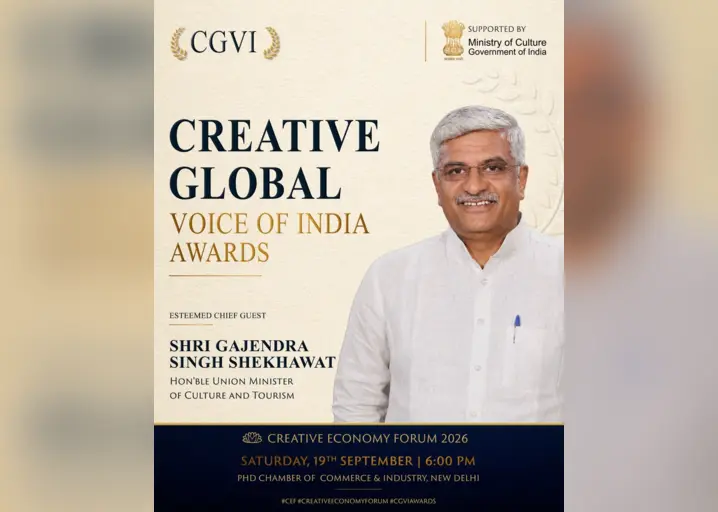
Creative Global Voice of India Awards
The programme also includes the Creative Global Voice of India Awards. According to the organisers, the awards are intended to recognise individuals, organisations and businesses working across India’s creative industries.
The forum format is expected to include discussions, exhibitions, networking sessions, business meetings and award presentations. Final speaker line-ups and programme timings may change before the event, so attendees should confirm the latest information through the official event website.
What to Watch
The most meaningful outcome would be a clearer route for creative professionals to access finance, protect their intellectual property and reach domestic as well as international markets. Attention should also remain on fair pay, skills development and sustainable careers within the sector.
Creative Economy Forum Season 4 arrives at a time when culture, technology and commerce are becoming increasingly connected. Its long-term relevance will depend on whether the ideas discussed in New Delhi lead to measurable opportunities for creators and creative businesses.