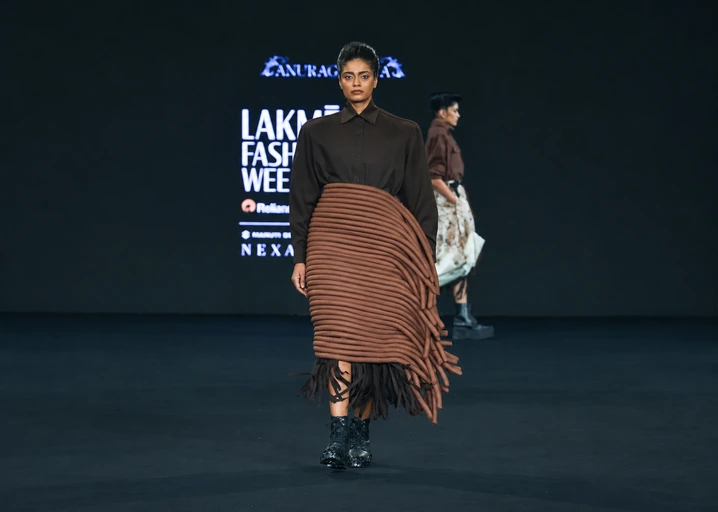
Anurag Gupta Turns Water Hyacinth Into Fashion With ‘Artisanal’ at Lakmé Fashion Week
Rooted in his hometown Biskohar in Uttar Pradesh, the collection pairs raw woven textures with Project Biskohar, a proposed craft-based livelihood plan for women
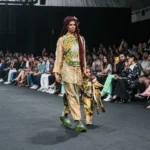
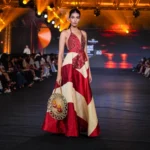
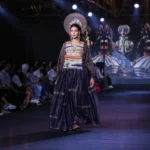
Designer Anurag Gupta presented his latest collection, ‘Artisanal’, at Lakmé Fashion Week in partnership with FDCI at Taj Palace, New Delhi, on 16 October 2026. The collection is inspired by Biskohar, a village in Uttar Pradesh’s Siddharthnagar district where Gupta grew up, and it draws attention to the lives of women whose economic circumstances and limited livelihood opportunities have historically left them dependent on sex work. Through unconventional materials, artisanal techniques and contemporary silhouettes, the show reflected Gupta’s view of fashion as a platform for dialogue, dignity and economic independence.
From an Environmental Nuisance to a Craft Material
At the centre of ‘Artisanal’ is Jalkumbhi, or water hyacinth, an invasive aquatic plant usually seen as an environmental nuisance. Gupta looked at this overlooked resource as a craft material that could create new livelihoods for women in Biskohar. Once harvested, dried and processed, the plant’s fibres can be woven into durable textiles and handcrafted objects.
From Plant to Textile
The Design Language
The collection turned that material exploration into a distinct design language that combines structured tailoring, raw woven textures and deliberate surface manipulation. Architectural forms, layered constructions and tactile detailing celebrate the relationship between natural materials, contemporary design and the skill of the human hand.
The Design Language of Artisanal
Project Biskohar
The show also put the spotlight on Project Biskohar, an initiative envisioned by Label Anurag Gupta to create alternative livelihood opportunities through craft-based employment. It is built around turning locally available water hyacinth into marketable products, and it proposes practical training, fair compensation and home-based earning for women from the community.
A proposed 30-day training programme aims to equip an initial group of 30 women with skills in harvesting, processing, weaving and product development, with stipends during the learning period. With the support of Earthomadic Foundation, the initiative seeks to connect traditional craft knowledge with design, production and access to markets, creating a route towards steady income and greater financial independence.
Skills the Programme Aims to Teach
A Homecoming With a Larger Purpose
The collection was a homecoming with a larger purpose. Instead of showing the women of Biskohar through the lens of vulnerability, ‘Artisanal’ puts their skills, resilience and aspirations at the centre of the story. It looks at how a material often thrown away as waste can become something of value, drawing a parallel with recognising opportunities that have long been overlooked. Through its focus on craftsmanship and thoughtful material innovation, the show reinforced the belief that fashion can go beyond creative expression and encourage conversations around opportunity, choice and long-term social impact.
In Anurag Gupta’s Words
With ‘Artisanal’, Gupta presented a collection that reaches beyond the runway, bringing together the stories of his hometown, the possibilities of material innovation and a vision for greater economic opportunity. By placing the women of Biskohar and their aspirations at the heart of the story, the show offered a reminder that fashion’s impact can extend beyond what is worn, creating space for new skills, independent livelihoods and futures shaped by individual choice.
At a Glance
Quick Answers
What is Artisanal about?
A collection inspired by Biskohar, Anurag Gupta’s hometown in Uttar Pradesh, exploring water hyacinth as a craft material that could create new livelihood opportunities for women in the village.
What is Project Biskohar?
An initiative envisioned by Label Anurag Gupta to create alternative livelihoods through craft-based employment, proposing practical training, fair compensation and home-based earning for women.
How will the training work?
A proposed 30-day programme aims to train an initial group of 30 women in harvesting, processing, weaving and product development, with stipends during the learning period.
When and where was it presented?
On 16 October 2026, at Taj Palace, New Delhi, as part of Lakmé Fashion Week in partnership with FDCI.
About FDCI
The Fashion Design Council of India (FDCI) is a non-profit organisation and the apex body of fashion design in India, represented by over 400 members. Its prime objective is to propagate the business of fashion. More at www.fdci.org.