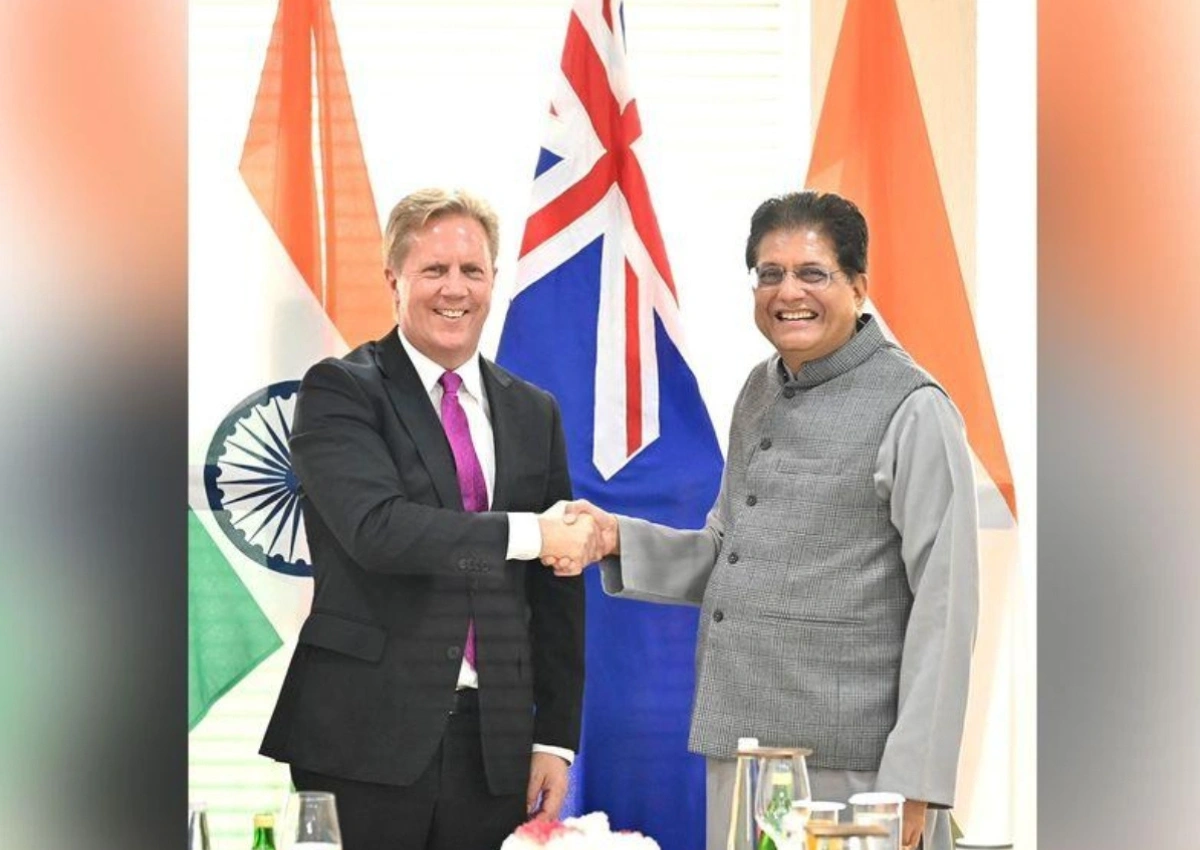
On 27 April 2026, India and New Zealand will sign an important Free Trade Agreement (FTA), which is a significant move toward deepening the economic and diplomatic ties of the two countries. It’s believed that the FTA will give rise to easing market access, elimination of trade barriers, expansion of investment avenues, and development of stronger partnerships in different domains such as agriculture services, manufacturing, and technology. This historic trade pact will be formally signed in New Delhi at Bharat Mandapam by the Union Commerce and Industry Minister Piyush Goyal and the New Zealand Trade and Investment Minister Todd McClay.
Sources reveal that the pact targets a doubling of the bilateral trade volume to approximately $5 billion within the next five years. Aside from trade, this initiative also plays a crucial role in India’s wider plan for developing global partnerships, adapting to the changing economic landscape of the world.
India and New Zealand have always enjoyed friendly diplomatic and trade relations over the years, yet the level of economic interaction between the two has remained limited compared to what was possible. For many years, the FTA trade talks stalled before they were given new impetus recently.
Last year, negotiations resumed after a nearly ten-year break, and the deal was made final remarkably only nine months after officials began the discussions in March 2025. This shows how much both nations now consider the diversification of trade partnerships and the reduction of reliance on traditional markets as matters of priority.
Highlights of the Agreement
The FTA’s feature that Indian exports will get 100 per cent duty-free access to the New Zealand market is the most significant. It means almost all the products from India, particularly the labour-intensive ones such as leather footwear, textiles, engineering goods, and pharmaceuticals, will go duty-free. Duty-free access is mentioned for approximately 8,284 Indian export items.
On the other hand, India plans to cut down or completely end duties on around 95% of New Zealand’s exports. Some of these products are wool, coal, wood products, wine, avocados, and blueberries. India, on the other hand, has made certain exceptions in sensitive sectors like dairy products, edible oils, and certain agricultural products to protect the interests of the domestic farmers and industries.
There’s a significant investment element in the contract, as New Zealand is expected to infuse around $20 billion in India within the next 15 years. Along with this, a 5,000-visa professional mobility pathway will likely be initiated to facilitate skilled workers and business professionals.
India’s Economic Benefits
Through the agreement, India would get huge export prospects. The better market access to New Zealand, especially small and medium-sized industries, and sectors like leather textiles, handicrafts, carpets, spices, and engineering products, stand to benefit most. Commerce Minister Piyush Goyal cited that the city of Agra, which is renowned for leather and handicrafts, can be a big winner as a result of broader access to the market. This has the potential to increase employment opportunities and raise manufacturing levels locally.
Besides, this pact might be an alluring factor for the flow of foreign investments and develop the confidence of investors. When the global economy is riddled with uncertainties, partnerships in trade help in providing a certain level of stability and thereby motivate the industrial sector to grow.
Benefits for New Zealand
New Zealand is also a major winner from the deal. Gaining entry to India’s huge consumer market opens up possibilities for exporting goods, especially those produced by the agriculture, horticulture, and industrial sectors. Lower tariffs and simplifications in procedures, combined with easier access to the Indian markets, are likely to benefit products such as wool, timber, fruits, and wine. Besides that, the investment provision enhances economic cooperation in the long run.
The New Zealand government has considered the FTA as a strategic diplomatic accomplishment, besides the trade aspects. Quite unexpectedly, even the opposition Labour Party in New Zealand backed the agreement, facilitating its passage through the Parliament, notwithstanding the resistance of one coalition partner. The bipartisan support makes it clear that the deal is viewed as a long-term national interest rather than a mere political decision.
Strategic and Geopolitical Importance
Free Trade Agreement isn’t just a trade instrument; it has a geopolitical significance as well. In a situation where the global supply chains have been disrupted, protectionism is on the rise, and regional alliances are changing, countries seek their economic partners whom they can rely on.
India has always attempted to establish trade with countries across Europe, Asia, and Oceania. The deal with New Zealand not only raises India’s stance in the Indo-Pacific region but also indicates the emergence of India as a major player in the field of international trade diplomacy. For New Zealand, getting closer to India would be a way to reduce its economic dependence on only a few big markets and, at the same time, to open up new strategic options.
Concerns and Challenges
Aside from all the positive aspects, there are still some issues that need to be addressed. For example, in India, farmer organisations and other players in agriculture generally remain sceptical about FTAs, especially if the import of certain commodities could hurt domestic producers.
This is the main reason why even agricultural sectors like dairy have been excluded from the agreement. The government’s balancing act between protecting local farmers and promoting trade expansion is a subject of much debate and will likely continue to be so.
Besides that, there are also challenges related to the implementation. Trade agreements don’t really create added value for the economy if companies aren’t capable of taking full advantage of the newly created potential. To get actual results, infrastructure logistics, regulatory clarity, and the level of exporters’ awareness will have to be at a sufficient level. Done poorly, follow-up is what distinguishes agreements that are merely strong on paper from those that have made a difference.
The Future of Bilateral Relations
The signed India-New Zealand FTA is probably the starting point of the two countries deciding to cooperate on a wider front that includes areas other than trade. Armies of mutual visitors (education tourism digital services, renewable energy, and technology partnerships) are bound to be a lot stronger if economic trust between the nations continues to be built.
Besides business ties, mobility pathways for professionals and students will also get people-to-people relations to a higher pitch. This way, long-term diplomatic understanding also gets strengthened, albeit indirectly.
The new agreement is therefore able to serve not only as a way of showcasing trade policy that brings about economic development, but also as one that facilitates strategic international cooperation.
Its success will largely hinge on the two governments’ performance with regard to fulfilling their commitments and the industries’ acceptance of new opportunities.