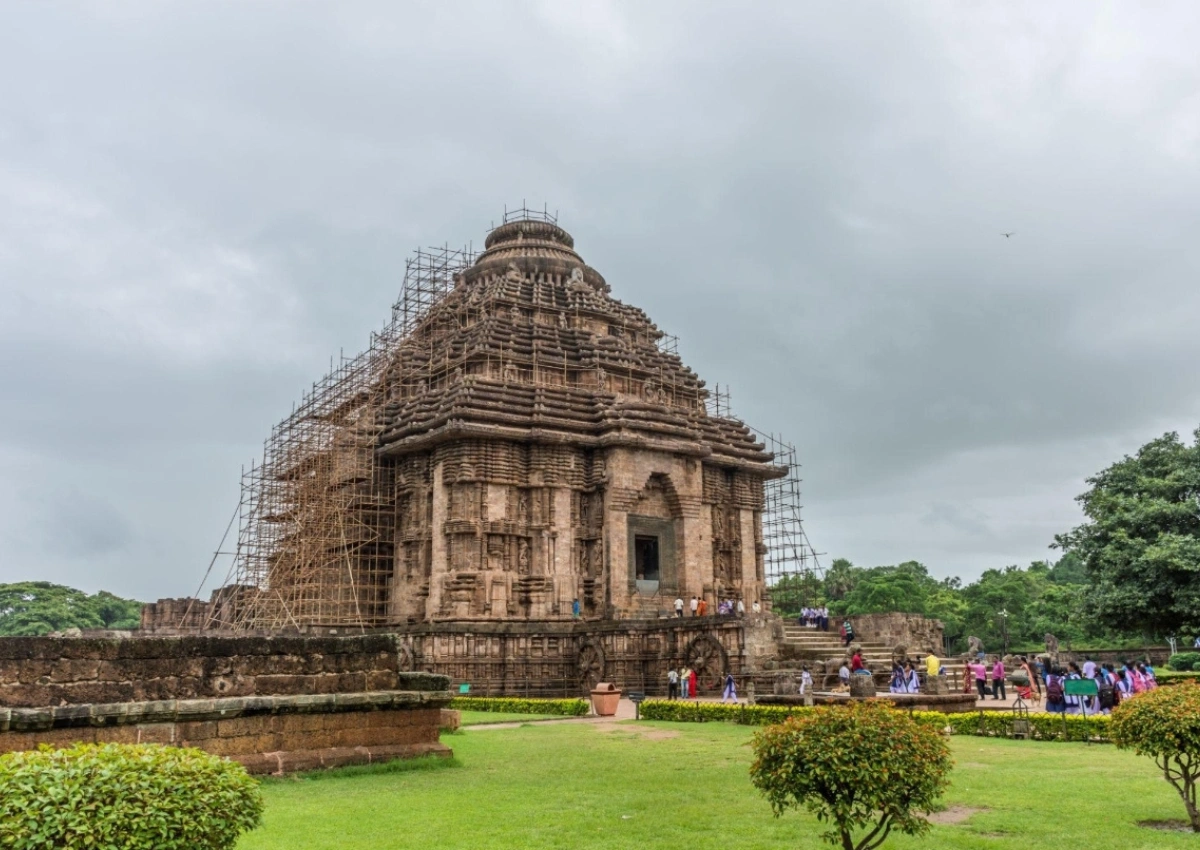
The Konark Sun Temple, situated in Odisha, is amongst the most extraordinary specimens of ancient Indian architecture and cultural legacy. It was constructed in the 13th century under the rule of King Narasimhadeva I of the Eastern Ganga dynasty and the temple is consecrated to the Sun God, Surya. Besides its magnificent structure shaped like a massive chariot, the temple is also famous for its elaborate stone sculptures and it has historical importance as well. It has been declared a UNESCO World Heritage Site and still stands as a representation of artistic brilliance and spiritual faith.
Currently, the Archaeological Survey of India (ASI) has taken the initiative to restore the temple in a major way by getting rid of the British-era sand that was filled inside the Jagamohan, or assembly hall, of the temple over a hundred years ago. This action has generated interest again in the role of heritage preservation and the importance of keeping the structural integrity of national heritage sites.
Such a move is not only crucial for the historians and conservationists but also for those citizens who consider the monuments as an integral part of national identity and cultural memory.
Historical Background of the Temple
The Konark Sun Temple was built approximately in 1250 CE and is shaped like a huge stone chariot having twelve pairs of wheels and seven horses, signifying the sun’s journey across the sky. The temple used to be a significant pilgrimage center and its architecture and engineering showcased the highest skills of the period.
The temple walls’ engravings show various aspects of life including the story of gods and goddesses music dance, animals, and heavenly figures among others. These images are a great source for understanding the traditions and ways of life of people during those times.
Nevertheless, through the ages, exposure to nature, attacks, and lack of care led to a lot of damage to the structure. The main part of the sanctuary had fallen down with time, and the worries about the structural integrity of the rest had been increasing slowly.
British-Era Intervention and Sand Filling
The engineers during the British rule in the early 20th century were concerned about the Jagmohan part of the temple turning weak and even toppling down. To stop the temple from getting damaged any further, they came up with an idea of filling the inside of the building with sand and covering it with stone and masonry.
Back in those days, it was believed that through this way the walls could support each other and the outside remain intact. However, it also meant that after this method no one was able to check the inside state of the monument until the present time.
Nevertheless, the sand probably helped in a way that they could save the temple from destruction at least for some time; however, later on, experts were alarmed that if the moisture is kept inside and the temple is not being properly monitored, then maybe it will cause some other major issues with the structure in the future.
ASI’s Restoration Efforts
In fact, the Archaeological Survey of India is finally taking the sand out of the Jagamohan starting from April 2026. This certainly is a significant conservation effort that is being done at the site.
ASI has also taken great care in ensuring that no damage is done to the temple during the removal of the sand. The ASI team is using advanced equipment such as 3D mapping, laser scanning, and structural analysis, not only to visualize the internal part of the temple but also to help them in the restoration works.
The primary concern is to understand the actual capacity of the monument so as to sustain and also to make a strategic plan for a long-term maintenance based on the latest conservation techniques and principles.
They have already said that the works will go on bit by bit and with utmost care so that safety and historical genuineness both are ensured.
Importance of Heritage Conservation
The body of work at the Konark Sun Temple brings to light the larger issue of heritage conservation in the country. Historical monuments are far more than mere tourism sites; they are living records of a civilization art religions, and identity.
Maintaining these structures through time is one way of enabling the descendants to see and appreciate the greatness and principles of the past. Besides that, it also intensifies cultural consciousness and assists in education research as well as tourism.
If heritage sites are neglected, it may cause permanent damage. If original sculptures, building features, or writings are impaired, they can only be somewhat recreated. Therefore, it is crucial that a restoration is made on time, and a proper maintenance is carried out.
Moreover, conservation involves achieving a compromise between allowing public access and preservation. If monitoring is not done properly, over-tourism, pollution, and poor management will be detrimental to the fragile heritage monuments.
Challenges in Restoration
Restoring historic monuments is a complicated task. The restoration experts have to figure out ways to deal with weathering erosion past repairs, and the danger of changing the highly original features of the monument.
In Konark’s case, the removal of the sands has to be carefully done, as the building has been resting on that support for more than a century. The slightest change could affect the balance of the monument.
Besides that, the restoration has to keep the monument as authentic as possible. If the restoration turns into a complete new construction, it would be a loss for the history. The aim should be to save the original structure and not come up with a new style.
Also, the restoring and preserving of a heritage site would require adequate funds, skilled labor, and regular supervision. Conservation of heritage is a long term commitment rather than a one-time initiative.
Public and Cultural Significance
Konark Sun Temple means a lot culturally and emotionally to people from all over the country. Besides the historical relevance, it is also a symbol of artistic excellence and spiritual heritage.
This temple is considered to be the treasure of the cultural heritage of Odisha and has been the main source of inspiration to scholars photographers tourists as well as to devotees from many parts of the world. The Konark Dance Festival is only one of the many ways through which this monument connects itself to the living art and performance traditions.
Therefore, restoration has spread the awareness and frilled the support of the public because people have understood that such historical treasures must be saved from old age which ultimately leads to the depletion of these sites. Enlightenment is definitely very significant in the case of restoration. People, local communities and schools can all help by encouraging responsible tourism and by showing respect to the heritage areas.
Conclusion
Restoring the Konark Sun Temple is not just a technical conservation task, it is a great way to keep a precious part of history alive for future generations. Clearing out the old sand and re-examining the structure are just some of the ways that the ASI is making sure that this beautiful and iconic monument of the country will be around for a long time.
Such work of heritage preservation takes the joint efforts of government, experts, and community.
Heritage sites are not just eras gone by, they are also the main pillars of culture and national identity. Besides being treasured as physical remains, the monuments preserved with care, scientific knowledge, and dedication stand as testimonies of the accomplishments of the past to be seen and admired by generations yet to come.