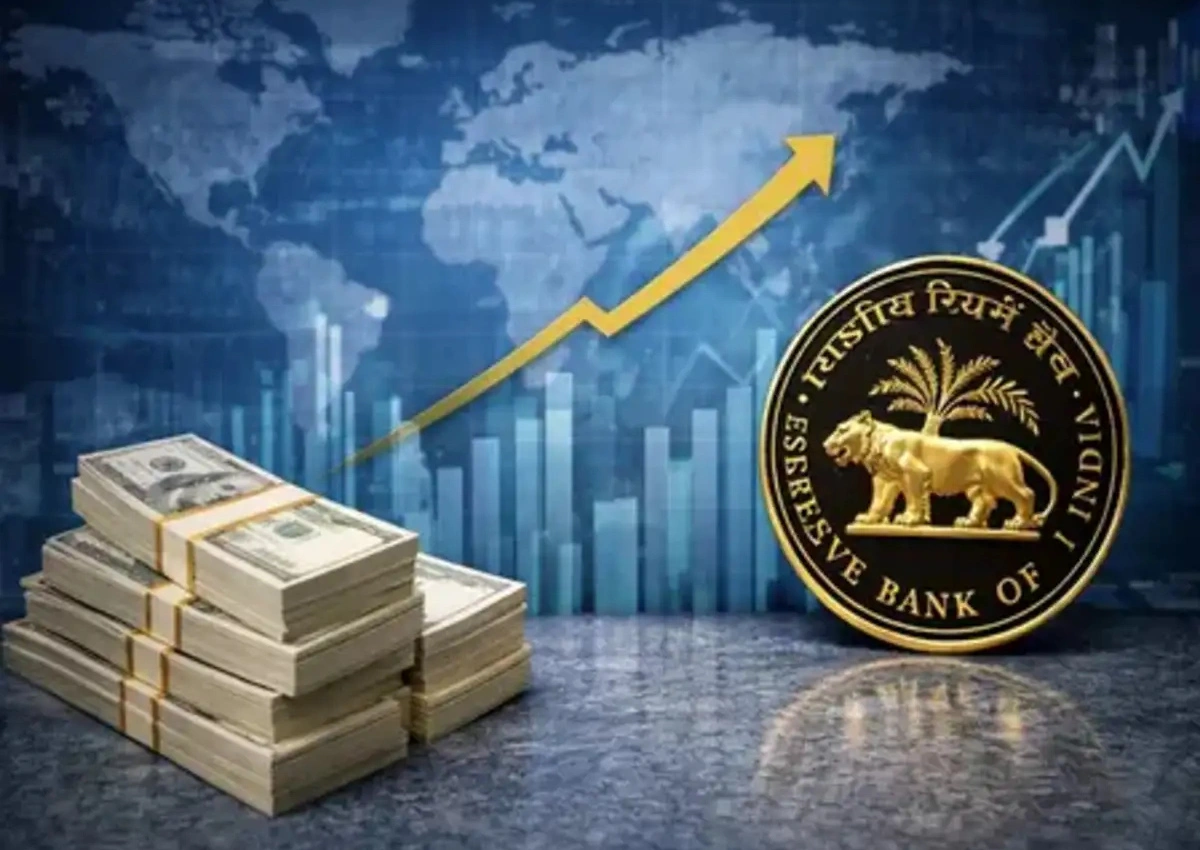
India’s fforex reserves have once again crossed the psychologically significant mark of $700 billion. As per the Reserve Bank of India (RBI) latest statistics dated April 17 2026 the nation’s forex kitty increased by $3.825 billion to $700.946 billion in the week ending April 10, 2026. This is the second weekly incline in a row and the highest level recorded in 2026.
The rally has happened after the fall caused by RBI interventions to support the rupee due to global uncertainties especially in West Asia. The reserves were at a record level of $728.49 billion at the end of February 2026 but the moderation in March was due to the dollar sales and changes in the valuation of gold holdings.
The Reserves Breakdown
RBI’s weekly statistical supplement spells out clearly the elements behind the increase –
- Foreign Currency Assets (FCA): Being the largest component, these increased by $3.127 billion to $555.983 billion. FCAs include the effects of currency movements and are the most liquid part of the reserves.
- Gold Reserves: These increased by $601 million to $121.343 billion as a result of both price appreciation and possibly additional purchases.
- Special Drawing Rights (SDRs): Increased by $56 million to $18.763 billion.
- India’s Reserve Position with the IMF: Rose by $41 million.
The breakdown clearly indicates that the increase was very much a collective effort with both foreign currency assets and gold playing key roles. Gold’s portion of the total reserves has been on the rise over the years as RBI has been reducing its holdings solely in US dollars due to the global uncertainties.
What Pulled the Rebound?
There are a number of reasons that seem to have led to the most recent rise-
RBI’s Forex Management Strategy: Having vigorously sold dollars in March to defend the rupee, the central bank seems to have softened, hence the natural inflows were allowed to help the buffer grow.
Capital Flows Getting Better: Strong foreign institutional investor (FII) interest along with quite high foreign direct investment (FDI) inflows into a few sectors have helped in building up the reserves.
Gold Price Surge: Increased global gold prices have made Indian gold assets more valuable.
Rupee Holding on Well: Indian rupee is only showing small movements recently. That makes the RBI less willing to intervene deeply.
RBI Governor Sanjay Malhotra had earlier declared the reserves as “enough and not a cause of worry” and that they give a sufficient import cover of about 11 months.
Looking Back and Forward
The story of India’s forex reserves is impressive. Beginning with about $305 billion in 2010-11, they have more than doubled over the last 15 years. The country crossed the $600 billion level for the first time in 2023-24 and hit a record high of $728.49 billion a few months ago.
Today’s figure of $700.946 billion is not yet at the level of February 2026 peak but it does show a big rebound from the March fall. Compared to the rest of the world, India still has among the largest forex reserves in emerging markets. This large stockpile gives the country a lot of leverage in case there are any external shocks like oil price increases, outflows of capital, or geopolitical issues.
Why Forex Reserves Are Important
There are several reasons why sufficient foreign exchange reserves are very important-
- Firstly, they act as a cushion to the economy in case there are drastic outflows of capital or when the country is facing the balance of payments difficulties.
- Secondly, they enable RBI to effectively handle the exchange rate fluctuations without having to resort to very frequent interventions.
- Thirdly, they strengthen the investors’ trust and aid to the country’s sovereign credit rating.
- Lastly, if a crisis hits, the reserves can be a source of funds for making any essential purchases in the international market especially when it comes to oil and defence equipment.
Presently, India’s foreign currency reserves are at a level that most global standards would consider to be sufficient. They actually cover the country’s short-term external debts and import bills quite comfortably and provide a good deal of flexibility to the policymakers in terms of economic management.
Potential Difficulties and Risks
Below the surface of the rosy picture, some issues are still there- Geopolitical Uncertainty: Rising conflict in West Asia keeps presenting threats to oil prices and capital flows.
Global Interest Rate Environment: A sudden and significant change in the US Fed policy could really impact FII flows into India.
Rupee Management: The RBI is going to have to keep on balancing the very need for a stable rupee with their objective to reserve foreign exchange reserves.
Composition Risks: If, for example, there is too much reliance on any one type of asset (like dollars or gold), then this may make the country vulnerable in case of a sudden change in global markets.
Some economists present a different point of view- even though the total volume is very high, concentrate on the quality and liquidity of the reserves and not just on the headline number.
Government and RBI Perspective
The Reserve Bank of India (RBI) has repeatedly stated that it adopts a dynamic method for managing its reserves; it usually performs operations both ways (i.e. buying and selling dollars) depending on the need to provide the market with an orderly situation. Recent figures indicate that this strategy is successful as the reserves have increased along with the rupee’s stability.
Officials of the Ministry of Finance have also appreciated this move and referred to it as a demonstration of fundamental economic resilience even when the economy is facing global adversities.
Looking Ahead
It will be a big decision for the weeks to come. RBI’s next weekly data release on 24 April will give an idea of the sustaining power of the upward trend. Apart from that, market participants will also keep an eye on the central bank’s balancing act of reserve accumulation with its other goals of currency management and price stability.
Having sufficient forex reserves has always been a major means of economic stability for India. The recent accomplishment of crossing US$ 700 billion reaffirms the country’s strengthening external sector and its capability to endure global upheavals.
As India moves forward on the path of further economic development, a strong forex reserve position will not only serve as a protection against external shocks but will also give the decision-makers more freedom to concentrate on the growth aspects over the long-term.