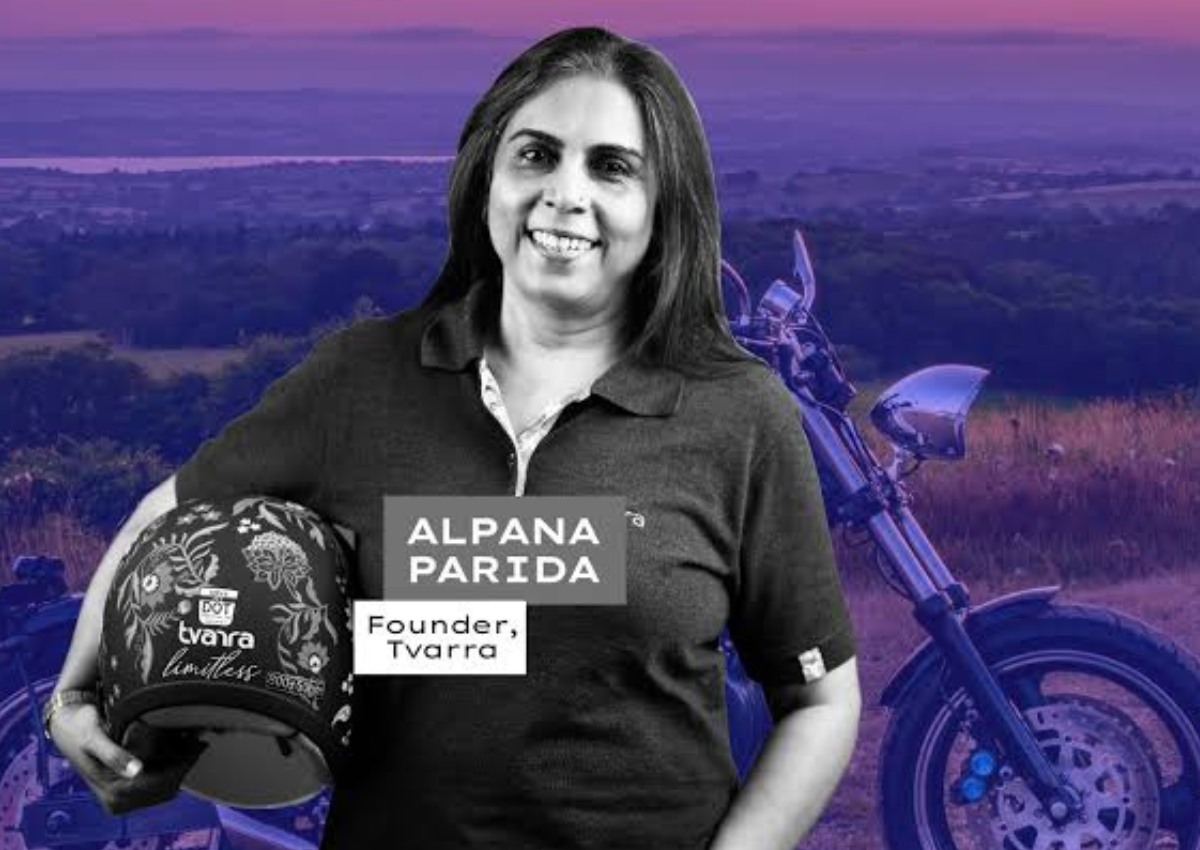
During a time when road safety is still a top issue, especially for two-wheeler riders, a new helmet brand is taking on the challenge to introduce proper safety solutions for women. Tvarra is a new helmet brand founded by entrepreneur Alpana Parida and co-promoted by Indian cricketer Jemimah Rodrigues that brings to light the combination of safety, comfort and design for women riders who have been a neglected segment in helmet manufacturing, till now.
Industry analysts state that the approach of Tvarra mirrors a larger change in the community’s attitudes towards the recognition of women as independent riders who demand products that meet their needs, instead of being merely passengers.
Looking back at the safety aspects that have remained unattended for a long time
It is only recently that some manufacturers of helmets have considered female head shapes and sizes while designing their products; however, most of the time, they still market the same models as unisex. On the other hand, women riders are often the ones who have to deal with issues of poor fitting, discomfort and improper safety protection.
Most of the helmets in the market, according to Alpana Parida, Tvarra’s founder, were not designed solely for women. Simply put, manufacturers usually take an existing design and add extra padding without considering the structural differences.
When women were shopping for helmets, they got to see products that were actually made for men, Parida said while explaining the brand’s launch. So this was not only a safety issue, but also a safety compromise because the fit is an essential factor in the effectiveness of a helmet.
If a helmet does not fit well, it can move around while riding and thus reduce the protective function and increase the risk in the event of an accident.
Designing helmets based on women’s requirements
As giant brands continued to overlook female motorists, Tvarra looked to solve these problems by completely redesigning helmets based on studies of head shape and measurements of Indian people.
To make the new helmets more comfortable for female riders, the designers even thought of the space along the ears to better fit the earrings.
Besides that, the visors are made wider and better sealed to protect the face from things like pollution and the direct impact of insects, which are typical problems of people who go to work by bike at least once a day.
All these changes are safety and comfort-oriented for the user so that the habit of wearing a helmet becomes natural and continuous.
Emphasis on safety and quality materials
In contrast to the standard models of helmets for ladies that work at the price point of 800 to 1,200 and hence, mostly implemented with second-grade materials, Tvarra instead focuses on utilising essential higher-grade components that are typically found in premium helmets.
If we are talking about the essential parts of a helmet for protecting the rider during a crash, then the standard industry weighs in on the points that the internal padding and the hard outer shell provide most of the protection.
Addressing a large and growing user base
India has several million women who ride two-wheelers on their own, and an even larger number of women who travel as pillion riders. However, there has been a shortage of safety products designed specifically for women.
Parida mentioned that many women just wore the helmets lying around at home, without considering whether they were the right size or offered enough protection.
Through the focus on this demographic, Tvarra intends to spread the message about the importance of using correctly fitted safety gear.
In addition, the company is set to launch helmet products for kids, thus taking another step in the direction of increasing awareness of safety.
Backing from cricketer Jemimah Rodrigues
Besides being a brand ambassador of Tvarra, Indian cricketer Jemimah Rodrigues has also become an equity partner a move that demonstrates her faith in the brand’s vision.
Parida explained that it was Rodrigues spirit of freedom, confidence and genuineness that made her the perfect face of the brand.
The partnership has brought about greater exposure, and the brand has been able to make inroads among the younger consumers, especially the women who are stepping out to work or living independently.
Growing business and expansion plan
Tvarra has started creating its presence on the internet through different platforms, including main e-commerce marketplaces and lifestyle retail channels.
The company is positive about solid growth that will be supported by the awareness of safety and the independence of women in commuting, which is increasing day by day.
According to industry sources, the brand is planning to expand its physical retail presence,including pilot stores and franchise-led outlets in major urban markets.
Having obtained international safety certifications, the company is also considering exports and worldwide expansion.
Changing perception of women riders
Tvarra’s coming out is evidence of social and economic changes, according to the experts. Increasing number of women are joining the workforce, commuting independently and giving first priority to their personal safety.
Products specially made for women riders not only go a long way in improving safety but they also serve as recognition of their increasing role in the city mobility and urban life.
Experts on road safety are of the view that the use of helmets properly is one of the most effective measures to prevent serious injuries and death in accidents.
A wider influence besides the focus on business
Besides the commercial success, the brand is a representation of a bigger change in identifying women as independent road users who have specific safety needs.
Parida commented that the intention was not merely to sell helmets, but also to instil confidence, independence and well-being among women riders.
With urban mobility changing and more women getting on the roads, companies like Tvarra are playing a part in the changing safety standards and product design across the industry.
Experts point out that such initiatives can progress safety awareness and drive innovation in general, thus the ultimate impact may be safer roads for all users.