Air pollution is a life-threatening problem, even if many of us remain unaware of the issues it causes, and Delhi is one of the places with the worst AQI in India, with many places officially in the poor range. There are many factors for this, from vehicular emissions to crop burning, as Hannah Ritchie notes in her book, “Not the End of the World,” which has been applauded for its optimistic approach to climate solutions and criticised for being too techno-optimist. In further work, Ritchie explores how deadly air pollution can be, with approximately 200 people in India dying due to air pollution for every 1000 citizens.
Air pollution can have health impacts ranging from respiratory diseases like bronchitis to lung cancer due to emissions from diesel generators. Experts, particular in Delhi’s case, have argued that staying in the city reduces years from a person’s life and doctors are now warning that if you have the means to, it is best to leave the city for a few weeks until the winter AQI levels return to the normal pollution levels that a Delhi resident has to endure. While many blame Diwali firecrackers for the pollution, there are bigger playesr in this equation, that causes babies to be born with weak lungs and adults to leave the city or wear masks when stepping outside their homes.
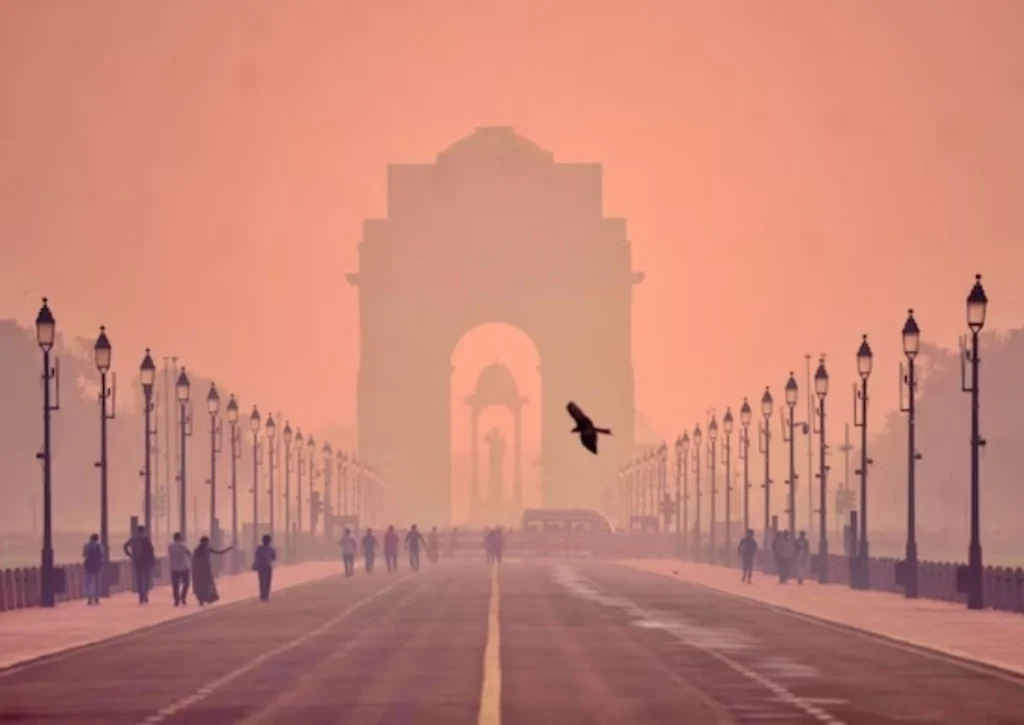
Causes of Delhi’s Air Pollution
Crop Burning
While many would assume this is the cause of the rising AQI levels in Delhi during winters, studies have actually shown that Uttar Pradesh is more likely to be affected by Punjab’s biomass pollution and CREW found that while stubble burning in neighbouring states does cause a major spike of pollution in Delhi’s air, it is a short-term impact. Just like the Diwali crackers.
Throughout the year, other impacts are found, instead, which are local in nature like the 53% of total No2 pollution matter in the air that comes from industrial sources and gets worse during winters due to a result of temperature inversions. Or the use of fossil fuels which contribute to the city’s rising CO2 levels. Such fossil fuels are used throughout the city, despite the ban on coal as a fuel outside plants, in activities like cooking to traveling.
Vehicular Emissions
39% of Delhi’s high No2 level is due to the emissions from vehicles like cars, trucks etc. While the government did try to deal with this with the odd-even scheme, pollution levels weren’t affected much, which lead many to think vehicular emissions were not a significant cause but public says this was due to citizens finding loopholes to avoid having to use public transport, despite vehicular emissions also contributing 41% to particulate matter pollution in Delhi’s case. Even movement of heavy duty vehicles causes further pollution due to road dust resuspension or when the dust stelled on the road enters the atmosphere due to vehicular movement.
Construction Activities
The Delhi Pollution Control Committee (DPCC) reported that construction dust contributes about 6% to the total PM2.5 concentration, a form of particulate matter that can travel large distances and have been linked to increased mortality or reduced lifespan in humans.
While there are other pollution sources like thermal power plants that release asthma worsening So2 and No2, those have solutions like sourcing clean energy when viable and the implementation of Flue Gas Desulfurization (FGD) technology
Also check:- Understanding Multinational Companies
Health Effects of Delhi’s Air Pollution and Precautions that can be taken
As we have seen, air pollution impacts human health in a variety of ways, from lung cancer to respiratory diseases such as cough and asthma to affecting unborn babies’ development and causing them to be born with weak lungs. Different pollutants have different affects on health with some even shortening life span by years.
While it may seem unavoidable if one is living in a highly polluted area, there are certain precautions one can take to reduce their exposure to the pollution. These include:
- Wearing masks like N/99 when stepping outside or at least covering your mouth and nose, especially during winters. Also change the filters regularly and do not rely on cloth masks.
- Use air purifiers inside your home, or get plants that remove toxins, and seal all your doors and windows.
- Use cleaner cooking fuel and transportation when viable, which has the added bonus of reducing pollutants released. Also avoid scented candles and indoor smoking.
- Support government policies such as proper waste disposal and odd-even schemes while avoiding highly polluted areas when possible
- Try not to leave home during peak pollution hours like office rush hour and monitor when to exercise. Light exercise is best for times when AQI is too high and indoor exercises remain best.
- Hydrate and eat immunity boosting foods.
- Try and reduce energy usage in your home or move to cleaner sources.
While the government rolls out policies and expert brainstorm solutions, we can work together to form resilient communities that help one another as and when possible, by sharing resources and joy in clean ways, such as ensuring wet waste from our societies gets composed instead of entering methane emitting landfills or getting burnt. Delhi’s air pollution is bad, but if Beijing can turn it’s horrible quality around, then who says India cannot?
Why did cloud seeding in Delhi fail?
Cloud seeding in Delhi failed due to low moisture, unsuitable weather, and high pollution aerosols that prevented cloud formation and raindrop growth, making artificial rain scientifically unfeasible.
Why is Delhi, AQI so poor?
Delhi’s AQI is poor due to vehicle emissions, industrial pollution, construction dust, stubble burning in nearby states, low wind speed, and temperature inversion trapping pollutants near the ground.
When was Delhi AQI 999?
The Delhi AQI reached 999 at the Anand Vihar monitoring station around early November 2023 in a severe smog episode.