Karisma Kapoor Brings Timeless Craftsmanship to the Fore in Punit Balana’s ‘Moh’
A pickle-green 64-kali Anarkali in crushed Banarasi silk, elevated with hand-embroidered Marodi and Gota work, becomes a statement of how Indian heritage craft continues to evolve
In an era when Indian fashion is increasingly finding its voice on global platforms, the most compelling stories are often those that understand how to balance heritage with contemporary sensibility. Karisma Kapoor’s latest appearance in Punit Balana’s Moh is a striking example of that balance—where traditional craftsmanship, luxurious textiles and a distinctly modern silhouette come together without losing the soul of Indian couture.
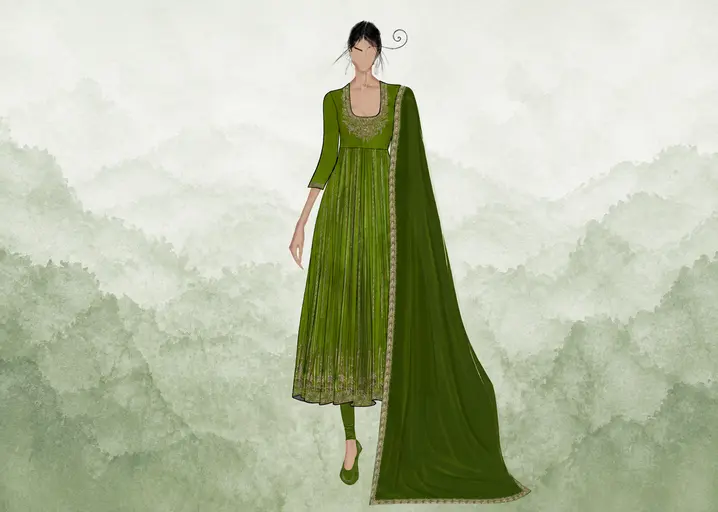
Dressed in a dramatic pickle-green Anarkali, Karisma Kapoor embraces the visual language of Moh with an effortless elegance that feels both nostalgic and current. The ensemble is built around the richness of crushed Banarasi silk tissue and elevated with intricate hand-embroidered Marodi and Gota work, bringing together several elements that have long defined the vocabulary of Indian occasionwear.
The result is more than a celebrity fashion moment. It is a reminder that Indian craftsmanship continues to evolve, and that heritage techniques can remain relevant when interpreted through silhouettes and styling that speak to today’s fashion-conscious audience.
A Colour That Refuses to Be Ordinary
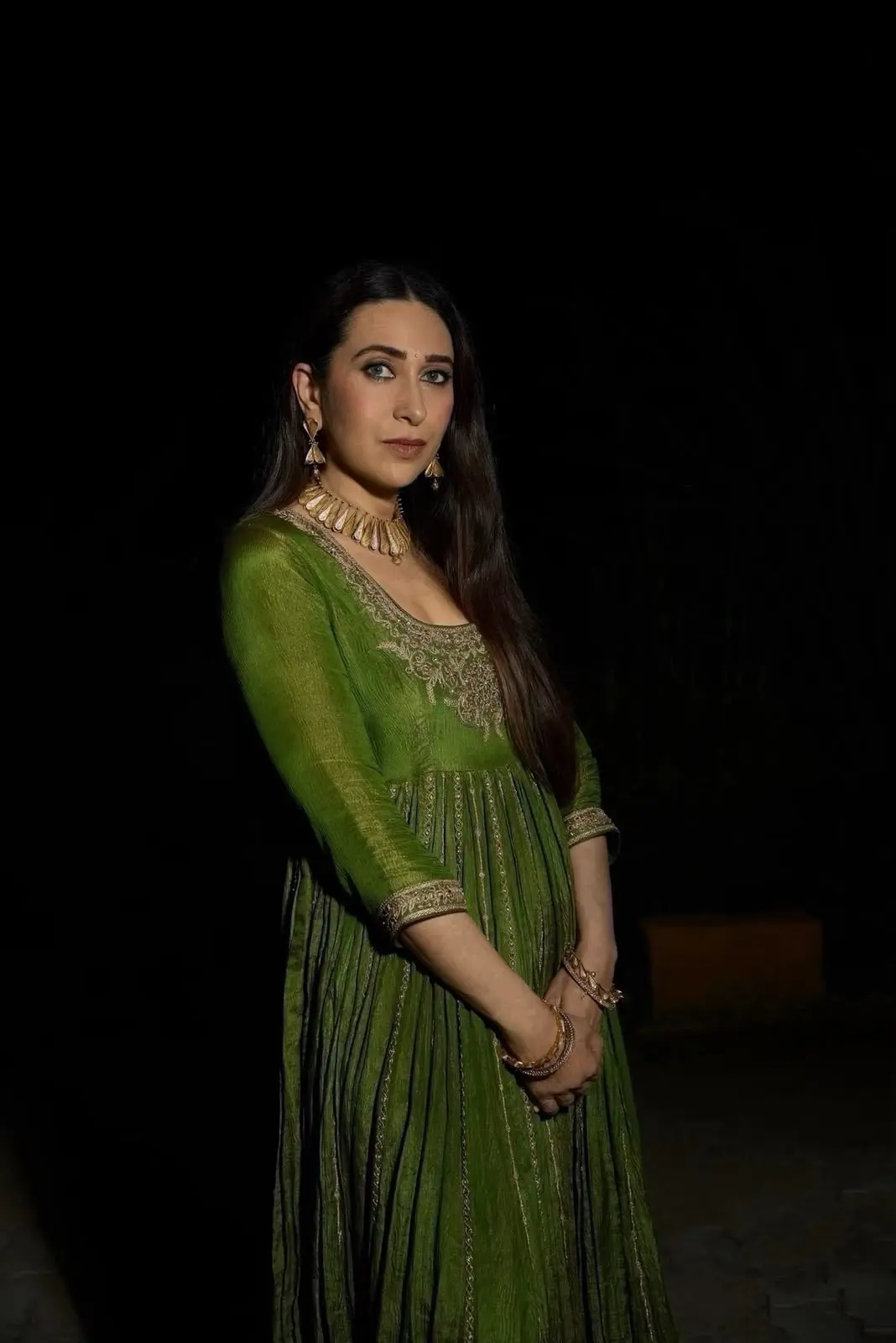
The first thing that captures attention is the unusual pickle-green hue.
Green has always occupied an important place in Indian festive dressing, symbolising freshness, prosperity, nature and celebration. Yet the particular pickle-green tone used in this ensemble moves away from conventional emeralds and deep bottle greens. It has a slightly earthy, sharp character that gives the traditional Anarkali a contemporary personality.
Karisma Kapoor’s understated approach to styling allows the colour and craftsmanship to remain the focus. Rather than competing with the garment, her styling lets the architectural quality of the silhouette and the texture of the fabric speak for themselves.
It is a colour choice that also reflects Punit Balana’s larger design philosophy. The designer is known for working with contrasting tones, expressive prints and fluid silhouettes while retaining a strong connection to Indian craft traditions. The Fashion Design Council of India describes the label’s aesthetic as one where movement, proportion, comfort and wearability coexist with traditional material, print and embroidery.
The Drama of the 64-Kali Anarkali
At the heart of the look is its distinctive “चौंसठ” or 64-kali construction.
The kalidar Anarkali has remained one of India’s most enduring silhouettes because of its ability to create volume and movement while retaining an unmistakably graceful form. A 64-kali construction takes that idea further, creating a dramatic fall and expansive flare that becomes particularly expressive when rendered in a luxurious fabric.
The silhouette is therefore not merely decorative. It is designed around movement.
Every step allows the multiple panels to open and close rhythmically, giving the garment a sense of fluidity. This quality aligns closely with Punit Balana’s design philosophy, where proportion and movement play an important role in how an outfit is experienced. The designer has previously described his garments as being created for movement, celebration and ease rather than simply standing still as elaborate fashion objects.
That philosophy makes the Anarkali particularly relevant today. The modern luxury customer increasingly wants occasionwear that photographs beautifully but also feels wearable, comfortable and expressive.
Banarasi Silk Tissue: Heritage with a Contemporary Finish
The choice of crushed Banarasi silk tissue adds another layer of sophistication.
Banarasi textiles have long been associated with India’s luxury weaving traditions, celebrated for their richness, intricate surfaces and ceremonial appeal. But the way the textile is treated here changes its visual character.
Instead of relying solely on the classic formal sheen of Banarasi, the crushed texture introduces depth and movement. Light catches different portions of the fabric differently, giving the pickle-green surface a nuanced appearance as the wearer moves.
This is where the look becomes particularly interesting from a design perspective. Traditional textiles are not being presented as museum pieces. They are being transformed into a contemporary fashion statement.
Karisma Kapoor has previously worn Punit Balana’s Banarasi Anarkalis, including a distinctive pickle-green version that Vogue India highlighted for its crushed texture, Banarasi silk composition and Marodi-Gota detailing. The designer’s own website also identifies the Karisma Kapoor ensemble as a pickle-green Anarkali with Gota and Marodi embroidery in Banarasi silk.
Marodi and Gota: The Beauty of Handcrafted Detail
While the silhouette establishes the drama, the embroidery gives the ensemble its personality.
Marodi work is traditionally associated with fine hand embroidery and lends a refined, tactile quality to Indian garments. Gota, meanwhile, brings a distinctive metallic dimension, catching light and creating subtle highlights across the surface.
Used together, the two techniques create an interesting dialogue between softness and shine.
The detailing is particularly effective because it doesn’t appear disconnected from the garment. Instead, it works with the movement and structure of the Anarkali, allowing the craftsmanship to become part of the silhouette itself.
The Craft Behind ‘Moh’
- Silhouette: 64-kali (chausath kali) Anarkali
- Fabric: Crushed Banarasi silk tissue
- Embroidery: Hand-worked Marodi and Gota detailing
- Colour: Pickle-green, an earthy departure from classic emerald tones
- Design house: Punit Balana, Jaipur
This focus on handcraft is central to Punit Balana’s identity. The label says it works closely with skilled artisans and continues to collaborate with craftspeople who have been part of its craft journey for decades. Its stated philosophy centres on handcrafted, homegrown and sustainable fashion.
In an industry increasingly influenced by mass production and fast-fashion cycles, this artisan-led approach gives garments another dimension: they carry not only design value but also a connection to India’s living craft traditions.
Why Karisma Kapoor Is the Right Muse for ‘Moh’
Karisma Kapoor’s relationship with Indian couture has always been distinctive.
Rather than relying solely on dramatic styling, she often allows the garment to define the moment. Her fashion choices frequently move between understated sophistication and statement-making traditional silhouettes, making her a natural fit for designers who reinterpret heritage through contemporary fashion.
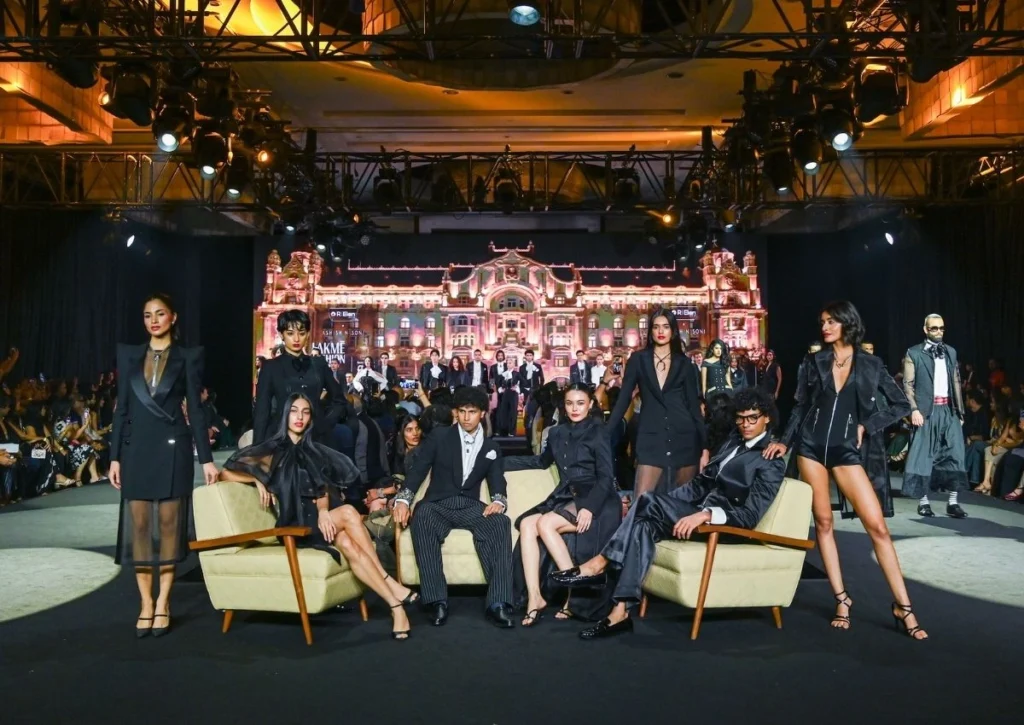
Her association with Punit Balana goes back several years. She previously served as a showstopper for the designer’s Maya collection at Lakmé Fashion Week, establishing a connection between the actor and the Jaipur-based label.
That history makes her appearance in Moh feel less like a one-off celebrity endorsement and more like an extension of a shared aesthetic language.
The pairing works because both the actor’s personal style and the designer’s clothing occupy an interesting space: recognisably Indian, yet never trapped in nostalgia.
Punit Balana’s Larger Fashion Language
The significance of Moh becomes clearer when viewed against Punit Balana’s wider design journey.
Founded in Jaipur, the label has built its identity around Rajasthan’s cultural and artisanal heritage. The brand describes itself as “Jaipur proud,” with its collections drawing inspiration from the region’s architecture, crafts, colours and visual traditions.
Yet Balana’s work is not simply about recreating traditional clothing.
His design language frequently takes familiar Indian elements—block printing, embroidery, kalidar silhouettes, festive colours and handcrafted surfaces—and places them in forms that are easier to interpret through a contemporary wardrobe.
This approach has helped the label develop a strong celebrity following, with its creations being worn by leading names including Alia Bhatt, Kareena Kapoor Khan, Kiara Advani, Madhuri Dixit and others.
Earlier collections such as Chaap have similarly explored the relationship between Rajasthan’s heritage techniques and contemporary silhouettes, incorporating elements such as Marodi, Gota and traditional printing techniques.
‘Moh’ and the New Indian Luxury
What makes the Karisma Kapoor look especially relevant is its reflection of where Indian luxury fashion is heading.
The contemporary Indian customer is increasingly looking for clothing that carries a story. Craft, provenance, regional identity and artisanal value have become important parts of the luxury conversation.
At the same time, today’s occasionwear cannot afford to be purely ornamental. Consumers want movement, comfort and versatility alongside grandeur.
The 64-kali Anarkali captures that shift beautifully. It has the visual impact expected from couture, but its appeal comes from movement rather than excessive embellishment alone.
The crushed Banarasi silk brings heritage. Pickle green brings individuality. Marodi and Gota bring craftsmanship. The expansive silhouette brings drama.
Together, they create a fashion statement that feels deeply Indian without looking conventional.
A Modern Expression of Timeless India
Ultimately, Karisma Kapoor’s Moh look succeeds because it doesn’t attempt to reinvent Indian fashion by abandoning tradition. Instead, it demonstrates how tradition can evolve.
Punit Balana’s strength lies in understanding that Indian craftsmanship does not need to be modernised by being stripped of its identity. It can remain authentic while being presented through new proportions, colours, textures and styling.
The pickle-green 64-kali Anarkali is therefore more than an elaborate festive outfit. It represents a larger movement in Indian fashion—one where heritage techniques are being carried forward by contemporary designers and embraced by a new generation of luxury consumers. As a piece of luxury ethnic wear, it captures exactly what festive fashion in 2026 is coming to represent: craft-led, wearable and unmistakably Indian.
And perhaps that is the real essence of Moh: an attraction to the beauty of India’s past, interpreted through the confidence of its present.
Karisma Kapoor, in this striking creation, becomes the perfect embodiment of that idea—graceful without being predictable, traditional without being dated, and luxurious without losing the human touch of craftsmanship.
In the evolving story of Indian couture, Moh reminds us that the future of fashion may not lie in forgetting where we came from, but in finding new ways to make that heritage feel irresistible again.