Amrit Udyan Summer Annuals Edition Opens to Public from August 16
New indigenous floral displays, Banyan Groves, Babbling Brook and Floral Clock among major attractions at Rashtrapati Bhavan’s historic garden
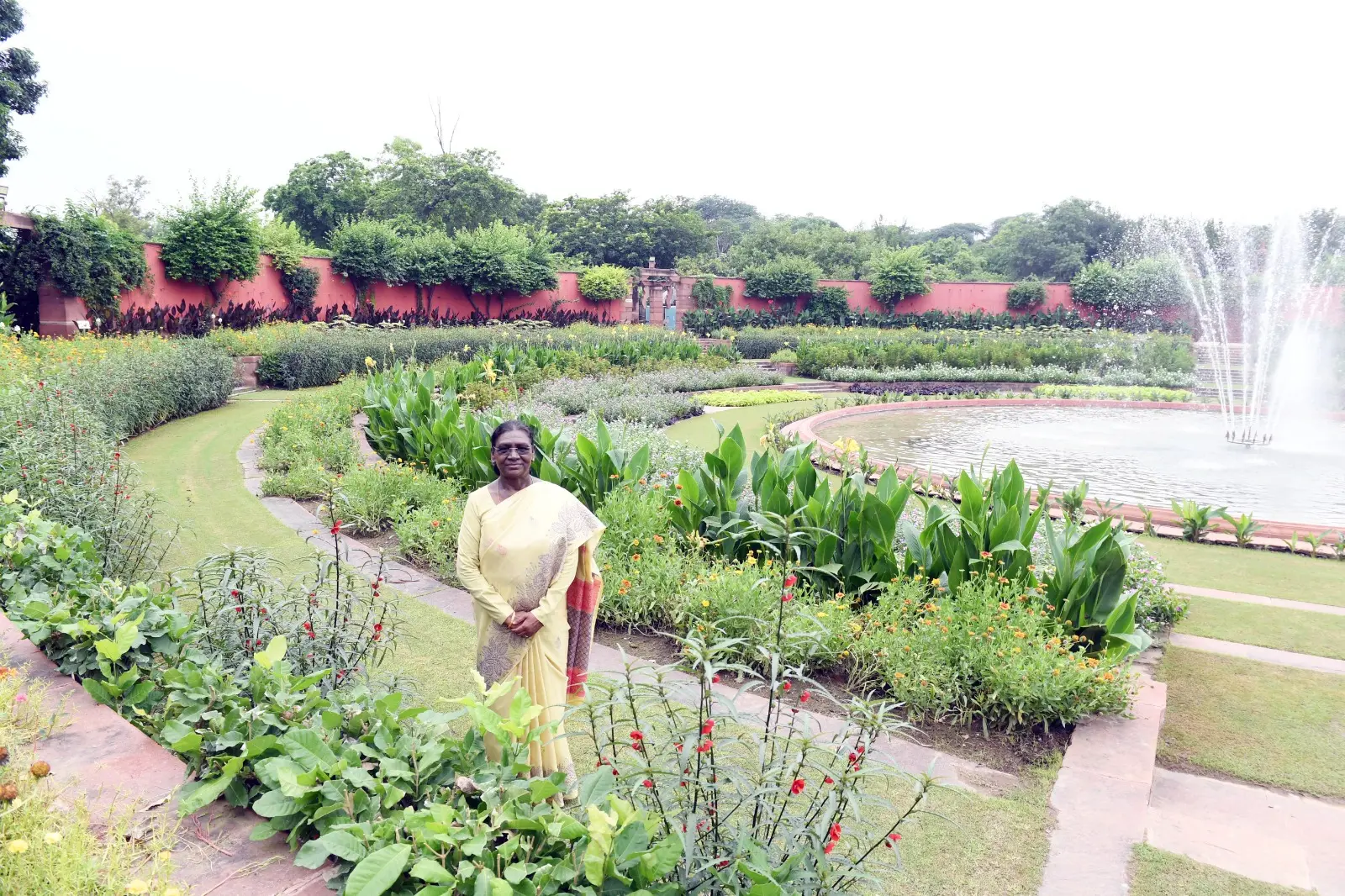
The historic Amrit Udyan at Rashtrapati Bhavan opened its doors to the Summer Annuals Edition 2026 on Friday, with President of India Droupadi Murmu gracing the inaugural ceremony. The 15-acre garden, widely regarded as the soul of Rashtrapati Bhavan, will be open to visitors from August 16 to September 15, 2026, offering the public an opportunity to experience a vibrant seasonal display of indigenous flowers, ornamental plants, landscaped gardens and new attractions.
During the month-long public opening, Amrit Udyan will remain accessible from 10 am to 6 pm, with the last entry permitted at 5 pm. The garden will remain closed every Monday for maintenance.
Free Entry, Advance Booking Mandatory
Entry to the Udyan will be free, but visitors must book their slots online in advance through the official Rashtrapati Bhavan visitor portal. Booking for a particular day will close at 10 am on the preceding day. There will be no facility for on-the-spot booking, making advance registration essential for those planning a visit.
Visitors will enter and exit through Gate No. 35 near North Avenue Road. To make the experience more convenient, drinking water stalls, First Aid posts, rain shelters and restrooms will be available along the visitor route.
A dedicated shuttle bus service will also connect visitors with the garden. The service, carrying the banner ‘SHUTTLE SERVICE FOR AMRIT UDYAN’, will operate between Central Secretariat Metro Station and the Amrit Udyan entry point at intervals of 30 minutes from 9.30 am to 6 pm.
Visitor Information
A Blend of Indigenous and Ornamental Blooms
Among the indigenous plants featured are Balsam or Gul-mehndi, Aparajita, Battum Phool or Gompherena, Kulfa, Rukmini, Barsha Phool, Morshikha, Dupahariya, Lal Saag, Kalihari and Nagphana. These have been combined with ornamental varieties such as Indian Shot or Canna, Rajanigandha, Indian blanket flower, Ornamental Tapioca, Kochia, Cosmos, Sunflower, Koliya, tree marigold, Nau Bajiya, Gul Abbas, Shakarkand and Sadabahar or Periwinkle.
The flowers have been arranged in mass displays, mixed borders and colour-themed beds, with landscaping designed around plant height, texture and flowering cycles. The result is a succession of seasonal colours intended to remain visually striking across the different sections of the Udyan.
The Rectangular, Long and Circular Gardens
The Rectangular Garden, adjacent to the main Rashtrapati Bhavan building, is divided into a grid by two north-south and two east-west water channels. At their intersections, fountains and sandstone structures carved in lotus-leaf motifs add to the visual appeal. At certain times of the day, the water channels capture reflections of the imposing Rashtrapati Bhavan building and the surrounding flowers.
The Long Garden extends westward from the main garden and features rose beds, low hedges and high enclosing walls lined with China Orange trees. Pergolas, stone beams and flowering creepers add architectural and natural elements to the landscape. Vines and Petrea cover the central sandstone pergola, while creepers including Bignonia, Tecoma grandiflora, Adenocalma and jasmine contribute colour and fragrance.
The westernmost Circular Garden, also known as the Pearl, Butterfly or Sunken Garden, remains one of the most distinctive features of Amrit Udyan. Its amphitheatre-like descending steps, high surrounding walls, central water pool and fountains create an intimate garden space. More than 15 varieties of seasonal flowers, including Canna, Dupahariya, Cosmos, Indian blanket flower and Sadabahar, contribute to its vibrant character. The garden is also designed to attract butterflies, making it a popular natural attraction.
New Attractions in the 2026 Edition
The 2026 edition introduces several additional experiences. Visitors strolling through the Plumeria Garden will encounter carefully curated flower beds and landscaped mounds featuring indigenous summer annuals. Adjacent to it are the Banyan Groves, conceived as a peaceful retreat centred around majestic banyan trees, their sprawling branches and aerial roots creating a tranquil natural setting.
Another new attraction is the Babbling Brook Garden, where flowing water, greenery, flowers and carefully positioned stones create a serene environment. The brook winds through the landscape, offering visitors a quieter space for reflection amid the gardens.
The Floral Clock is another distinctive addition. Located near a Pilkhan tree, it combines floral art with a functioning clock. Flowers are arranged in a circular pattern, surrounded by smaller edge plants, creating a functional landscape feature.
New Attractions in 2026
- Plumeria Garden – curated flower beds and landscaped mounds
- Banyan Groves – a tranquil retreat around majestic banyan trees
- Babbling Brook Garden – flowing water, stones and greenery
- Floral Clock – a functioning clock built with floral art near a Pilkhan tree
A Rich Tree Collection
The garden’s tree collection further adds to its ecological and visual character. Mushroom-shaped Moulsri or Bakul trees occupy square patches of lawn, while China Oranges alternate with Cypresses. Other trees and species include Kadamba, Ficus varieties, Putranjiva, Junipers, Jamun, Pine, Fig, Neem, Sausage Tree and Barna. Putranjiva roxburghii trees have also been planted around the gazebos at the western ends of the terrace gardens.
With its combination of heritage landscaping, indigenous flora, seasonal blooms and newly developed attractions, the Summer Annuals Edition 2026 seeks to offer visitors not merely a garden visit but an immersive experience of India’s botanical diversity.