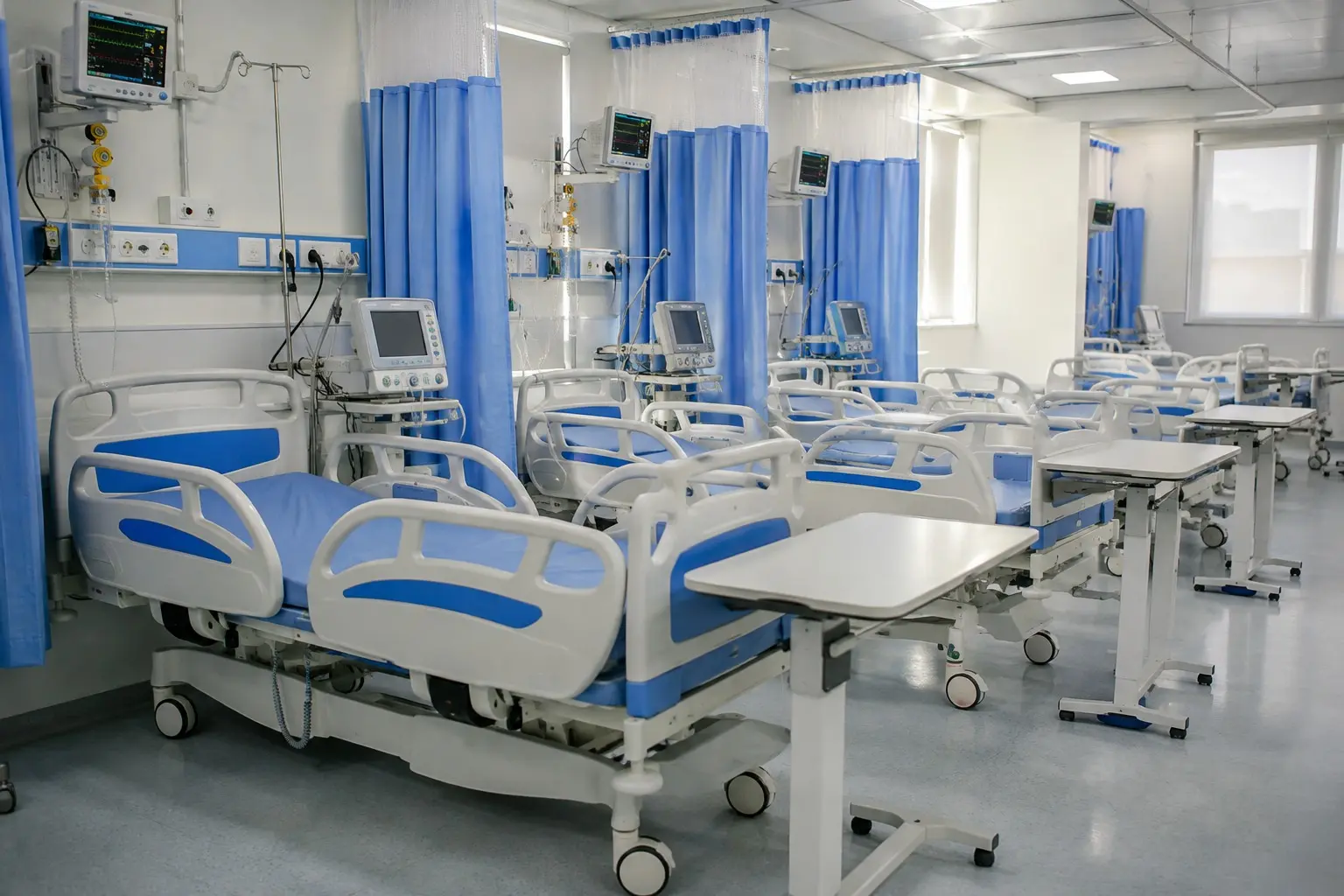
Capacity Building in Healthcare: India Needs Beds, Not Just Schemes
Parliamentary Panel Recommends 4 Lakh More Private Hospital Beds Under AB-PMJAY
India’s healthcare capacity could receive a major boost with a Parliamentary Standing Committee on Health and Family Welfare recommending the induction of at least four lakh additional private hospital beds into the Ayushman Bharat–Pradhan Mantri Jan Arogya Yojana (AB-PMJAY) network. The recommendation is part of a broader set of measures aimed at addressing infrastructure gaps, improving utilisation of health funds and expanding access to quality healthcare across the country.
The Committee has also flagged a 33% gap in AB-PMJAY fund utilisation, identifying systemic bottlenecks that are restricting the scheme’s potential to advance Universal Health Coverage. It has called for greater flexibility for State Health Agencies to deploy funds according to local healthcare needs and faster implementation of benefit packages.
Why Private Capacity Matters
The recommendation to add four lakh private beds comes against the backdrop of limited public healthcare capacity, which has resulted in nearly two-thirds of healthcare utilisation taking place in the private sector. The Committee has proposed paperless empanelment, lower administrative compliance for smaller hospitals and predictable monthly payment cycles, while insisting that minimum infrastructure and staffing standards must be maintained.
Reducing the Burden on Smaller Hospitals
According to healthcare experts and leaders, bringing four lakh additional private beds into AB-PMJAY will require more than administrative orders. Smaller hospitals, particularly those outside metropolitan centres, often face significant compliance and administrative burdens. The Committee has consequently called for paperless empanelment, reduced compliance burdens for smaller hospitals and predictable monthly payment cycles, while retaining minimum infrastructure and staffing standards under the Clinical Establishments Act, 2010. This balance is crucial: expansion cannot come at the cost of quality.
The payment issue deserves particular attention. A hospital cannot sustainably provide subsidised care if reimbursements are unpredictable or delayed. The Committee has called for a time-bound mechanism for claim processing and reimbursement and greater transparency in claim status and query resolution. Unless this is implemented, private hospitals may remain reluctant to expand their participation in public insurance programmes.
Beds Alone Are Not Capacity
Capacity, however, is not synonymous with beds alone. A hospital bed without doctors, nurses, technicians, medicines, diagnostics and functional equipment is merely a statistic. The Committee has recommended strengthening public infrastructure to meet Indian Public Health Standards, ensuring maintenance and medicine availability and improving diagnostic services, including through public-private partnerships where required.
This is particularly important for smaller towns and rural India. Private healthcare capacity remains concentrated in urban and higher-income markets, while rural and informal-sector populations have much weaker access. The report’s call for stronger primary healthcare systems, wider availability of free medicines and diagnostics and expanded financial protection beyond hospitalisation points towards a more distributed healthcare architecture.
Redesigning AB-PMJAY for Complex Care
The design of AB-PMJAY itself also needs to evolve with the changing nature of healthcare. The Committee has recommended changes to the scheme’s package architecture to accommodate complex emergencies, multi-speciality cases, ICU patients requiring surgical intervention, bilateral procedures and patients with simultaneous medical and surgical conditions. It has also called for faster implementation of the 2022 package revisions across States and Union Territories.
This matters because India’s disease burden is changing. Healthcare capacity cannot remain designed primarily around episodic hospitalisation. Chronic diseases, rehabilitation, psychiatric disorders and outpatient requirements increasingly demand continuous care. The Committee has therefore recommended expanding public Health Benefit Packages to cover comprehensive OPD services, psychiatric disorders, chronic non-communicable disease management and rehabilitation.
Key Committee Recommendations
- Induct 4 lakh+ additional private hospital beds into AB-PMJAY
- Paperless empanelment and lower compliance burden for smaller hospitals
- Time-bound claim processing and predictable monthly reimbursement cycles
- Strengthen public infrastructure to Indian Public Health Standards
- Redesign package architecture for complex, multi-speciality and ICU cases
- Faster rollout of 2022 package revisions across States and UTs
- Expand Health Benefit Packages to OPD, psychiatric care and chronic disease management
The Economic Case for Expansion
There is also a strong economic argument for expanding capacity. When public facilities are inadequate, patients are pushed towards private hospitals. When private capacity is outside public insurance networks, beneficiaries face restricted choices. And when hospitals face delayed reimbursements, they have less incentive to participate. This creates a cycle in which public expenditure fails to translate into maximum healthcare capacity.
The Government now needs a coordinated national strategy linking health insurance, hospital infrastructure, human resources, diagnostics and digital claims management. Bringing four lakh beds into AB-PMJAY should be treated as a measurable national capacity target, with State-wise timelines, transparent empanelment and regular monitoring. The Committee has explicitly stressed maintaining minimum infrastructure and staffing standards, and that safeguard must remain non-negotiable.
Beyond Insurance, Towards Capacity
India has built impressive health insurance architecture through AB-PMJAY, but the next phase must be about building the capacity to honour that insurance promise. Four lakh additional private beds can be an important beginning, but the larger objective should be a healthcare system where geography, income or shortage of infrastructure does not determine whether a patient receives timely treatment.