GenNextDesigners-JubinavChadha, TaariniAnand, and Saim presented their collections
Mumbai, March 20th,2026:NIF Global Presents GenNext at Lakmē Fashion Week in partnership with the Fashion Design Council of India (FDCI) showcased the collections of three emerging designers at the Jio World Convention Centre in Mumbai this season. Continuing its legacy of championing young creative talent, the GenNext platform once again highlighted the work of promising designers poised to shape the future of Indian fashion.
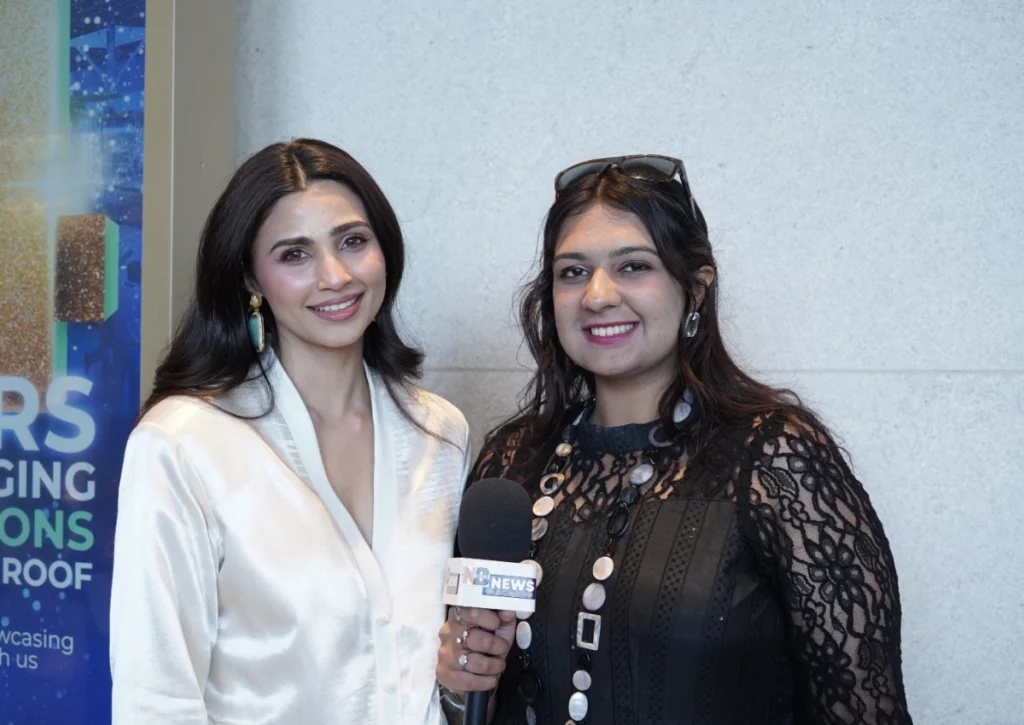
The GenNext showcase at Lakmē Fashion Week x FDCI has long served as a launchpad for new voices in fashion, offering designers the opportunity to present their ideas, craft techniques and creative narratives to a wider industry audience. Over the years, the platform has nurtured several designers who have gone on to build influential labels and global recognition. This season, the spotlight turned to three distinctive designers — Jubinav Chadha, Taarini Anand and Saim — each presenting collections rooted in personal narratives, craft exploration and contemporary interpretation.
Shaunik Khosla, Business Head, NIF Global, said, “NIF Global presents GENNEXT, a dynamic talent discovery platform that continues to nurture and elevate emerging designers across India. It offers young creatives the opportunity to showcase their unique aesthetics to a wider national and international audience, while connecting with key voices in the fashion industry. As we mark the 40th edition of Lakmé FashionWeekxFDCI, our association with this prestigious platform reinforces our commitment to giving aspiring designers a powerful stage to launch their journeys.GENNEXT is a strong step toward shaping the future of Indian fashion by supporting its next generation of talent.”
JUBINAV CHADHA
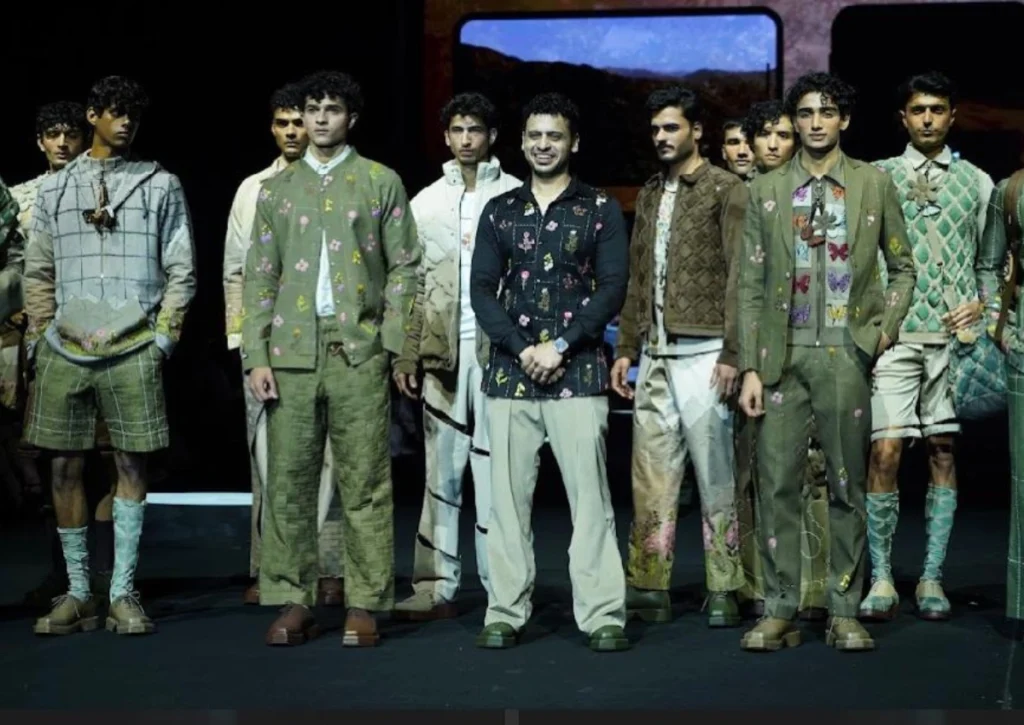
Designer Jubinav Chadha presented his collection titled ‘APostcardFromValleyofFlowers’, drawing inspiration from the indigenous flora of Uttarakhand’s famed Valley of Flowers. The collection explored the distinctly modern phenomenon of experiencing landscapes through digital storytelling and travel vlogs, transforming these mediated impressions into tangible design narratives.
Built around themes of visual memory and symbolism, the garments translated fleeting online imagery into physical craft expressions. Quilted landscapes, thread-embroidered floral stamps and digital prints of vintage postcards evoked fragments of distant journeys. Jubinav further experimented with basket-weaving techniques to map geographical latitudes and longitudes, creating engineered textiles that reflected both emotional and geographical experiences of travel.
Fabric choices balanced delicacy with resilience, echoing the contrast between fragile wildflowers and rugged mountain terrain. Turkish linen, cotton silk, micro-crepe, micro-suede, cotton fleece and vegan leather came together in a material palette that blended fluidity with structure. The colour story mirrored the valley’s natural hues of greens, beiges, browns and greys, punctuated with vibrant thread-embroidered accents inspired by wildflowers.
Speaking about the collection, Jubinav Chadha said, “A Postcard from Valley of Flowers collection at GenNext, Lakmé Fashion Week feels like a full circle moment. I’ve spent years watching travel vlogs, which inspired this collection as well as past Gen Next seasons online. Now, I’m part of the very platform I once admired from a screen.”
TAARINI ANAND
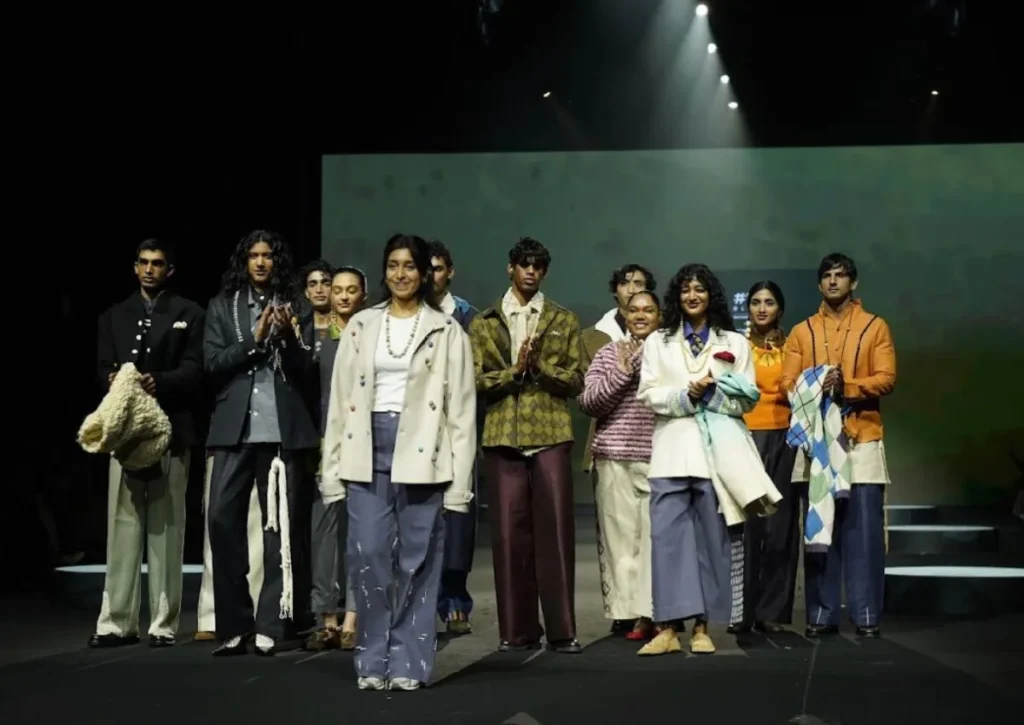
Designer Taarini Anand unveiled her FW26/27 collection, On Restoration: Methods for Preservation, drawing from the Ajanta caves and their stories’ murals as both visual reference and conceptual anchor. Engaging with the caves’ language of layered pigment, architectural carving and centuries of restoration, the collection explores modernised craft and the evolving possibilities of hand-knitted garments through texture, proportion and construction.
The organic drape of painted figures and the sculptural stillness of bodies within the murals inform silhouette and posture across the pieces. Jewellery motifs and ornamental detailing translate into tactile surfaces, while column engravings and stratified pigments reappear through pattern-making and garment construction.
Restoration emerges as the collection’s central idea, understood not as repair but as continuation. Anand approaches knitting as a living practice, pushing it beyond familiar associations into more experimental terrain. The connection is also personal: hand knitting has travelled through generations of women in her family, tracing back to her great-grandmother before arriving in Anand’s own hands. What once existed as a domestic language of making expands here into a contemporary design vocabulary.
The palette borrows from the mineral pigments of weathered frescoes, where colour gathers in layered depth. Softened blues, maroons and olive tones unfold across the collection. Materials move between heritage and contemporary textiles, including Indian wool, pure silks and khadi- and linen–silk blends alongside denim, pure wool tweeds and newly developed hand-knitted cashmeres. Handmade crochet appliqué and glass bead embroidery introduce rhythmic surface detailing that sits within the garments rather than resting on top of them.
Silhouettes remain relaxed yet deliberate, where sculptural structure and layered surfaces converge in garments that feel rooted in tradition while looking decisively forward.
Speaking about the collection, Taarini Anand said, “Restoration sits at the heart of this collection, extending to knitting itself, intimate in process yet expansive in vocabulary. Closing out our first year with GenNext reaffirms my ambition to give craft both the patience it requires and the recognition it deserves.”
SAIM
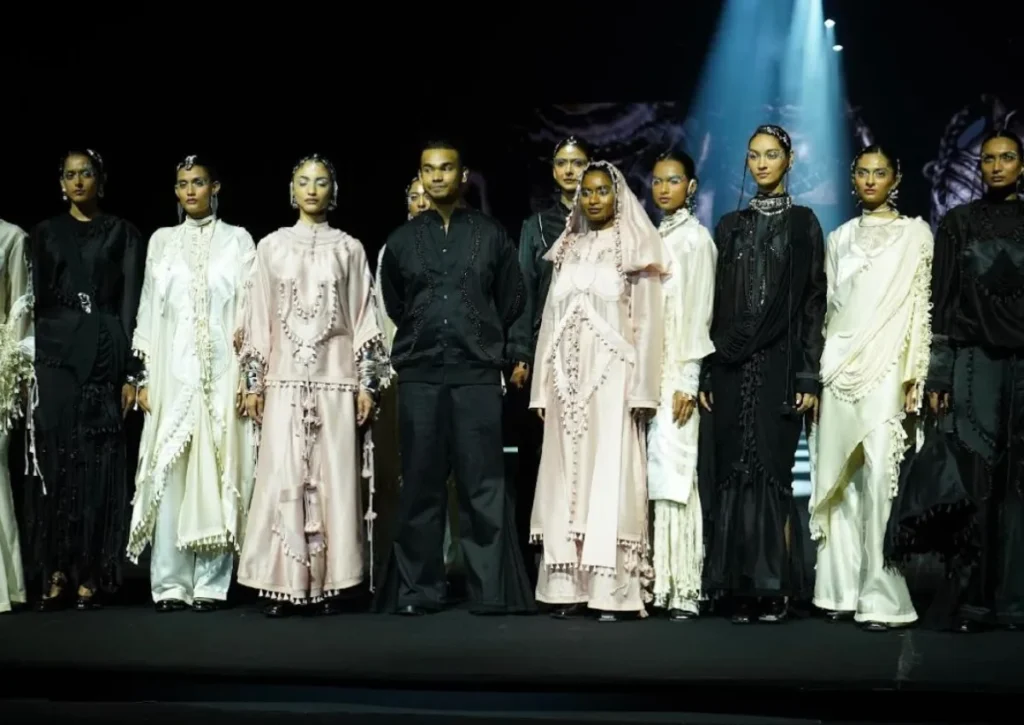
Designer Saim made his runway debut at Lakmē Fashion Week x FDCI with a collection inspired by Indian mythology, temple sculptures and personal childhood memories. The collection explored the celebration of the human form through drape, ornamentation and sculptural detailing, reinterpreting traditional visual references through a contemporary design language.
The garments featured shaped patchworks layered over sheer fabrics, creating silhouettes that balanced sensuality with mystery. Through these constructions, the designer translated mythological aesthetics into a modern wardrobe narrative.
At its emotional core, the collection reflected Saim’s memories of growing up in Kolkata, where moments of cultural coexistence shaped his creative outlook. The designer recalled standing at the feet of Goddess Durga during festivities while hearing the sounds of the azaan and the shankh (conch shell) echoing simultaneously, and these layered experiences have influenced the spirit of the collection.
Silk Chanderi formed the foundation of the garments, complemented by satin and silk patchworks that introduced structure and depth. Jersey drapes and ribbed edgings allowed the silhouettes to move fluidly with the body. Surface ornamentation recreated traditional jewellery forms such as necklaces, armbands, cummerbunds and bangles through techniques including quilting, pearls, sequins, silver metal threads, crystals, handmade cloth tassels and cord fringes.
Speaking about the collection, designer Saim Ghani of the label Saim said,“I’m honoured that Saim is part of that narrative.Our design language amplifies a modern, imaginative, and multicultural rendition of India and its clothing, where nostalgia, functionality and conversation play key shaping roles — reinterpreted for a contemporary, global wardrobe.”