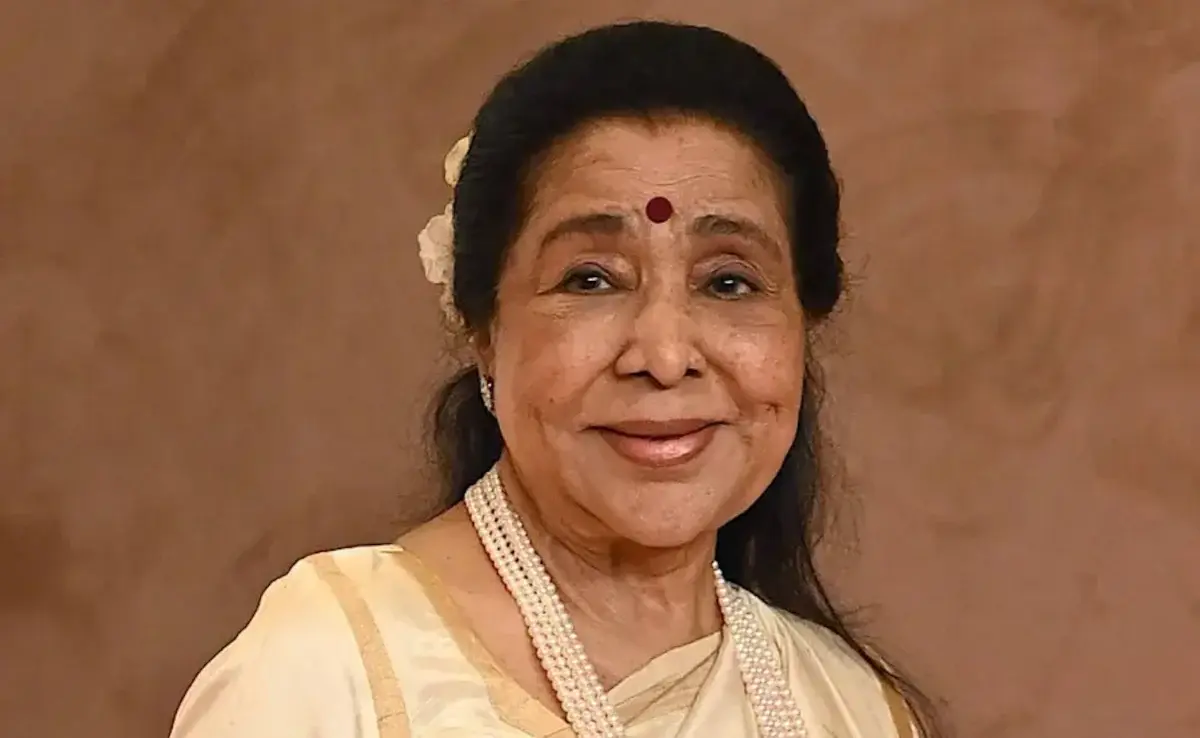
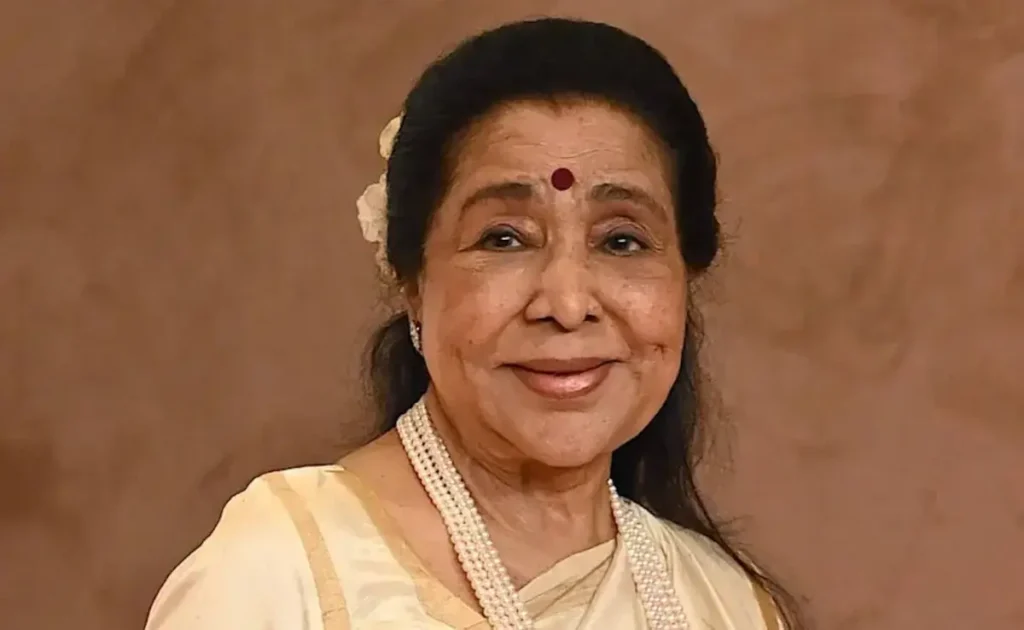
Today, the music industry bid farewell to one of its most renowned voices as Asha Bhosle, the legendary playback singer, passed away at the age of 92. She died at the Breach Candy Hospital in Mumbai where she had been brought in on the night of 11 April due to exhaustion and a pulmonary infection. Her granddaughter, Zanai Bhosle, broke the news on social media, while also asking for the family’s privacy during this difficult time.
The passing of Asha Bhosle symbolizes the closing of a remarkable chapter in Indian cinema and music. For more than seventy years, her multifaceted voice has been the medium for thousands of songs in different languages and styles from touching ghazals and spiritual bhajans to lively cabaret and contemporary pop. Only a handful of musicians in the annals of Indian film music possess her versatility, endurance, and prolificacy of work.
A Life Rooted in Music
Asha Mangeshkar was born on September 8 1933 in Goar village near Sangli that was a part of British India then. Since she was born into a musical family she ended up spending her life among music. Her father, Dinanath Mangeshkar, was a renowned classical vocalist and a theatre artist.
Unfortunately, he died when the girl was very young, in 1942, and the family was left to look after itself. Together with her elder sister Lata Mangeshkar, Asha got on the stage and started performing from a young age to be able to support their family. She started as a playback singer in 1948 with the song “Saaiyaan Dil Mein Aana Re” from the movie Chunariya. This was just the beginning, gradually she landed a leading role and eventually full career. By the 1950s, Asha had carved a distinct space for herself, specialising in bold, western-influenced, and energetic numbers that complemented her sister Lata’s more classical and melodious style.
Her professional breakthrough came in the 1960s and 1970s through her legendary collaboration with music composer R.D. Burman, whom she later married. Together they created some of Hindi cinema’s most memorable tracks “Dum Maro Dum”, “Chura Liya Hai Tumne”, “Piya Tu Ab To Aaja”, “Yeh Mera Dil”, and countless others. Asha’s ability to adapt to any style of classical folk rock, disco qawwali, or pop made her the preferred voice for generations of leading ladies, from Madhubala and Meena Kumari to Zeenat Aman, Rekha Sridevi, and Madhuri Dixit.
A Record-Breaking Legacy
Over the years, Asha Bhosle has carved out an untouchable place for herself in the record books. According to the Guinness World Records, she is the artist with the highest number of tracks recorded – more than 12,000 songs in over 20 languages. Hindi Bengali Marathi Gujarati Punjabi are just a few of the languages she has sung, and she also has songs in English and Russian.
Besides winning seven Filmfare Awards, she was also honoured with the Dadasaheb Phalke Award in 2000 and the Padma Vibhushan in 2008 are two of these many lifetime achievement awards she got. She was the first Indian singer to be awarded a lifetime achievement award at the IIFA ceremony in 2013. Up to the present time, after her 80s, she is still fully active. She is releasing songs, doing live concerts, setting up her own music label, and most importantly, she is guiding young talents. Even recently she has won the affections of different generations with her vibrant stage performance and personable nature.
Tributes Pour In
As news of her death spread, the world of cinema, political leaders, and fans everywhere expressed their sorrow and grief. Prime Minister Narendra Modi took to X to say: “Asha Bhosle was a voice that captured the soul of India. Her songs brought joy to crores across generations. Her contribution to Indian music is unparalleled. My condolences to her family and countless admirers.”
Music composers, movie stars along with singers praised her as a phenomenon that cannot be replaced. Several individuals emphasized that she was more than a singer but a cultural icon who united different generations. Social networking sites were full of her favorite songs, and fans shared their stories of how her voice was the thread running through their lives from the time they were children to their weddings and quiet evenings at home.
The Impact She Made Culturally
Asha Bhosle’s experiences weren’t easy. She was challenged by the masculine industry and a tough first marriage. Also she was compared to her more famous sister. However, she stood with dignity and constantly worked very hard. Her entrepreneurial success and TV fame also revealed that talent and determination can break the barriers.
The loss of Asha means India is losing the last one who can tell of the great times of film music. Even after her death, her music does not become old. Her tunes are being played at all kinds of events and even at home where people get together. They are helping yet another generation to fall in love with her lovely singing.
Even though Asha Bhosle is no longer with us, the songs she gave us will keep playing in our hearts for a very long time. A musical era has gone, but the songs penned and sung by her will be cherished always.