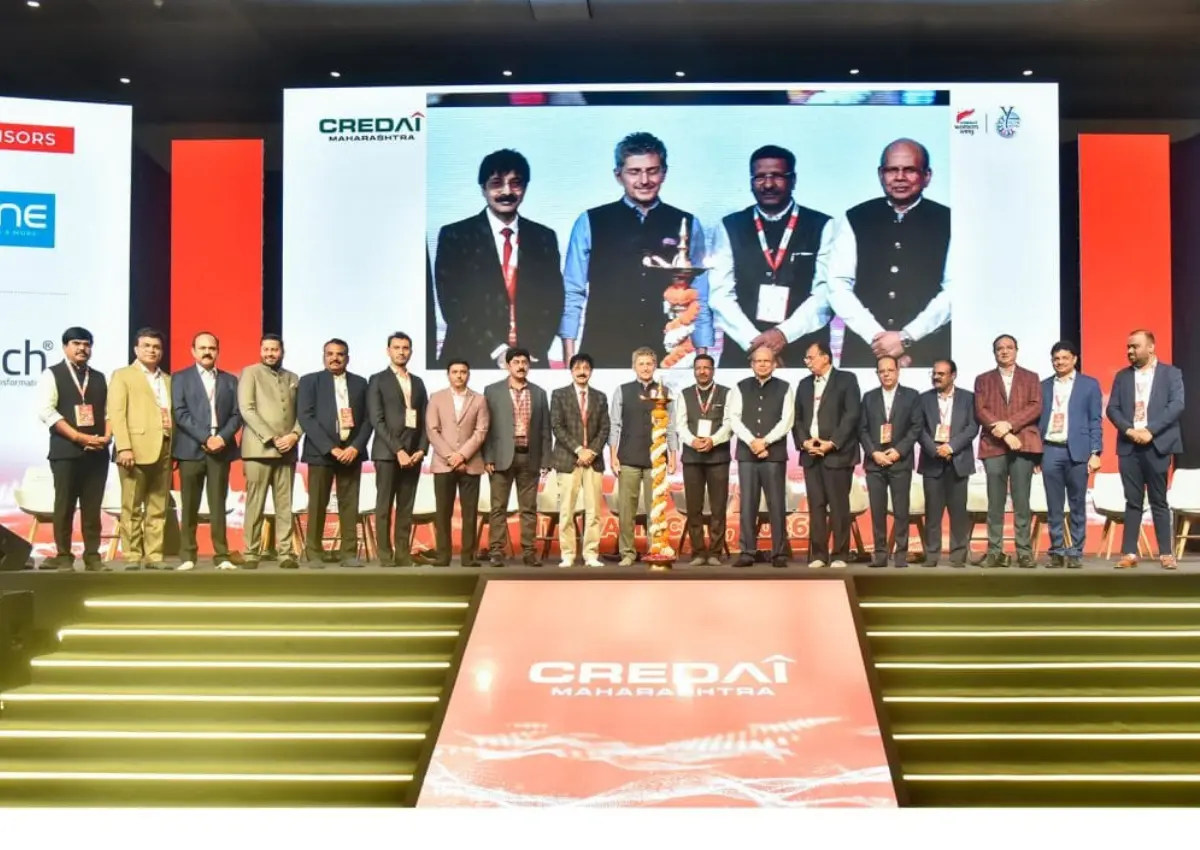
Mumbai India’s real estate sector is set to hit a market landmark of Rs. 10 lakh crore, with senior living projects and commercial assets expected to be the main drivers of the industry’s next phase of growth, according to key industry players who were speaking at the 11th edition of the annual real estate convention organised by the Confederation of Real Estate Developers’ Associations of India (CREDAI).
The growth prospects and new investment trends were brought to the fore during CREDAI MahaCON 11th Edition, an industry event of developers, policymakers, financiers and consultants, which took place in Mumbai.
Senior living as the new major growth engine
The panel of real estate professionals at the event stated that senior living has evolved from a niche segment to a rapidly emerging asset category within the broad housing sector. The need for community based senior citizens’ housing professionally managed is continuously growing due to the changing family patterns, longer life expectancy and more people moving to the cities.
Furthermore, developers say that consumers in this category are not only looking for dwellings but for a lifestyle, which is why they are including features such as healthcare, recreation, security and social infrastructures in their projects. Subsequently, there is a growing trend of senior living real estate being financially backed by the investment community on a long term basis and institutional investors are showing interest particularly in large, urban and satellite cities.
The respondents pointed out that besides offering higher profitability, the segment also offers a greater level of resilience compared to conventional residential properties since demand is generated by longer term demographic factors rather than shorter term market fluctuations.
Commercial real estate sector is further strengthening
Senior housing and commercial real estate, mainly office assets and mixed use developments, were two major drivers of sectoral growth that were pointed out by industry leaders. The experts stated that demand for top, notch office spaces has remained steady, and that it is also supported by the ongoing growth in technology, global capability centres, and professional services companies.
Even with alterations in work styles, such as hybrid models, it was noted by developers that businesses are still looking for modern, sustainable and well connected work locations. As a result, there is the realization of the importance of grade A commercial properties, large integrated business parks, and transit oriented developments.
The attendees at the panel discussion indicated that commercial real estate is still one of the most desirable asset classes for both domestic and foreign investors owing to the stable rental income and long, term visibility it offers.
Industry nearing a Rs. 10 lakh crore opportunity
According to the figures that were presented at the meet, the real estate market of India is gearing towards a combined opportunity of nearly Rs. 10 lakh crore, which will be driven by residential, commercial, logistics, data centres and alternative housing formats such as senior living and student accommodation.
Developers have noted that the sector has undergone a huge transformation during the last 10 years, with significant changes such as regulatory reforms, digital adoption and higher transparency, that led to increased investor confidence as well as buyer trust.
Both the introduction of structured regulatory frameworks and the rising institutional participation have been recognised as the most important factors that have enhanced the industry’s credibility.
Infrastructure and urban expansion supporting growth
Speakers at CREDAI MahaCON also stressed the impact of infrastructure investments on real estate demand. New transport corridors , metro networks, expressways and airport developments are pushing the city limits further and opening up new areas for growth.
According to industry leaders,these infrastructure projects are facilitating the decentralization of commercial hubs and residential clusters,thus enabling developers to come up with bigger and more integrated projects outside the traditional city centres.In addition, such growth is likely to pave the way for affordable housing, rental housing, and senior, focused developments in the newly urbanized areas.
Institutional capital and long term investors showing interest
One of the main points of the talks was the deepening engagement of institutional investors, private equity funds, and long term capital providers in Indian real estate.
The experts mentioned that commercial assets and certain housing segments are particularly appealing for foreign investors who are on the lookout for stable returns and long term portfolio diversification. Senior living is one such segment that global funds are scrutinizing, as these funds already have exposure to similar asset classes in mature international markets.
Industry leaders mentioned that Indian developers are increasingly able to meet global investing standards thanks to better governance,tighter financial discipline and professional project management.
Challenges continue, yet the mood stays positive
Although the mood shown at the conference was upbeat , the speakers also highlighted that the challenges still exist.Increasing construction costs, complicated procedures for land acquisitions and approval delays are issues that still plague project timelines.
Moreover obtaining affordable project financing for mid sized developers is still a worry. The industry bodies thus, once again pointed to the necessity of policy support, clearance procedures, simplification and enhancement of the collaboration between public authorities and private developers to ensure long term growth.
Nevertheless, participants were of the opinion that the sector has, over time, accumulated enough resilience to withstand economic downturns and market changes thus, they are not deterred by these structural issues.
Moving towards specialised and experience driven assets
One of the event’s main focus was that there is a noticeable change from the real estate standard residential formats towards more specialised and experience oriented developments. Senior living, co living, managed rental housing, and mixed use townships were the areas that were constantly brought up as the future of growth.
Developers pointed out that nowadays homebuyers and occupiers are, to a greater extent,prioritising items like the quality of life,accessibility, sustainability, and community engagement over the size of the properties.Industry observers believe this trend will continue to significantly influence real estate planning, design and investment strategies during the next ten years.
Outlook reinforced at CREDAI MahaCON
Wrapping up their talks, the panelists mentioned that the real estate sector of India is now on the verge of a fresh expansion cycle which is being driven by the changes in demographics, ongoing urbanization, and gradual lifestyle changes. Besides, the exceptional performance of commercial properties and the breakout of senior living spaces are the two main factors that will help the real estate sector to reach its target of Rs. 10 lakh crore sooner.
The main focus of the 11th edition of CREDAI MahaCON at its wrap up was on the need for developers, investors, and policymakers to cooperate with each other to ensure that the next stage of growth in real estate is sustainable, transparent, and in line with the country’s overall urban development objectives.