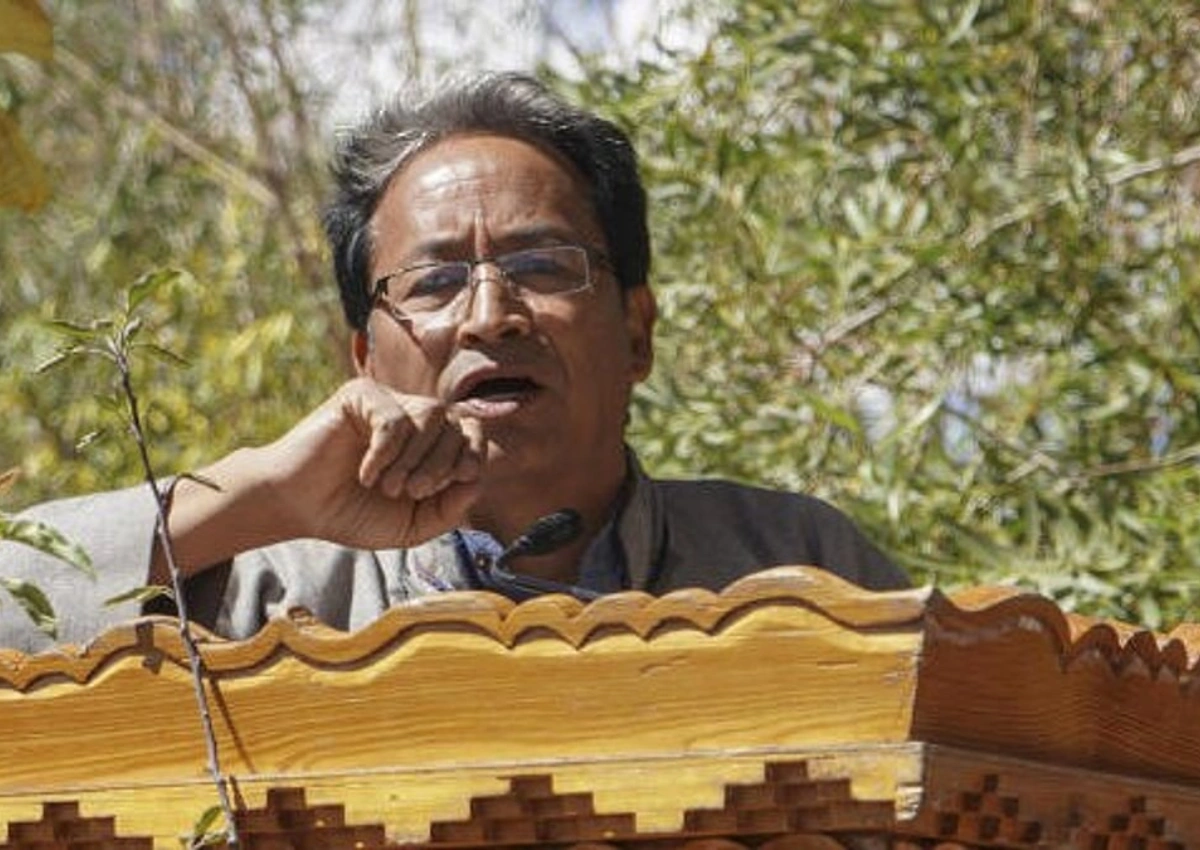
The central jail at Jodhpur opened its gates on Saturday afternoon, and Sonam Wangchuk out walked -the engineer, environmentalist and handiest face of Ladakh’s long tank for constitutional honor. His wife Geetanjali Angmo got to the prison in the morning for the paperwork. At 1:30 p.m. everything was ready. After 170 days in preventive detention, one of the most widely admired activists of India was finally going home. The release came after the Ministry of Home Affairs decided to lift Wangchuk’s detention under the National Security Act immediately. The government considered the step a point of goodwill -a sign to reconnect with a region over which they had been losing control for years.
The Road to Jodhpur
It would require one to go back to the room when everything fell apart in order to truly understand what Saturday symbolized. Wangchuk 59 was on a hunger strike and his main demand was either full federal statehood for Ladakh or constitutional safeguards for its tribal communities, their lands, and resources. The protests had been escalating for months and were the result of the people feeling abandoned since 2019, after the central government removed the special status of the Jammu and Kashmir and also made changes to the region – making Ladakh a Union Territory directly ruled from New Delhi and without its own legislature.
The unrest on September 24 2025 led to people being killed (at least 4) and many others (over 160) getting injured during the protests in Leh. The government blamed Wangchuk and implied that his words had incited the crowd. Two days later, on September 26, police arrested him under the NSA on the order of the Leh district magistrate implying that it was a necessity to uphold public peace.He was sent several hundred kilometres away to a prison in Jodhpur, Rajasthan – a piece of information that did not escape the notice of his supporters who interpreted it as a deliberate move to keep him miles away from his family and his people.
The arrest sparked instant anger. People lit candle and sat through night at Jantar Mantar in New Delhi. Opposition political leaders criticized the government’s move of using the NSA – a legislation that permits the authorities to detain persons without charge or trial for a period of up to twelve months – against a man who had never been armed or accused of inciting violence.
A Case the Government Couldn’t Sustain
Subsequently, there was a long legal and political battle. The Supreme Court had set a date for the final hearing of a petition, which raised numerous concerns regarding Wangchuk’s detention. In fact, during the initial hearings, the Court very tactfully raised a serious issue as to how his speeches and even his social media posts could be the basis for police action as if they had incited the Leh violence. That question was quite a thorn in the side of the government and indicated the government had no easy answer to this. According to a number of lawyers and court-watchers, the government did not have a strong case in court, and several people opined that the government, faced with an almost certain humiliating judgment, decided to withdraw the case quietly rather than facing the bench for the accused of the verdict. Nevertheless, there was a stark contrast, which was almost invisible to the naked eye. A man who many thought was a ruling-dominated establishment sympathizer, had been imprisoned under one of the most draconian preventive detention laws of India, and later he was set free without any official explanation of what kind of threat he had in fact posed. The government’s quietness on that point was telling.
What the Government Said
The Ministry of Home Affairs in their official statement have resolved to concentrate on the future instead of dwelling on the errors of the past. They claimed that this step was taken in order to foster peace and communication channels with the stakeholders of the area. Besides, the government is very much set on the establishment of a cordial and positive relationship with the people of Ladakh, the note says. Officials observed that the prolonged bandhs and protests were not only causing resentment but the economy of Ladakh was getting severely affected – hence this too was one of the factors which influenced the government to release Wangchuk. The government went on to stress that their High-Powered Committee was an appropriate medium for Ladakh to voice their grievances and expressed a wish that the few remaining differences would be resolved through peaceful and orderly manners.
A Victory But Not the End
Reactions in Leh were cautious yet warm. Community leaders welcomed the revocation of the NSA order as a great move but on the other hand, they made it clear that the fight for Ladakh rights still continues and it is not the single man’s release that has ended it. Other voices were asking for the release of those activists who are still behind bars and for the withdrawal of the charges against those who were arrested during the protests last year. A few days before his release, Wangchuk took a stand in social media about his loyalty to Ladakh never weakening despite political imprisonment and he also thought that genuine activism has to lead to a bigger and more permanent change. He said it would need clarity, unity, and earnest communication, which has been difficult so far. Their meaning is really valuable now that he is out of jail. The requests that forced him to be locked up – statehood, Sixth Schedule safeguards, an elected assembly for the people of Ladakh – have not at all been satisfied. He comes back to the public with his moral authority perhaps even stronger than before his arrest.