Amit Shah’s Next Political Masterstroke? Women’s Reservation and Delimitation Put India’s Parliamentary Future in Focus
From the failed constitutional amendment in April to a possible special session in November, the government’s renewed push raises questions about strategy, legislative arithmetic, women’s representation and the structure of Parliament
The Narendra Modi government is planning a special session of Parliament to try again on women’s reservation, a push in which Union Home Minister Amit Shah is again in the spotlight, according to media reports on 12 November 2026 that cite government sources. The plan is to pass a Constitution amendment bill tied to the implementation of the 33 per cent quota for women, which is linked to a wider redrawing of Lok Sabha seats through delimitation. The dates and duration of any session have not been announced, and the government has not confirmed the details on record in the reports cited here.
An earlier attempt failed in April. Whether Amit Shah and the government can make the second try succeed depends on parliamentary arithmetic and on how the government and the opposition resolve a disagreement that is as much about federal balance as about women’s representation.
What Happened in April
In April 2026 the government brought a package of three bills: the Constitution (131st Amendment) Bill, the Delimitation Bill and the Union Territories Laws (Amendment) Bill. Together they aimed to make women’s reservation workable, set up a delimitation framework and raise the maximum strength of the Lok Sabha.
On 17 April the constitutional amendment failed in the Lok Sabha, with 298 votes in favour and 230 against. A constitutional amendment needs a two-thirds majority of members present and voting, which in that vote meant 352 votes, so the bill fell 54 short. Parliamentary Affairs Minister Kiren Rijiju then said the other two bills would be withdrawn, as they were linked to the amendment. It was reported as the first time a constitutional amendment brought by the Modi government failed on the floor of the Lok Sabha.
Women’s Reservation and Delimitation: Key Dates
- September 2023Parliament passes the Constitution (106th Amendment) Act, the Nari Shakti Vandan Adhiniyam, providing about one-third reservation for women in the Lok Sabha and state assemblies.
- 16–18 April 2026Special session of Parliament to take up the 131st Amendment Bill and two related bills.
- 17 April 2026The 131st Amendment Bill fails in the Lok Sabha, 298 to 230. The two related bills are withdrawn.
- 13 August 2026Both Houses are adjourned sine die at the end of the Monsoon Session, which has not been prorogued since.
- 12 November 2026Reports say the government plans a special session to pass a women’s reservation-linked amendment.
Why Delimitation Is in the Picture
The 2023 women’s reservation law provides about one-third reservation for women in the Lok Sabha and state assemblies, including seats for women from Scheduled Castes and Scheduled Tribes. But it ties the quota to a delimitation exercise based on the first census taken after 2026, so passing the law did not by itself put women in a third of the seats.
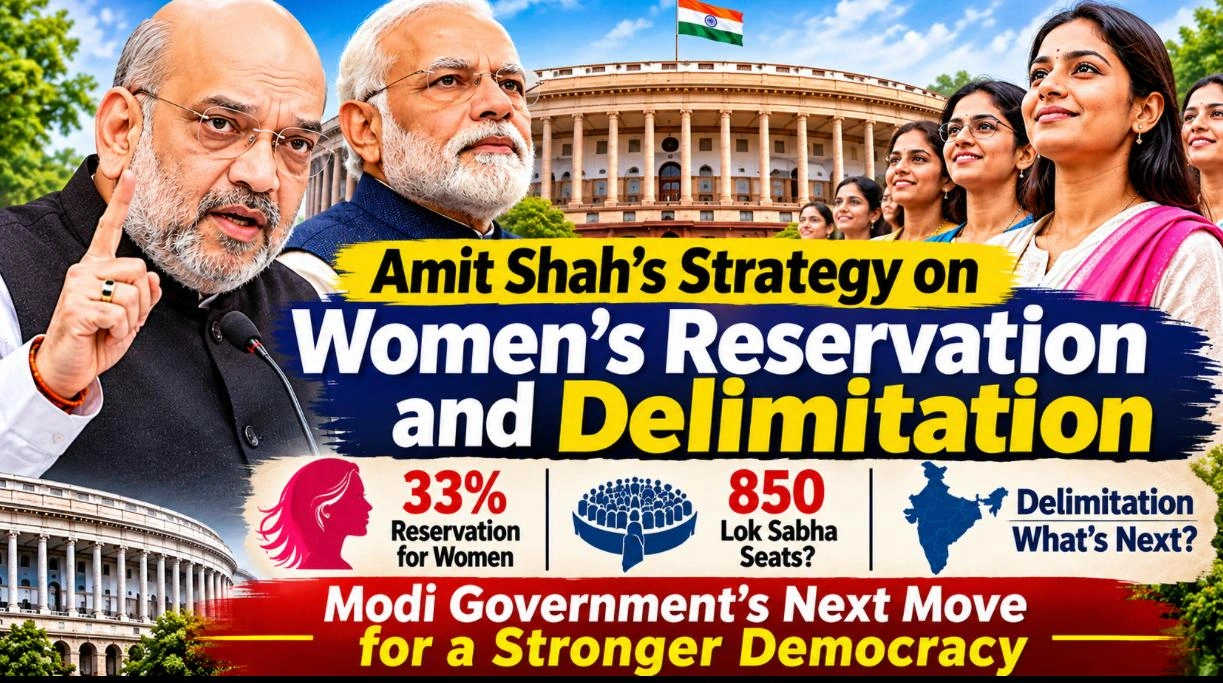
Delimitation is the process of fixing constituency boundaries and, where the law allows, allocating seats. The allocation of seats between states has been frozen on the basis of earlier arrangements. The 2026 proposals sought to raise the Lok Sabha’s maximum strength from the present 543 to 850 and to change the delimitation route, so that the women’s quota could be implemented sooner. The government has argued that expansion would accommodate changing population patterns and widen representation.
What the Government and the Opposition Argue
The Government’s Position
Implementing the women’s quota needs a workable constitutional and delimitation framework. During the April debate, Home Minister Amit Shah assured the House that the representation of southern states would not decrease, and the government has rejected claims that any region would be disadvantaged.
The Opposition’s Position
Many opposition parties back women’s reservation in principle but object to linking it to delimitation, to the choice of census data and to the possible effect on how seats are shared between states. In April, Congress MP Shashi Tharoor said linking the two held Indian women’s aspirations hostage.
Southern states such as Tamil Nadu, Kerala, Karnataka, Andhra Pradesh and Telangana have been among those raising questions about whether population-based redistribution could change their share of seats. India’s federal balance rests on holding population representation and the interests of individual states together, so how a delimitation exercise is seen to be fair matters as much as its arithmetic.
Amit Shah’s Role
Amit Shah, who is often described by BJP supporters and some political observers as the party’s ‘Chanakya’, is closely associated with the government’s parliamentary and political management. He addressed the Lok Sabha during the April debate on the delimitation proposals, and it was he who assured members that the representation of southern states would not decrease. That makes him a central figure in any second attempt, which will depend less on strategy in the abstract than on numbers: a constitutional amendment needs a special majority, so negotiations with parties outside the ruling alliance matter.
Whether the plan turns out to be a masterstroke will be settled by outcomes, not labels. The tests for Amit Shah and the government are the same three: securing the constitutionally required majority, answering regional concerns about delimitation, and setting out a credible way to implement the women’s quota. The opposition, for its part, argues that the earlier defeat showed the limits of the government’s approach, a point Congress general secretary Jairam Ramesh made after the latest reports.
The Numbers This Time
Reports citing government sources say the Centre believes it has the numbers and expects to win by 15 to 18 votes. Reports say the government needs 361 votes for a two-thirds majority in a House of 543 that currently has three vacancies. These are sources’ assessments, not confirmed parliamentary support, and any real count would depend on attendance and on how parties vote.
Women’s Reservation: A Promise Still Awaiting Implementation
The 2023 women’s reservation law was presented as a major constitutional step towards more women in politics, but it has yet to be implemented. Turning it into practice raises a second question: even with reserved seats, meaningful representation will also depend on parties giving women tickets in winnable constituencies and leadership roles. The government describes women’s empowerment as one of its governance priorities, and the debate in Parliament has so far been about how to implement the quota, not whether to have it.
What to Watch Next for Amit Shah and the Government
For Amit Shah and the government, the first thing to watch is whether a session is formally announced and what exactly the bill contains, since the earlier package was voted down over its delimitation provisions. Then comes the vote count, which will show whether the reported margin holds. The opposition will have its own tests: whether it can offer a workable alternative that delivers the women’s quota while protecting states’ interests. A reform of this size would shape several parliamentary terms, so the process by which it passes, and the confidence it commands across parties and regions, will count as much as the result.
Quick Answers
What happened to the women’s reservation amendment in April?
The 131st Amendment Bill failed in the Lok Sabha on 17 April 2026 by 298 votes to 230, short of two-thirds. The other two bills in the package were withdrawn.
Is a special session planned, and what is Amit Shah’s role?
Reports on 12 November, citing sources, say yes, but dates and duration have not been announced. Amit Shah, the Union Home Minister, addressed the Lok Sabha in April and is closely associated with the government’s parliamentary management.
How many votes are needed?
361, according to reports, in a 543-member House with three vacancies. Sources say the government expects a margin of 15 to 18 votes, which is unconfirmed.
Why is delimitation linked to women’s reservation?
The 2023 law ties the women’s quota to a delimitation exercise after the first census following 2026, and the 2026 proposals sought to change that route and raise the Lok Sabha to up to 850 seats.