57th GST Council Meeting: 7 Key Recommendations Explained
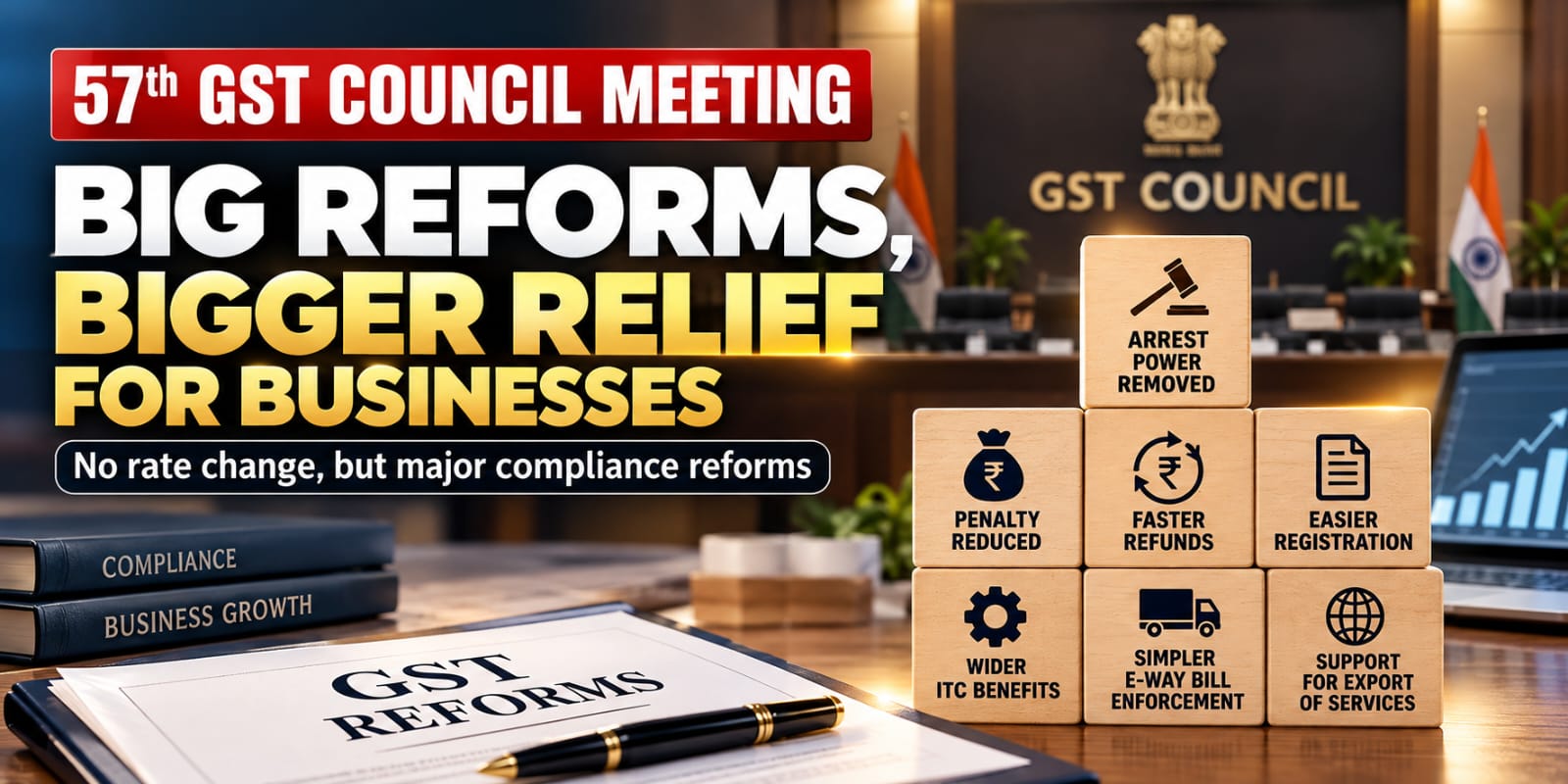
No major rate changes this time. The focus was on easier compliance, faster refunds, lower penalties and more predictable enforcement
The 57th GST Council meeting, held on 8 October 2026, came out with recommendations aimed at making the indirect tax system more transparent, technology-driven and friendlier to taxpayers.
There are no big changes to GST rates this time. The discussion was mostly about easing the compliance burden, speeding up refunds, trimming penalties and making enforcement more predictable. Here are the 7 recommendations that matter most.
The Council has suggested scrapping the arrest provisions under section 69 of the CGST Act, and raising the prosecution threshold from Rs 1 crore to Rs 5 crore.
Taxpayers are likely to see this as a big relief, since it lowers the fear of criminal prosecution for relatively small tax defaults.
The Council recommended reducing the maximum general penalty under section 125 from Rs 25,000 to Rs 10,000.
MSMEs and other taxpayers who slip on procedural or technical points, with no tax evasion or fraud involved, stand to benefit the most.
The Council wants the refund process to be more automated and easier for taxpayers. Eligible refunds often get stuck over procedural issues, which hits working capital hard.
The new provisions are meant to speed up processing and also allow automatic refund of excess input tax credit balances lying in the electronic cash ledger.
Several recommendations deal with input tax credit and refunds in specific situations. Health and life insurance, telecom infrastructure, pipelines, free samples and certain categories of expired or destroyed stock have been named specifically.
An inverted duty refund has also been recommended for eligible input services, with specified timelines.
The Council said vehicle inspection under the e-way bill system should be driven by intelligence instead of random searches.
That should cut down avoidable delays and hassle for taxpayers moving goods from one state to another.
The Council recommended automating the whole registration process as far as possible, including amendment and cancellation of registration.
Small taxpayers and new e-commerce start-ups could gain the most, since registration formalities can be made simpler and faster.
The recommendations also cover services provided to overseas units, including foreign branches, subject to specified conditions.
This should bring clarity to the export of services provisions, which are a grey area at the moment.
What the 57th GST Council Meeting Means for Taxpayers
Taken together, the recommendations point to a clear change in how tax is administered in India. Direct taxes are still busy with avoidance and aggressive tax planning, while indirect tax law is being reworked to be more efficient, taxpayer-friendly and compliance-driven.
For businesses, the changes could mean:
Likely Impact on Businesses
- Lower compliance and penalty risks
- Faster refunds
- Lower working capital needs, since less GST money stays blocked in refunds
- A simpler compliance regime with fewer procedural hassles
- Rationalised input tax credit rules
- Predictable, calibrated enforcement without fear of harassment
- Lower litigation risk on GST issues
Not Law Yet
The GST Council’s recommendations are not law. The government still has to amend the CGST Act and rules and issue notifications to put them into effect.
The proposed changes are significant. Cutting the compliance burden, speeding up refunds and rationalising input tax credit rules will clearly help businesses, but they need to be implemented carefully to avoid revenue leakage and misuse.
Rate rationalisation gets most of the attention in any tax reform discussion, yet a big part of the indirect tax reform now being considered is about processes, not rates. For businesses, that means easier GST compliance, faster refunds and simpler ways to settle disputes.