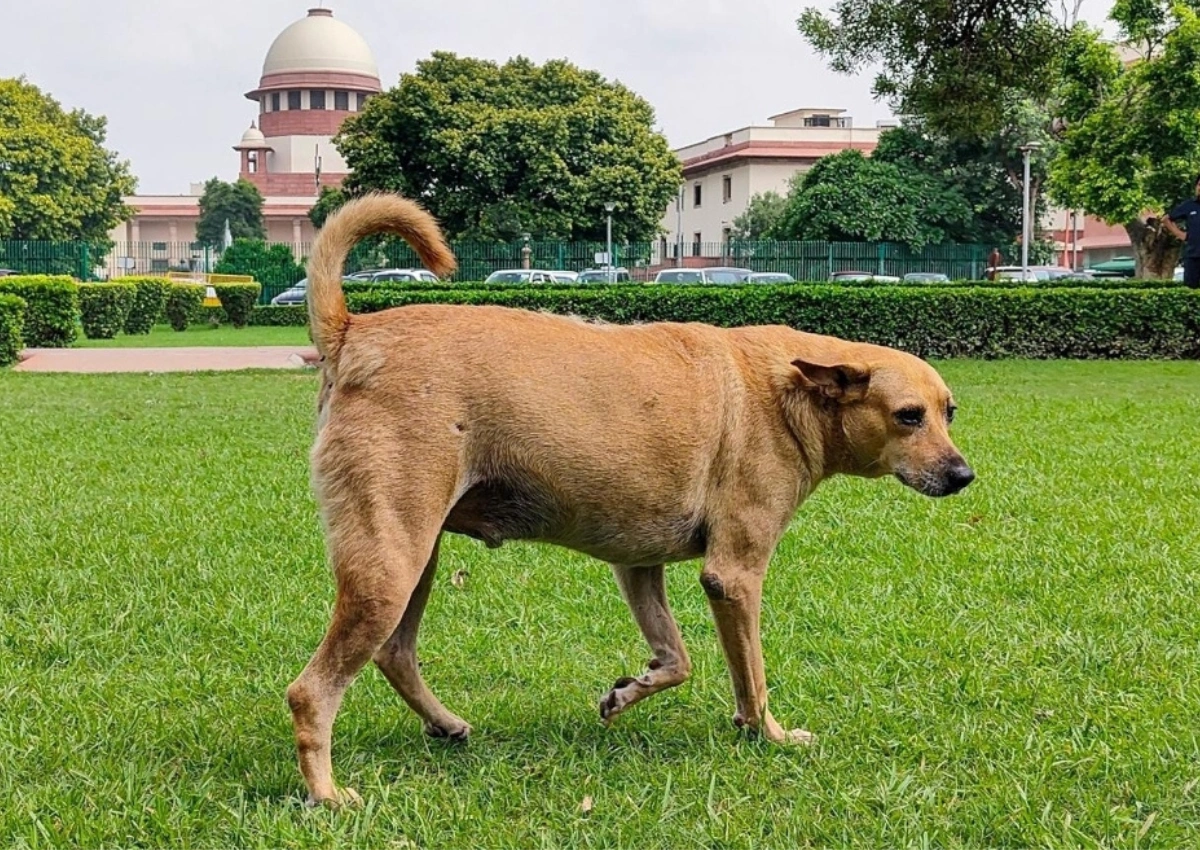
Once again, the Supreme Court of India has drawn national focus on the issue of stray dog control when it declined to review its stay on the directions issued by it. The order had directed the removal of stray dogs from all government-run establishments and bodies, including schools and hospitals, railway stations and airports, bus stands and sports complexes.
The Court also issued a warning to the authorities explaining that if directions aren’t implemented, appropriate action will be taken against them, including contempt proceedings and disciplinary action. The verdict has revived the heated debate that has engulfed the country in recent months.
There are concerns expressed about the proliferation of dogs in public places and the increasing number of dog-bite casualties, many of them women and children. On the other side are the advocates of animal rights and dog lovers. This is no longer merely a legal battle; it’s a broader public debate about city government, public health, community engagement, the place of animals and humans in the city.
What the Supreme Court Said
The Court turned down the Petitions filed by Animal Welfare groups and activists for variation of the earlier directions passed in late 2025. The earlier order was directing the authorities to catch stray dogs from sensitive areas in public and bring them to shelters after sterilisation and vaccination, and not return the animals to the same localities. At the hearing stage, the bench pointed out that the dog attacks had permeated “critical areas” like airports, hospitals, educational institutions and residential areas.
The judges observed that there was a series of incidents where children, old people, travellers, and patients were being attacked by stray dogs. The Court declared the right to life with dignity should also encompass the right to live without the threat of being attacked by dogs and condemned the failure of the authorities in implementing the animal birth control and management system effectively.
The Court further held that the recurring incidents were the result of a failure of administration and were not responsible for the directives issued by the Court in earlier directions.
Why the Issue Became So Serious
There has been increasing media attention and concern about attacks by free-ranging or stray dogs in India over the last few years. Several reports from states detailed bites and incursions on pedestrians, school children, seniors in wheelchairs, patients, joggers, and other commuters.
Numerous such incidents involving children backfired on the entire nation and increased the call for cracking down on the perpetrators. As per reports cited during the testimonies, the period of dog attacks within school premises, hospital complexes, bus depots, and railway stations. The problem was compounded because dog bites in India are intricately tied to the rabies menace.
The public health authorities have speculated before that the problem arises out of insufficient vaccination and poor policing of sterilisation programmes. But urbanisation played a negative role as well. The dump overflowing, improper storage of food waste, absence of fixed shelters and poor coordination of the municipality have all resulted in an increasing of the number of strays in several cities. So, the Supreme Court’s intervention was prompted by growing fears for the safety of the general public and the inability of administrators to act.
Public Safety Versus Animal Rights
The Court’s ruling has elicited much division of opinion from the general public. Proponents of the order contend that public safety has to come first. A lot of people think that schools, hospitals, transport centres, and even neighbourhoods shouldn’t be insecure due to the unrestrained numbers of roaming animals.
Parents in particular are terrified by the repeated reports of children being attacked. Many citizens believe that the failure of the local administration to provide adequate sterilisation and vaccination programs has worsened over the years. But it isn’t supported by the animal welfare organisations. In the way the Court has proposed the situation to be when certain animals are forcibly withdrawn, it’s argued, it would cause an imbalance in the ecology, leading to the attraction of new unsterilised dogs to those areas.
Further, the concern of overpopulation in shelters and the lack of proper facilities to house the transferred animals is also expressed. This debate stirs an extremely difficult ethical question: how can cities strike a balance between compassion for animals and the safety of the general public?
The Emotional Nature of the Debate
Managing stray dogs in India evokes more heated divisions of opinion than any other public concern. Most animal lovers think cats and homeless dogs are inferior beings and deserve love and trust.
Simultaneously, members of canine populations who have suffered bites or been raised in hostile environments are frequently neglected in these debates: The social media debate on the subject has become very polarised, with hot debates between supporters of animal rights and advocates for more stringent regulation.
Conclusion
As the Supreme Court refuses to recall its stray dog removal orders, one of the country’s most highly charged social issues becomes even more so. This historic comment encapsulated an increasing consciousness of public protection, dog attacks and urban governance. Alongside this, the judgment has triggered significant legal and moral debates about the rights of animals.
In the end, the story touches upon a larger truth of Indian cities in general, existing on a rushing, swelling growth of urbanisation, being plagued by fragile civic infrastructure plus terrible administration system. People, as well as animals, are involved in all conflicts.
A long-term resolution will need more than court-administered mandated solutions or passionate pleas. It will call for unification of policy, technical expertise, an increase in civic accountability, and an equilibrium of justice. One that honours the lives of animals while also protecting the well-being of the populace.