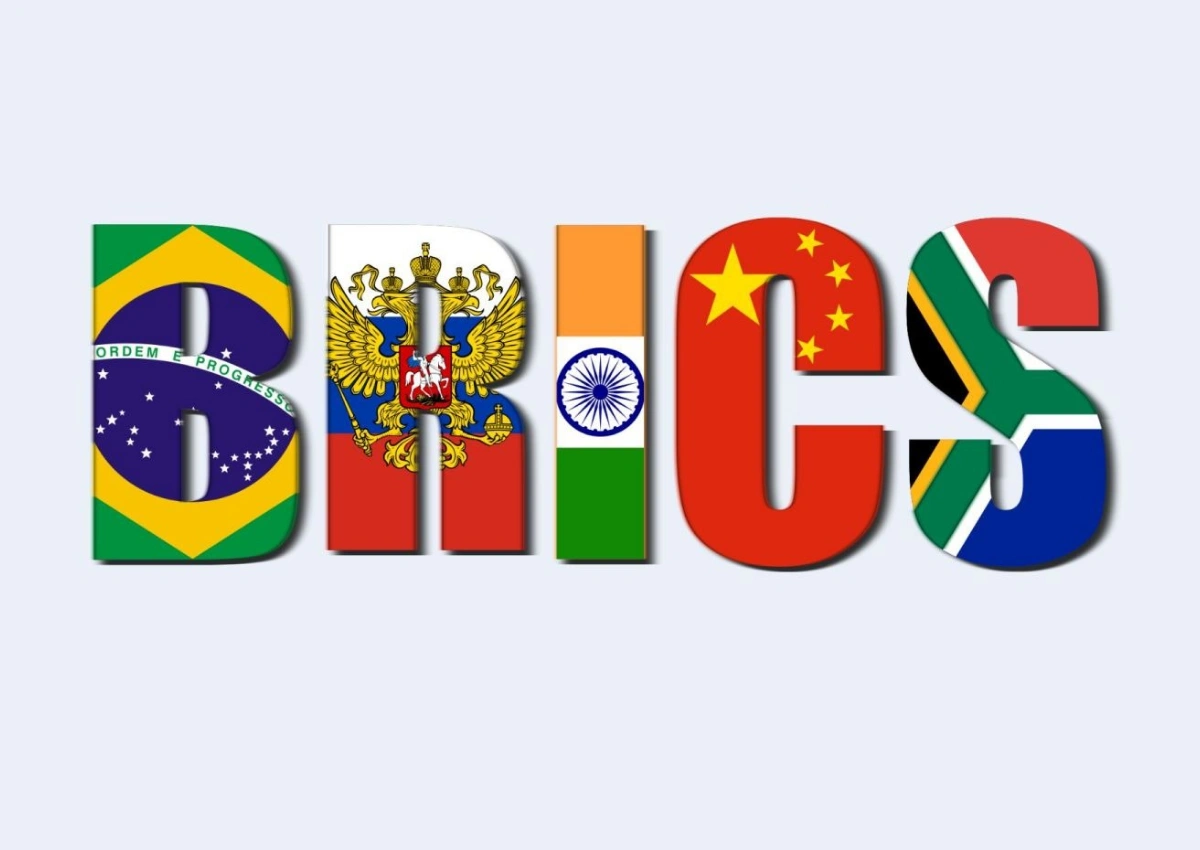
When India took on the BRICS Chairship, it found the group to be very different from what it was originally. Starting as BRIC (Brazil, Russia, India, China) in 2009 and becoming BRICS with the addition of South Africa in 2010, the group has now been termed BRICS+ after the induction of five new members in 2024: Egypt, Ethiopia, Iran, Saudi Arabia, and the United Arab Emirates, with Indonesia joining later.
This enlargement has not only almost doubled the original members but also significantly raised the group’s global importance. Combined, the ten countries represent around 45% of the world’s population and contribute more than 35% of global GDP (PPP basis). For India, leading this larger forum presents a mix of thrilling prospects and intricate diplomatic difficulties.
Strategic Prospects for India
The first and most obvious benefit is to give a louder voice to the Global South. India has always been a major supporter and promoter of the interests of developing countries. However, with new BRICS members such as Egypt, Ethiopia, and Indonesia, the group now has a more robust presence from Africa and Southeast Asia two areas where India is quite actively extending its diplomatic and economic ties.
From an economic point of view, the bigger members present a lot of opportunities for India, especially concerning trade and investment. Diversifying supply chains through an increase in exports from such industries as pharma IT, automobile, and renewable energy, along with furthering partnerships in highly relevant fields like food security and infrastructure, are some of the ways India is thinking of to make the most of this broadening of BRICS. Besides, the addition of large energy-producing nations such as Saudi Arabia, UAE, and Iran not only means a better foothold in matters of energy security but also holds the potential for influencing the stabilisation of energy prices.
Development Finance Is Still a Tremendous Area of Opportunity. The New Development Bank (NDB), a financial institution and major project of BRICS, has already given the green light to several projects in India. If other members also decide to put in more capital, the bank will be able to broaden its lending capacity and thereby help with the infrastructure and sustainable development projects of the Global South.
A Balanced Approach from India
On the one hand, there seem to be great opportunities for India to leverage the power of BRICS, on the other India is showing great caution and pragmatism as a way forward. India has flatly stated that it is against the idea of a common BRICS currency or any such moves which can be seen as directly challenging the existing global financial system. In fact, India is first and foremost focusing on its practical cooperation, consensus-building efforts, and reform of multilateral institutions instead of creating parallel structures that may further divide the world.
In fact, this balanced position comes out in almost every opportunity that India is exploring through the four pillars of its 2026 Chairship: Resilience, Innovation Cooperation, and Sustainability. By concentrating on these aspects, India intends to transform the BRICS grouping into one that is more oriented towards finding solutions and less confrontational.
Key Challenges Ahead
Managing an enlarged and more diverse BRICS poses significant challenges. The bloc now consists of countries with very different political systems, economic models, and foreign policy priorities. Geopolitical tensions, especially between India and China, along with different perspectives on regional conflicts, may hinder consensus-building.
Several other challenges include the fact that coordinating ten members instead of five will require a more advanced diplomatic apparatus. Besides language barriers, institutional capacity differences among new members, and varying expectations regarding the speed of cooperation, are issues that India, as the Chair, may have to deal with very carefully.
In addition, the question of how to strike a balance between India’s two roles of a strong bilateral partner of the West and a key player in BRICS will also be quite challenging. India wants to see that BRICS remains a platform of constructive engagement rather than a means of anti-Western rhetoric and the role of India is to ensure that this happens without them having to reject existing global institutions.
Focus on People-Centric Cooperation
One of the aspects that India emphasises in its Chairship is the initiation of BRICS, which is more “resident-focused” and diversified. It is evidenced by the official theme “Building for Resilience Innovation, Cooperation and Sustainability” and the logo with lotus and the Namaste sign. India intends to go beyond top-level diplomacy in order to make BRICS more understandable to the citizens through cooperation in areas such as digital public infrastructure, skill development, healthcare, and cultural exchange.
What will 2026 bring?
During the year, India will be organising several major BRICS meetings, such as the Sherpa and Foreign Ministers’ meetings, then the Leaders’ Summit (probably in the second half of 2026) after that. India’s Chairship will be considered successful not only by big announcements but mostly by real achievements in easing trade, sharing technologies, implementing sustainable development projects, and enhancing institutional mechanisms.
Being able to represent the Global South is one of the diplomatic goals of India. On the other hand, India still needs to work on China and Russia, which are two of the major powers. However, it will be a tough job for the BRICS countries to materialise their expanded demographic and economic weight into actual influence and benefits for their populations.
Moving forward
India’s strategy for the 2026 BRICS seems to be practical and oriented towards the future. Instead of advocating for a complete overhaul of the global order, New Delhi is primarily seeking gradual yet meaningful collaboration that can result in tangible benefits.
In the best-case scenario, the expanded BRICS may become a more inclusive and potent forum for discussing the issues of developing countries. Proper leadership of BRICS 2026 will be a way for India to prove itself to be a globally responsible leader and the link between the Global North and South.
Only time will tell if the advantages of an enlarged BRICS surpass the problems and whether India will be able to transform the group into a vehicle for useful collaboration in a world that is becoming more and more divided.