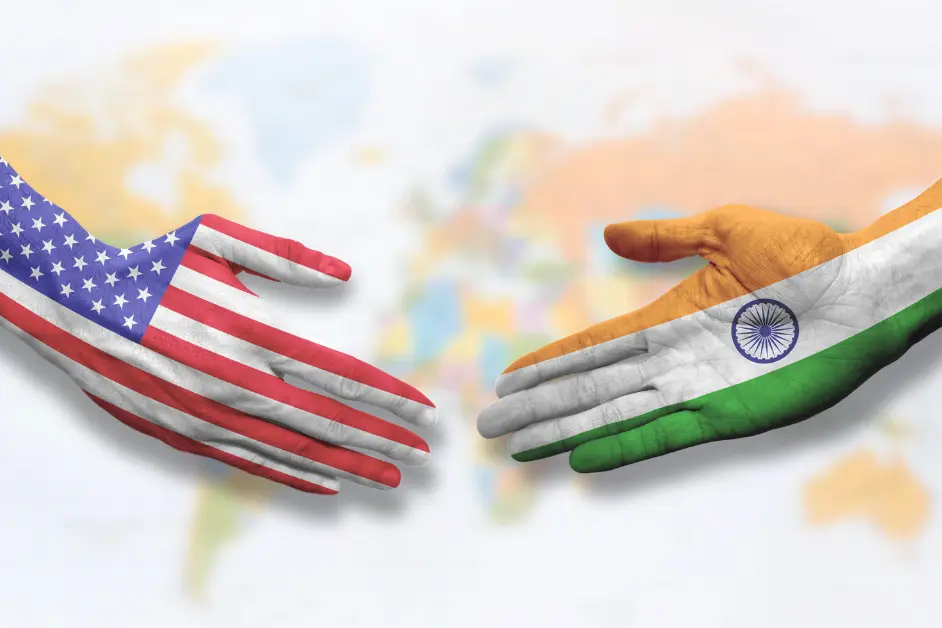
The trade agreement announced between the United States and India has been touted by both governments as a gesture of reconciliation after a series of tariff disputes that have marred the relationship in recent years . After a call between Donald Trump and Narendra Modi, the two sides pledged to reduce tariffs and open up the market, as well as a stronger cooperation in the energy sector.
However, the positive political spin aside, the real impact will be very different across industries.Some sectors will quickly reap the rewards while others will have to endure greater competition and the need to adjust.
Export oriented industries are the main winners
Among the top beneficiaries of the deal is expected to be Indias export, led manufacturing sector. Indias textile, clothing, pharmaceutical, diamond and jewellery as well as the processed food industry stand to gain from the easier market entry to the US and the reduction of tariffs.
Exports to the US are still, for many companies, a major source of high, value and large, volume shipments. By cutting duties, Indian companies will be able to offer lower prices, thereby increasing their competitiveness, which is highly needed at a time when they are being challenged by suppliers from Southeast Asia and Latin America.
Industry insiders opine that easier access to the US market can bring about a fresh round of investments in export infrastructure, packaging, quality control and logistics. Small and medium enterprises, especially those in labouroriented sectors like apparels and handicrafts, are likely to get bigger orders if the tariff cuts are implemented without a hitch.
Pharma companies are also expected to be among the main beneficiaries. It is well known that Indian pharmaceutical companies have been the backbone of the US generic drug market at affordable prices. With trade barriers coming down and procedures getting simplified, India can better consolidate its position as a reliable supplier in the healthcare value chain.
American exporters gain access to a large consumer market
In the case of the US, farmers and manufacturers of industrial goods are expected to get the biggest share of benefits. Indias agreement to lower or eliminate tariffs on a list of selected US products opens up a completely new range of commercial opportunities for American companies in a very rapidly expanding consumer market.
There are also good chances for producers of unprocessed and processed agricultural goods and some farm related commodities to do well, particularly in the urban segment where the demand for imported and high quality products is on a constant rise. The entry of industrial equipment, machinery and specialised manufacturing inputs from the US into the Indian market is also going to get easier and cheaper.
Besides tariff concessions, US companies find the deal quite attractive because of the vast Indian market. Even a small increase in market share can greatly increase the volume of business.
Energy suppliers and logistics firms are potential winners
Energy is without doubt the most strategically crucial component of the agreement. The deal implies India’s resolve to increase its energy imports from the United States and diversify the list of suppliers.
New commercial opportunities are created for American energy exporters, shipping companies, and other related service providers because of this. Indian port operators, transport firms, and storage infrastructure companies could at the same time be able to take advantage of energy imports of higher volumes and the corresponding domestic trade activity.
Besides that, the broader logistics sector, including freight forwarding and warehousing, is set to benefit from increased business activity on both sides as the trade flows expand.
Technology and professional services could benefit slowly
In fact, the present agreement mostly concentrates on goods and tariffs, but technology companies and professional service providers might be able to take advantage of it indirectly. Increased trade gets normally stronger business partnerships, joint ventures, and cross border projects.
Corporate digital services, consulting, supply chain management, and compliance support companies may experience a surge in demand as businesses get on with the new trade norms and venture into new markets. However, such profits are likely to be quite small at first and then gradually increasing rather than immediate ones.
Not all industries will enjoy the same benefits. Some Indian producers might be challenged by cheaper and better-quality imports, especially in areas where US companies have strong technological capabilities.
Certain machinery, equipment and specialised manufacturing inputs imported from the US could displace the local suppliers who live on very tight margins or rely on market protection. Small manufacturers may not be able to compete unless they increase productivity and improve product quality.
In agriculture, though some Indian exporters might benefit from better access to the US market, local producers could be confronted by a higher level of competition from imported food products and agricultural inputs. Farmers and small food processors might have to be helped with policy and given adjustment assistance in order to stay competitive.
Small retailers and distributors may need to make certain adjustments to cope with these changes
Among the other groups who might have problems are the small scale traders and distributors whose livelihood depends on the current supply chains. If the sourcing of goods is changed and if there are new players in the market, then the established networks will be disrupted.
Large companies, most of the time, have a better chance of coping with the changes of regulations, they are able to handle compliance requirements and can make up for losses in the short term. On the other hand, small businesses, especially, those that have very limited access to finance and market information, will find it very difficult to change their ways rapidly and adjust to the new competition.
Workers of vulnerable sectors could experience the short term impact
Generally, the effects on employment will be varied. Export oriented industries may be the source of the new jobs, mainly in manufacturing, logistics and quality assurance. On the contrary, sectors which have to face stronger import competition may have slower hiring or even job losses in the short term.
Labour intensive sectors which rely mostly on domestic consumption rather than exports may be extremely vulnerable to price competition. Politicians as well as the representatives of the industries are likely to keep a very close eye on the trends of the workforce in the months following the implementation.
Strategic industries are showing cautious neutrality
Among strategic and heavily regulated sectors, to a certain extent , defence manufacturing and some public utilities, are not directly impacted by the current agreement. These industries, in terms of politics, may find the deal significant but, commercially, the deal is neutral for the time being.
Negotiations down the road, especially in services, digital trade and investment frameworks might alter this balance. For the time being, these sectors are largely insulated from the competitive changes that are immediate.